Organizing your potting shed can turn chaos into creativity! With over 25 practical tips and clever hacks, you’ll find ways to maximize your space, making it a breeze to find your gardening tools, supplies, and plants. Dive into a world of organization that will help your gardening endeavors flourish!
Essential Tools for Every Gardener
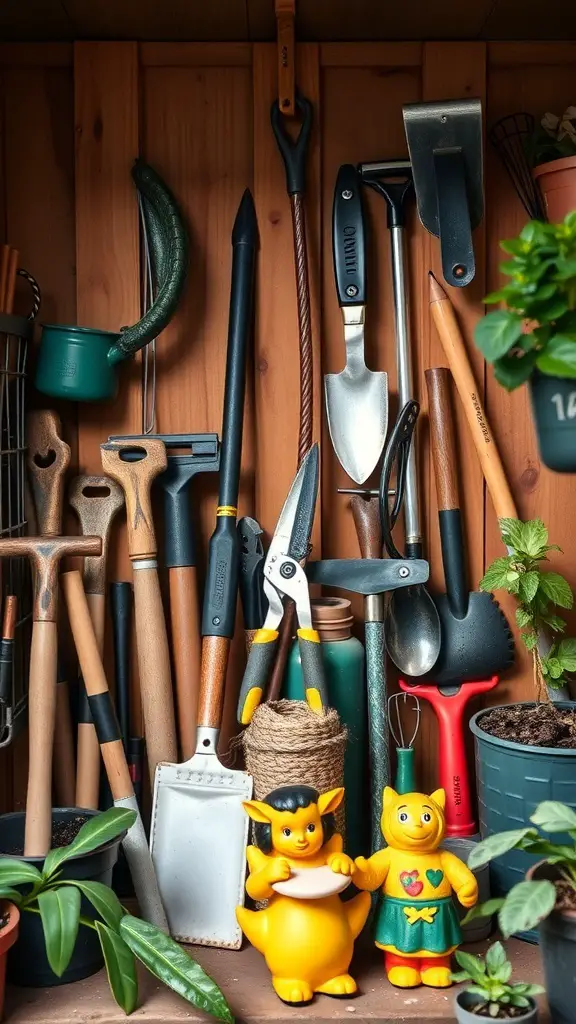
Every gardener knows that having the right tools makes all the difference. The image shows a well-organized potting shed filled with essential gardening tools. From shovels to pruners, each tool has its place, making it easy to find what you need.
In the center, you can spot a couple of cheerful plastic figures, adding a fun touch to the workspace. These playful additions remind us that gardening should be enjoyable. The tools are neatly arranged, showcasing a mix of hand tools and larger implements, perfect for various gardening tasks.
Having a dedicated space for your tools not only keeps them in good condition but also saves time when you’re ready to dig in. Whether you’re planting seeds or pruning plants, a well-organized potting shed is key to a successful gardening experience.
Incorporating a Watering Station
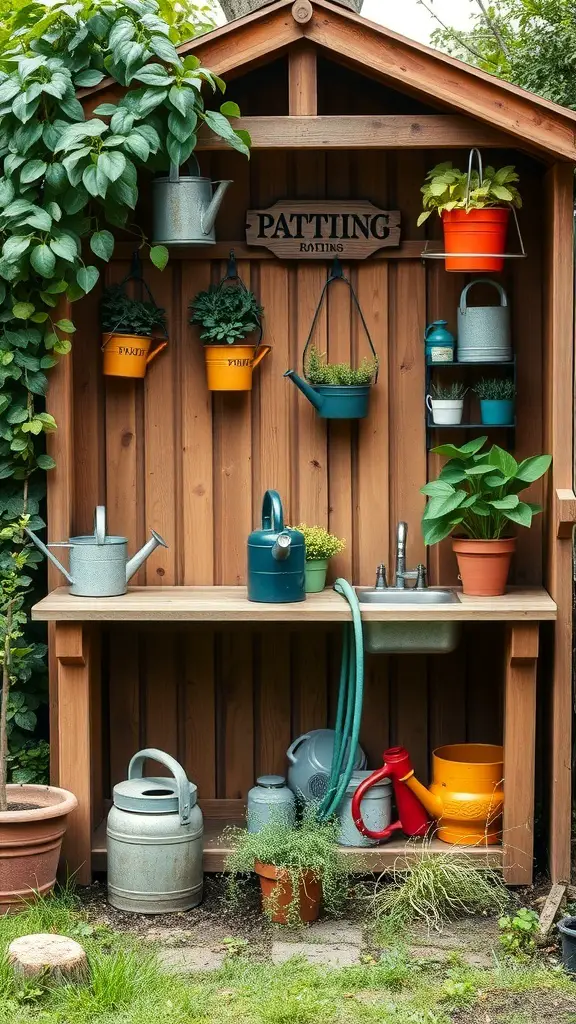
A watering station is a must-have in any potting shed. It keeps everything organized and makes watering your plants a breeze. The image shows a charming setup with various watering cans and pots neatly arranged.
The wooden shelf provides a sturdy base for your watering tools. You can see a mix of colors and sizes, which adds a fun touch. The plants on the wall bring life to the space, making it inviting.
Having a sink nearby is a great idea. It allows you to fill up watering cans easily and clean your tools after use. Consider adding hooks for hoses to keep them tidy and out of the way.
With a little creativity, you can personalize your watering station. Use decorative pots or labels to make it uniquely yours. This not only helps with organization but also makes watering feel like less of a chore.
Utilizing Clear Storage Bins
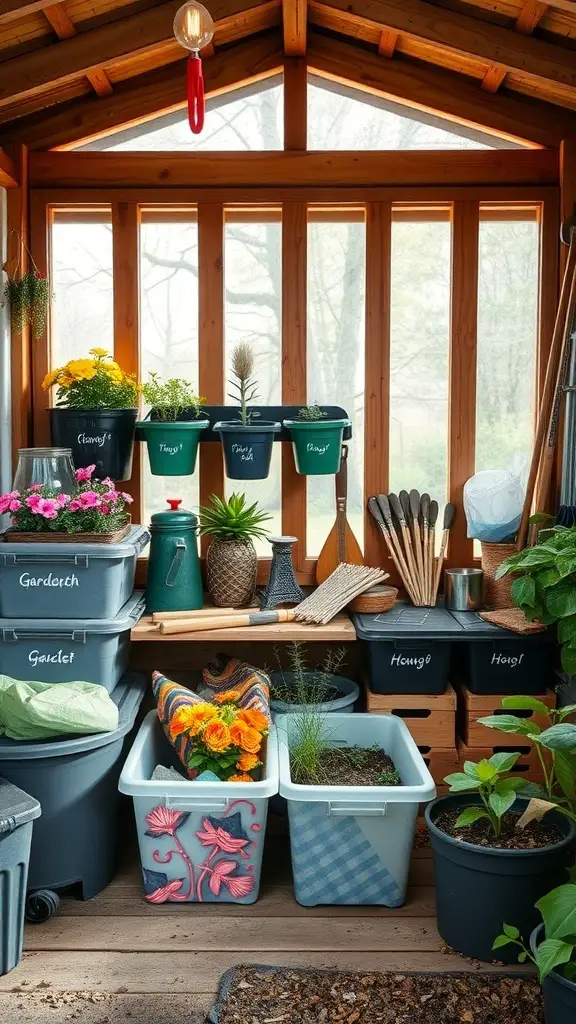
Clear storage bins are a fantastic way to keep your potting shed organized. They let you see what’s inside at a glance, making it easy to find what you need without rummaging through everything.
In the image, you can see a variety of bins labeled for different uses. This labeling system helps you quickly identify where everything is stored. Whether it’s tools, seeds, or potting soil, having a designated spot makes your shed more efficient.
Using clear bins also helps protect your items from dust and moisture. You can stack them neatly, maximizing space in your shed. Plus, they come in various sizes, so you can choose the right one for your needs.
Consider adding some decorative elements to your bins. This can make your shed feel more inviting while keeping it functional. A little creativity goes a long way!
Maximizing Vertical Space
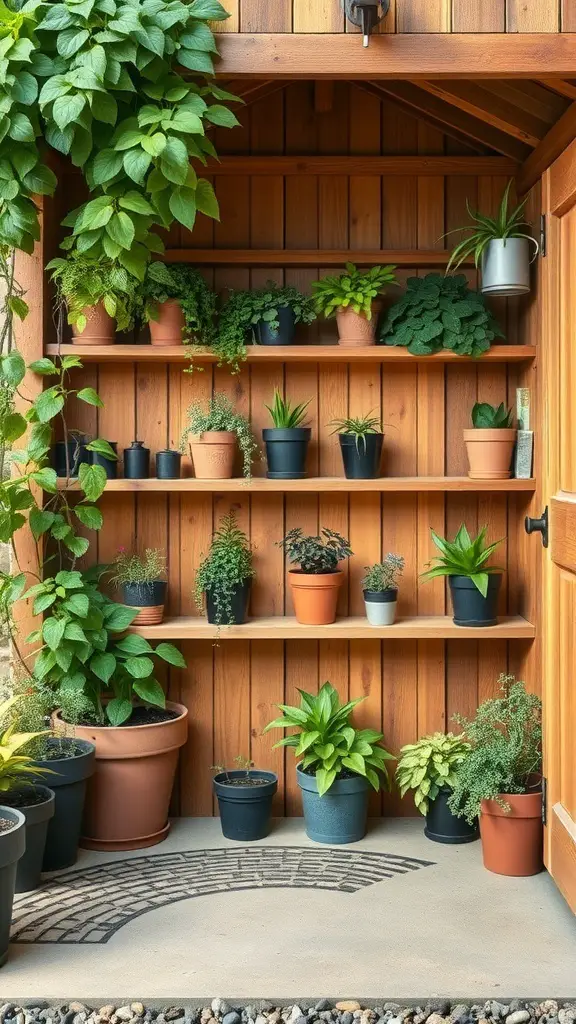
When it comes to organizing your potting shed, using vertical space is a smart move. The image shows a well-arranged shelf system that takes advantage of height. This setup allows you to store multiple plants without taking up too much floor space.
Consider adding shelves to your shed. They can hold pots of various sizes, making it easy to access your plants. You can even mix in some decorative items to add a personal touch. Hanging plants can also contribute to a lively atmosphere while saving space.
Using wall-mounted planters is another great idea. They can bring greenery to your walls and keep your floor area clear. This not only looks good but also makes caring for your plants easier.
Lastly, think about using stackable pots. They can be arranged in different configurations, allowing you to customize your setup as needed. With these tips, you can create a functional and beautiful potting shed.
Organizing Seeds and Labels
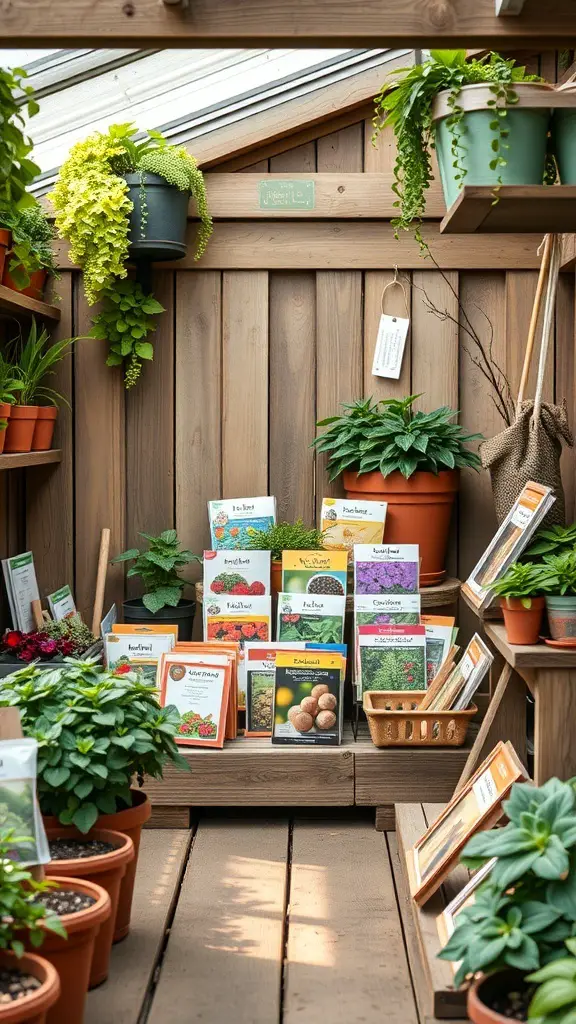
Keeping your seeds and labels organized can make gardening much easier. In the image, you can see a charming potting shed filled with neatly arranged seed packets. Each packet is labeled clearly, making it simple to find what you need.
Consider using small baskets or trays to group similar seeds together. This way, you won’t have to sift through a pile of packets when you’re ready to plant. You can also use a marker to write down the planting dates on the labels for easy reference.
Another idea is to create a seed inventory list. This can be a simple chart that includes the seed type, planting date, and any special notes. Keeping this list handy can save you time and help you plan your garden layout.
Don’t forget to store your seeds in a cool, dry place. This will help maintain their viability for future planting seasons. With a little organization, you can enjoy a more productive gardening experience!
Storage Solutions for Pots and Planters

When it comes to organizing your potting shed, having a dedicated space for pots and planters is key. The image shows a charming wooden shed with neatly arranged shelves. This setup makes it easy to find what you need without rummaging through clutter.
On the shelves, you’ll notice a variety of pots in different sizes and colors. Grouping similar items together can save time and help you visualize what you have. Consider using labeled containers for smaller items like seeds or gardening tools.
Outside the shed, you can see larger pots and plants arranged in a way that keeps the area tidy. Using plant stands or carts can help elevate pots and create more space. This not only looks appealing but also makes watering and maintenance easier.
Incorporating some vertical storage, like wall-mounted racks, can free up floor space. Hanging tools or smaller pots on hooks keeps everything within reach. With these simple organization tips, your potting shed can become a functional and inviting space for all your gardening needs.
Creating a Potting Station
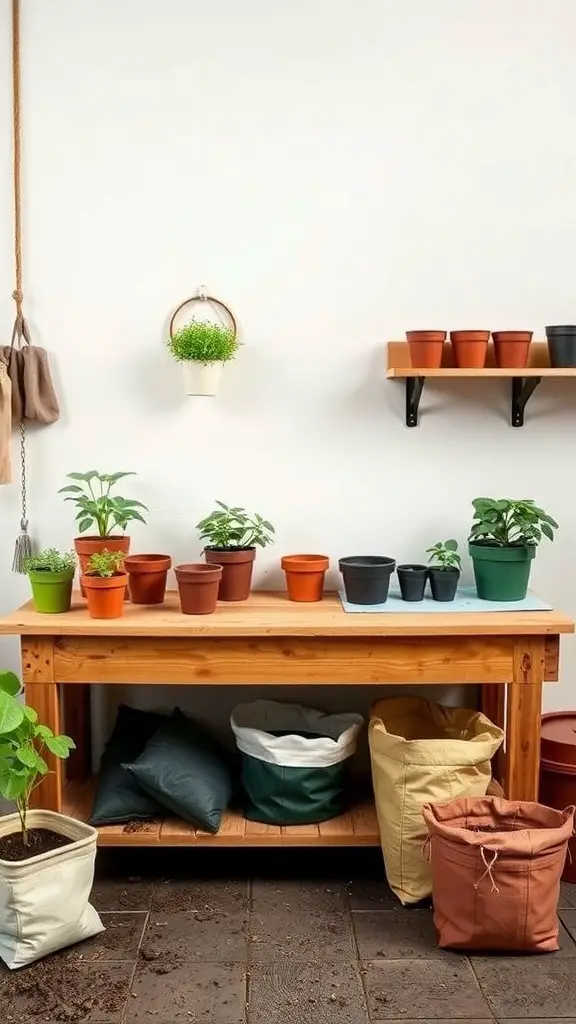
Setting up a potting station is a fun way to organize your gardening space. The image shows a tidy setup with a wooden table, various pots, and bags for soil. This kind of arrangement makes it easy to access everything you need while planting.
Start with a sturdy table that can hold your pots and tools. The one in the image is perfect for this. It’s spacious enough for multiple plants and has a clean look. You can add shelves above for extra storage, just like the ones shown.
Having different sizes of pots is essential. The image displays a mix of colors and sizes, which adds a nice touch. You can choose pots that suit your plants and your style. Don’t forget to keep some bags of soil handy. They can be stored underneath the table to keep the area neat.
Adding a few plants on the table gives it life. Consider small herbs or flowers to brighten up your space. A hanging plant, like the one in the image, can also add charm. This setup not only looks good but also makes gardening more enjoyable.
Creating a Functional Layout
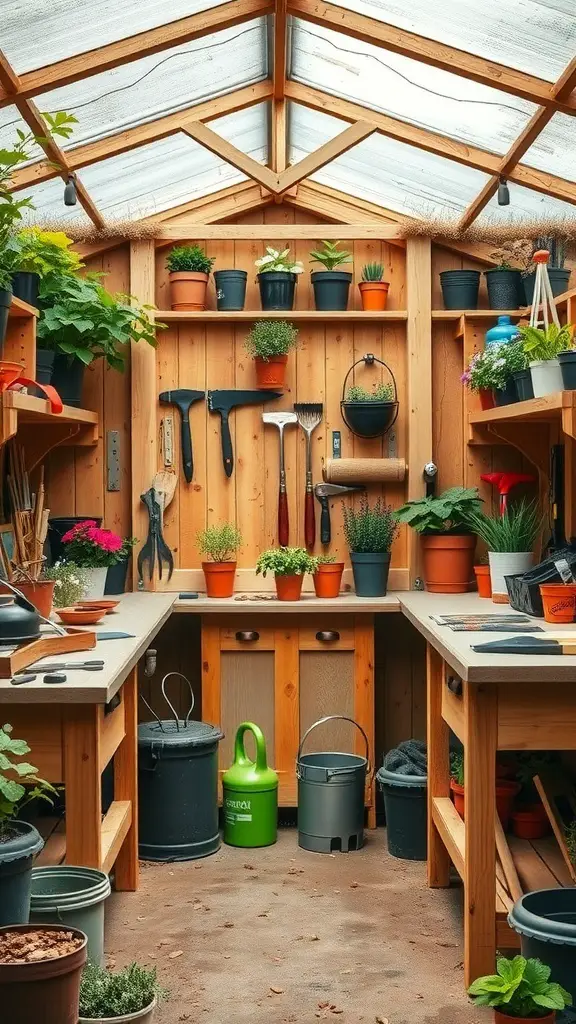
A well-organized potting shed can make your gardening tasks much easier. Take a look at this image of a potting shed filled with plants, tools, and storage options. The layout is designed for efficiency and ease of access.
Notice how the shelves are lined with pots and plants. This setup allows you to quickly grab what you need while potting or planting. Keeping frequently used items within reach saves time and effort.
The workbenches provide ample space for potting activities. Having a dedicated area for soil, pots, and tools helps keep everything tidy. You can also see various tools hanging on the wall, making them easy to find and reducing clutter on the work surfaces.
Consider adding hooks or pegboards for tools if you haven’t already. This keeps them organized and off the ground. Also, using labeled containers for smaller items can help you find things quickly.
Lastly, don’t forget about plants! Incorporating greenery into your shed not only beautifies the space but can also improve your mood while you work. A functional layout is about balancing practicality with a touch of nature.
Establishing a Seasonal Rotation
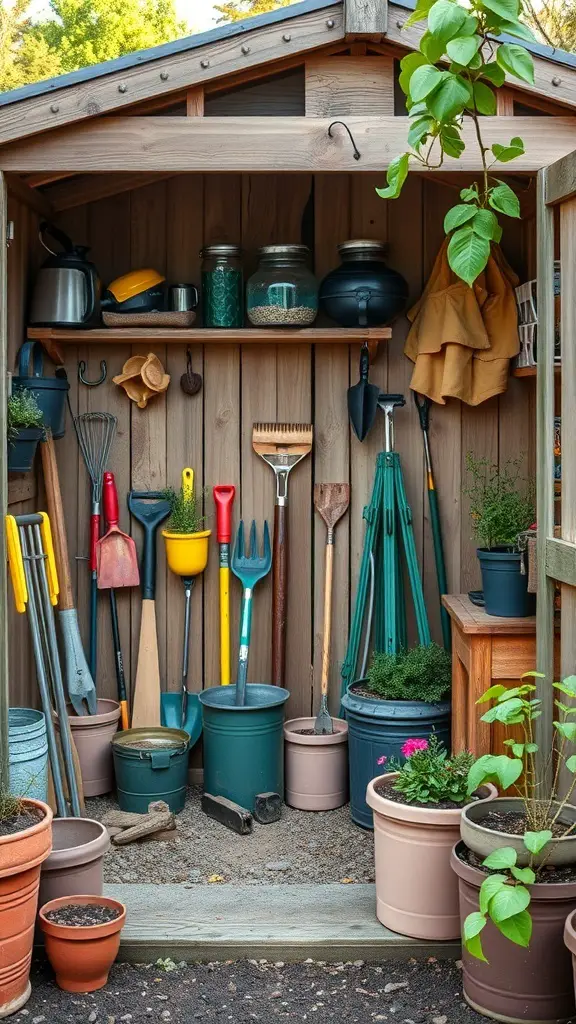
Organizing your potting shed is key to a successful gardening experience. The image shows a well-arranged space filled with tools and pots, making it easy to find what you need. Seasonal rotation helps keep everything fresh and functional.
Start by categorizing your tools and supplies based on the seasons. For example, keep spring planting tools at the front for easy access. As the seasons change, rotate your supplies accordingly. This way, you’ll always have what you need right at hand.
Consider labeling your pots and containers. This will help you remember what you planted and when. It’s also a great way to keep track of your seasonal rotation. A tidy potting shed not only looks good but also boosts your gardening efficiency.
Maintaining a Clean and Tidy Environment
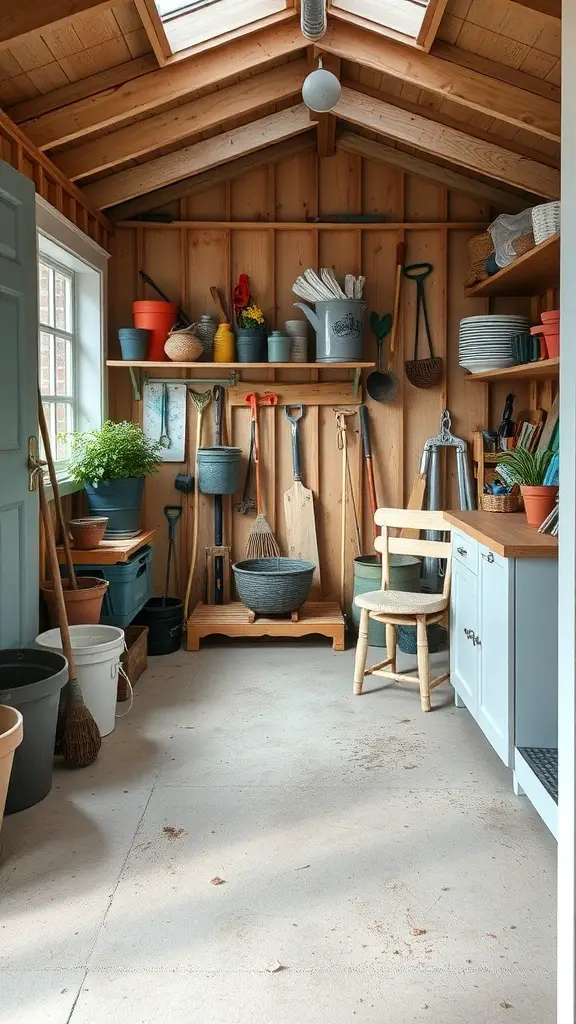
A well-organized potting shed can make all the difference in your gardening experience. The image shows a tidy space filled with neatly arranged tools, pots, and plants. This setup not only looks great but also makes it easy to find what you need when you need it.
Start by categorizing your items. Group similar tools together, like shovels, rakes, and watering cans. Use shelves to keep pots and supplies off the floor. This keeps everything accessible and helps prevent clutter.
Regular cleaning is key. Sweep the floor to remove dirt and debris. Wipe down surfaces to keep them free from dust. A clean environment not only looks nice but also helps maintain your tools and supplies in good condition.
Consider adding hooks or pegboards to hang tools. This keeps them visible and easy to grab. You can also use labeled bins for smaller items, making it simple to locate seeds or plant markers.
Lastly, don’t forget to check your plants. Remove any dead leaves or debris to keep your potting shed fresh and inviting. A tidy potting shed can inspire you to spend more time gardening!
Creating a Composting Area
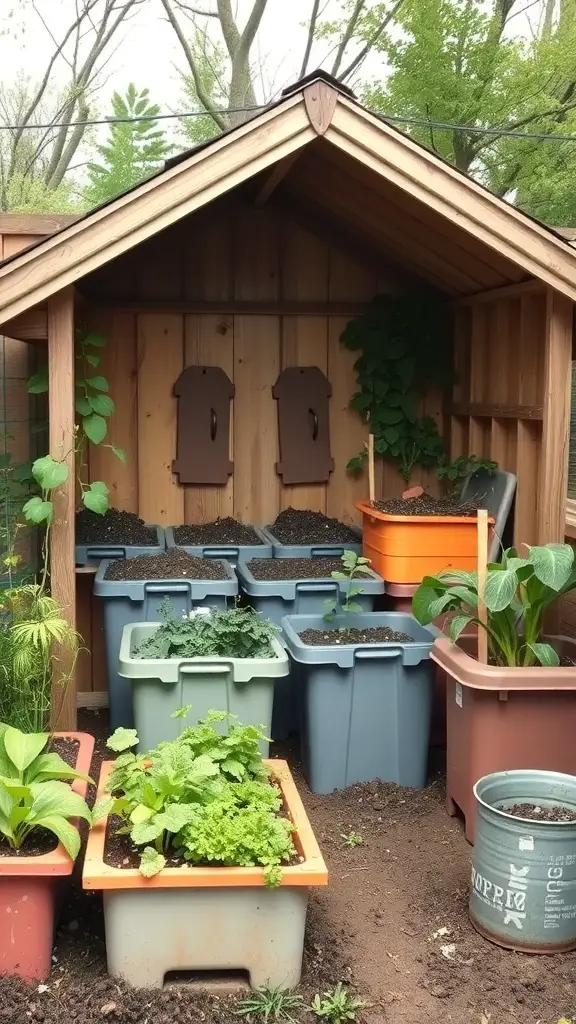
Setting up a composting area in your potting shed can be a game changer for your gardening routine. It’s a simple way to recycle kitchen scraps and yard waste into nutrient-rich compost.
Start by designating a corner of your shed for composting. You can use a compost bin or even a simple pile. Make sure it’s easily accessible for adding materials and turning the compost.
Gather materials like fruit and vegetable scraps, coffee grounds, and dried leaves. Avoid adding meat or dairy to keep pests away. Layering green materials (like kitchen scraps) with brown materials (like dried leaves) helps speed up the composting process.
Keep the compost moist, but not soggy. Turning it every few weeks aerates the pile and helps it break down faster. In a few months, you’ll have rich compost ready to nourish your plants!
Labeling Systems for Easy Access
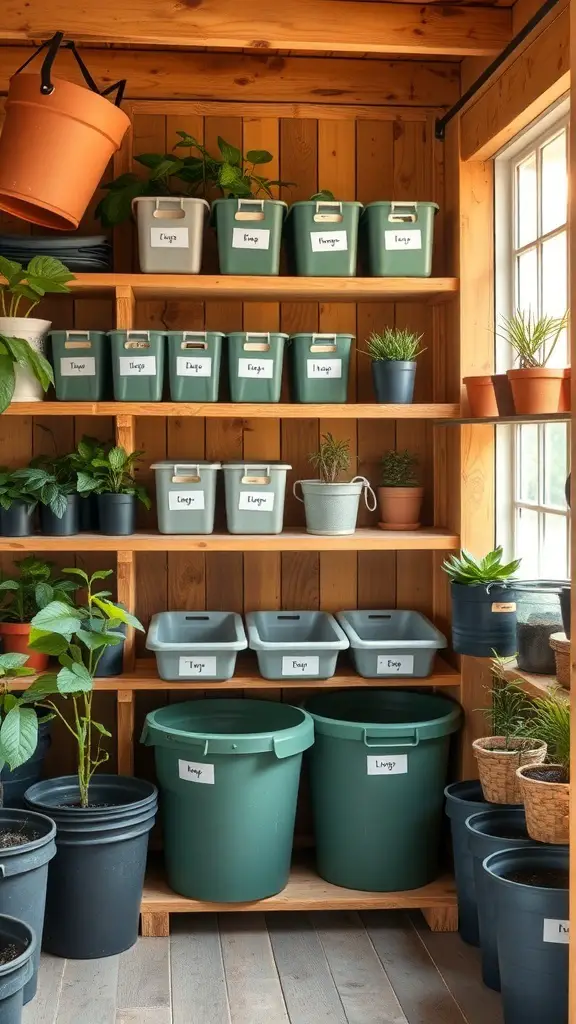
Keeping your potting shed organized can make gardening a breeze. A well-structured labeling system is key to finding what you need quickly. In the image, you can see a neat arrangement of labeled containers and pots. Each box is clearly marked, making it easy to grab supplies without rummaging through everything.
Using different sizes of containers helps categorize items effectively. For instance, larger bins can hold soil or tools, while smaller ones can store seeds or gardening gloves. This setup not only saves time but also keeps everything looking tidy.
Consider using waterproof labels for durability. You can even color-code your bins for an extra touch of organization. With a little creativity, your potting shed can be both functional and visually appealing!
Incorporating a Gardening Library
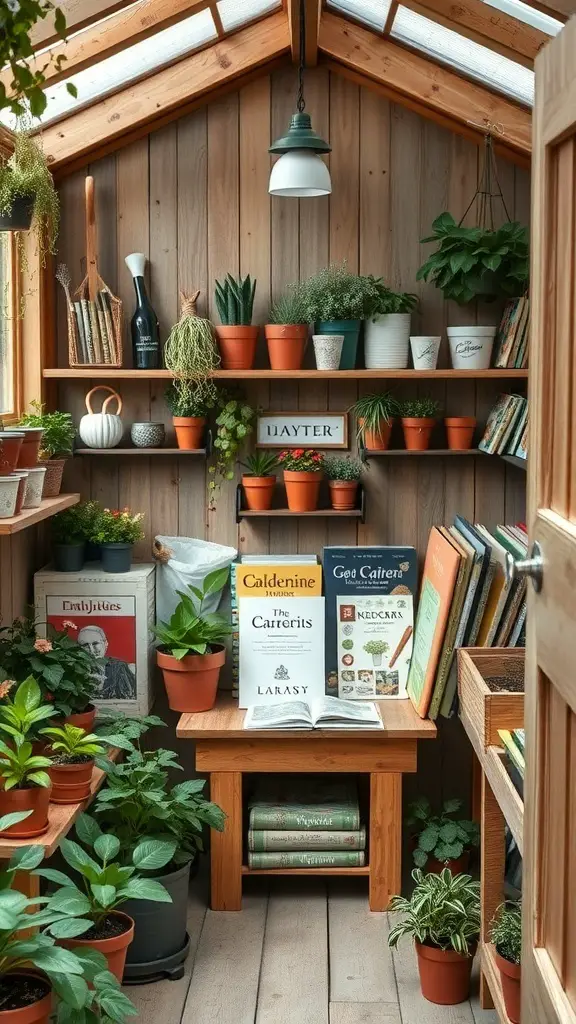
A gardening library can be a fantastic addition to your potting shed. Imagine a cozy corner filled with books that inspire and educate you about plants, gardening techniques, and seasonal tips. This setup not only keeps your gardening knowledge at your fingertips but also creates a warm atmosphere.
In the image, you can see shelves lined with books and resources. This makes it easy to grab a book when you need advice or inspiration. A small table can serve as a perfect spot to sit and browse through your favorite gardening titles while surrounded by the beauty of your plants.
Consider organizing your books by topic. You might have sections for vegetables, flowers, and even garden design. This way, finding the right book becomes a breeze. Adding some decorative elements, like potted plants or gardening tools, can enhance the space and make it feel more inviting.
Designing a Plant Care Zone
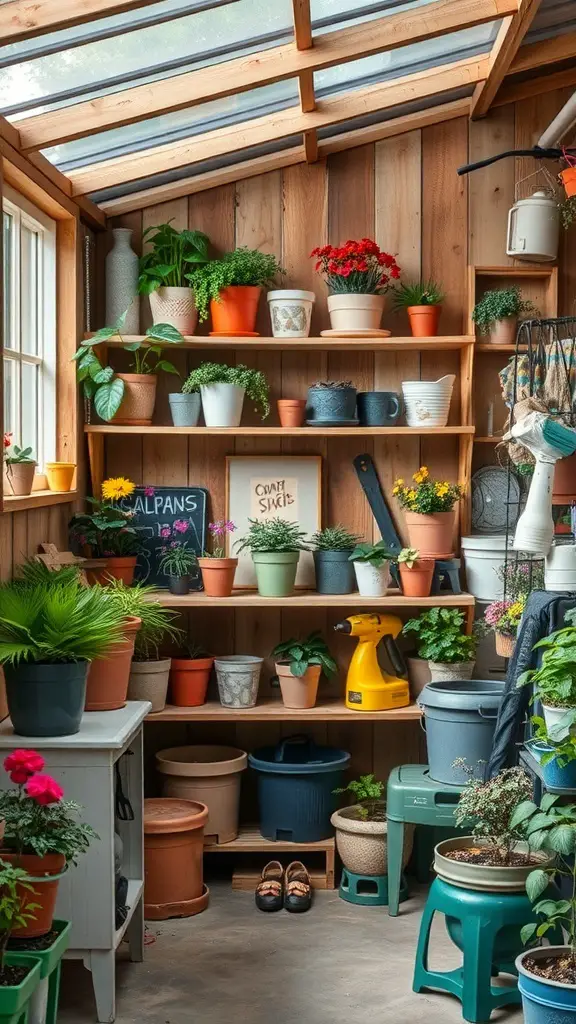
Creating a dedicated plant care zone in your potting shed can make a big difference in how you manage your plants. This area should be organized and functional, allowing you to easily access everything you need.
Start by using shelves to display your pots and tools. This keeps everything visible and within reach. You can see the plants you have and what supplies you need. Consider using different sizes of pots for various plants, and group them by type or care requirements.
Adding a workbench can be a game changer. It gives you a space to repot plants or mix soil without making a mess. Make sure to keep your tools handy, perhaps in a small storage container or hanging on the wall.
Don’t forget about lighting! Natural light is great for plants, so position your care zone where it gets plenty of sunshine. If that’s not possible, consider adding grow lights to help your plants thrive.
Lastly, make it a cozy spot. A comfortable chair or a small stool can make your plant care time enjoyable. You’ll find yourself spending more time nurturing your green friends in a space that feels inviting.
Incorporating Natural Lighting
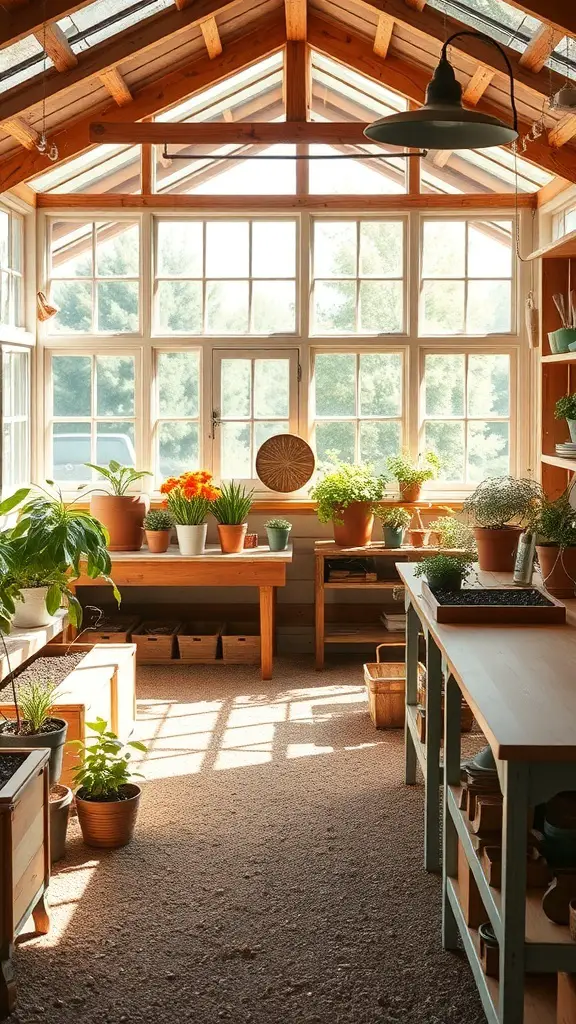
Natural lighting can transform your potting shed into a cheerful workspace. Large windows, like those shown in the image, allow sunlight to flood the room. This not only brightens the space but also creates a warm atmosphere for your plants.
Consider positioning your work tables near the windows. This way, you can enjoy the view while tending to your plants. The sunlight helps plants thrive, making it a win-win for both you and your greenery.
Using light-colored surfaces can enhance the effect of natural light. Reflective surfaces can bounce light around, making the space feel even more open. A well-lit potting shed can inspire creativity and make gardening tasks more enjoyable.