Annabelle Hydrangeas can bring gorgeous white blooms to a garden, but finding the right placement can be harder than simply planting them wherever space is available.
Their large flower heads naturally attract attention, while poor spacing or too many surrounding plants can make garden beds feel crowded. Annabelle Hydrangeas look best when their soft blooms have enough space to create a balanced and graceful display.
Once you consider spacing, companion plants, and the surrounding landscape, creating a beautiful arrangement becomes much easier.
In this article, I’ll share 19 Annabelle Hydrangea landscaping ideas to inspire your garden design.
Let’s get started!
Standalone White Hydrangea Bush
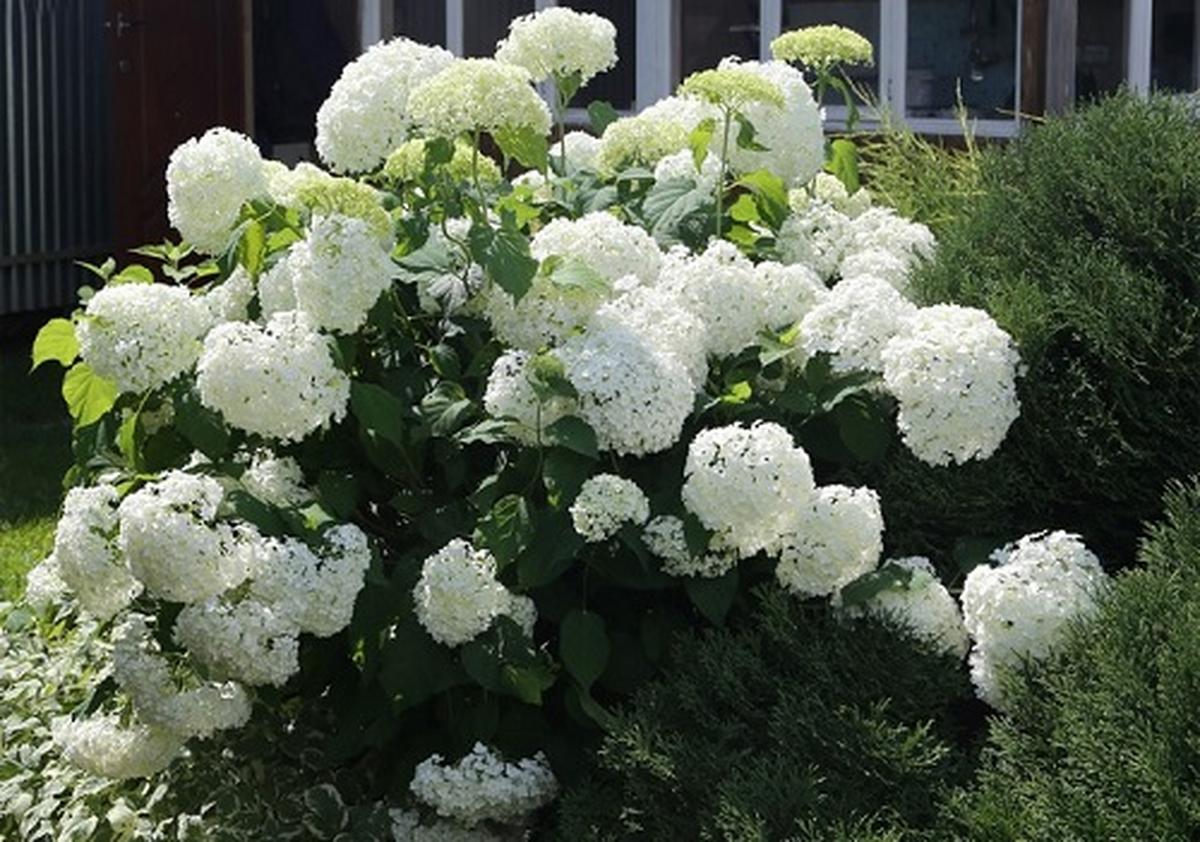
Massive white flower clusters create an eye catching central focal point next to evergreen shrubs. Rich green leaves underneath highlight the bright snowballs, giving your garden structure and full texture.
Positioning this upright plant near a house foundation soften hard exterior walls. Regular morning sunlight helps maintain these oversized blooms while keeping foliage healthy throughout summer.
Brick Wall Flower Bed Border
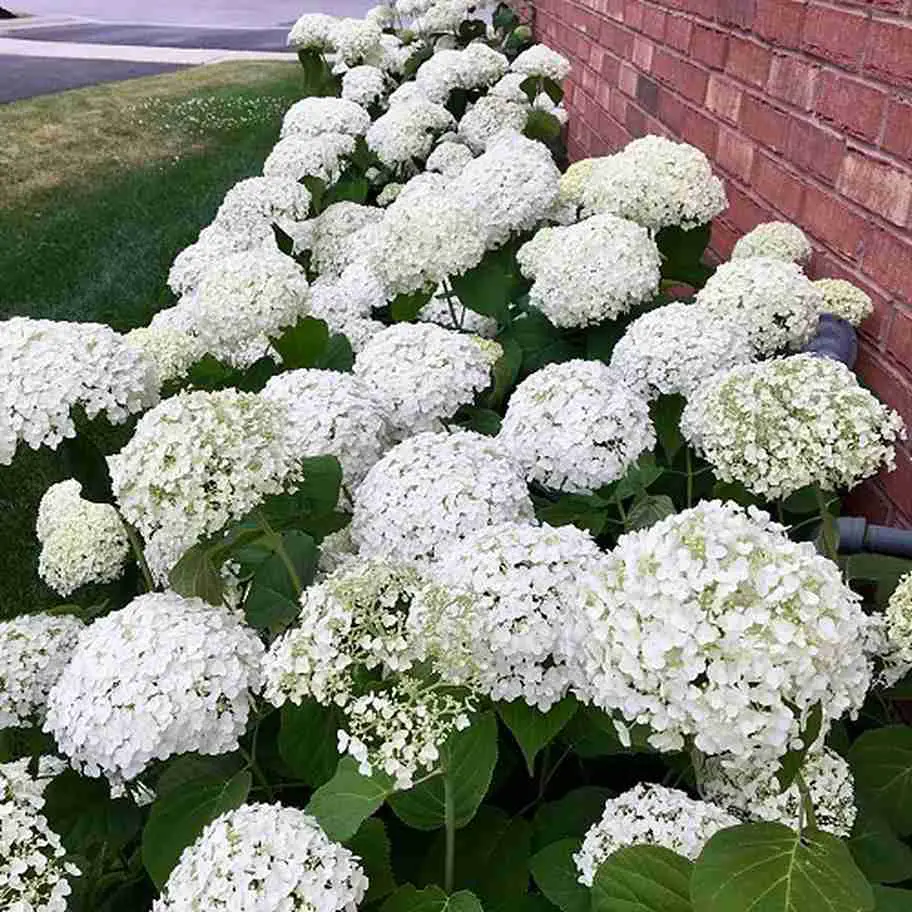
Dense rows of round white flowers line a red brick foundation, filling the garden bed completely. Deep green leaves crowd close together, creating a thick natural barrier that hides bare soil.
Planting hydrangeas directly against brick walls offers solid wind protection during early summer storms. Constant moisture near foundation beds keeps the heavy floral heads plump and fresh.
Gravel Driveway Lining
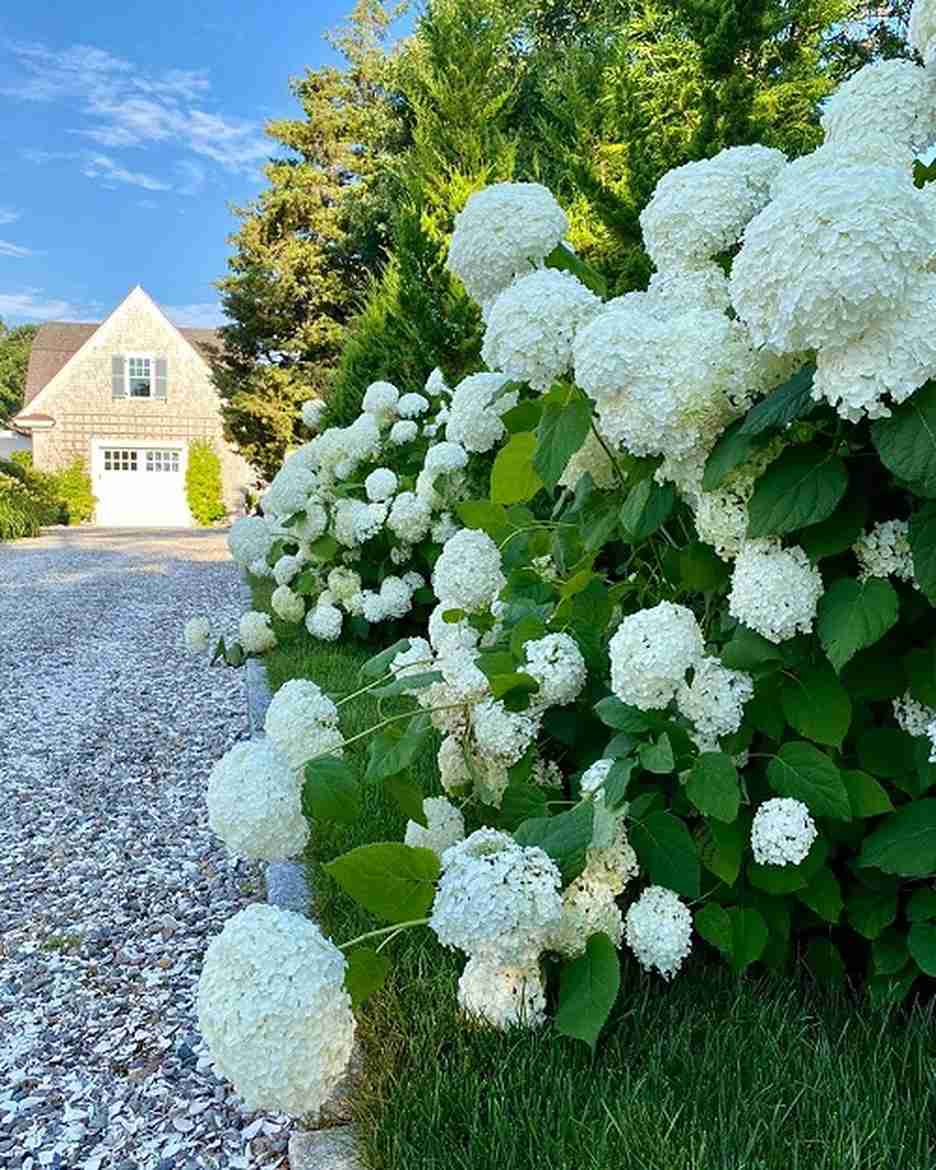
Cascading flower clusters spill over the edge of a crushed stone driveway, softening hard property lines. Tall green trees in the background framed by blue skies give your entryway a classic estate feel.
Lining long driveways with flowering shrubs guides guest vision toward your home main entrance. Spacing them properly allows the flexible stems to bow outward without blocking vehicle access.
Cobblestone Pathway Accent
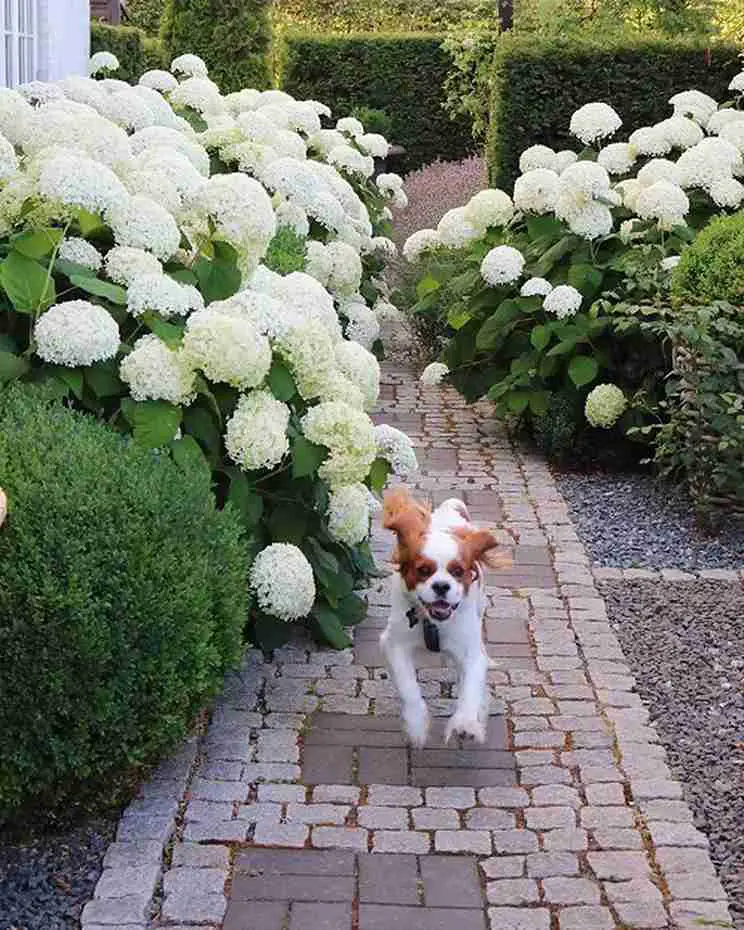
A playful dog runs down a stone path flanked by massive snowball flowers. Neat green topiaries balance out the wild, billowy nature of the heavy flower heads along the walkway.
Creating a scenic path with lush shrubs turns routine yard walks into memorable daily experiences. Firm stone paving keeps soil away from your shoes while plants overflow naturally around the walkway edges.
Stone Urn Garden Feature
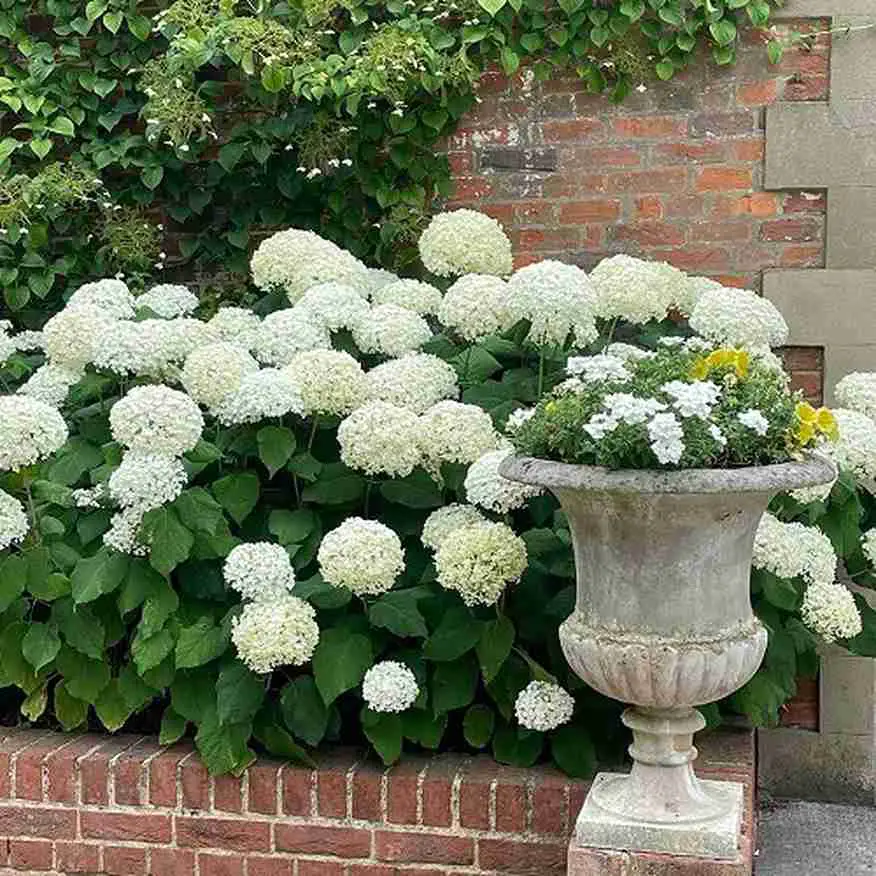
An ornate stone planter sits in front of dense white blooms along a raised brick retaining wall. Climbing green vines on the background wall add vertical depth, turning a simple garden corner into an elegant display.
Pairing stone urns with soft flower heads contrasts hard masonry against delicate natural growth. Raised brick beds keep root systems well drained while bringing flowers closer to eye level.
Potted Topiary Patio Companion
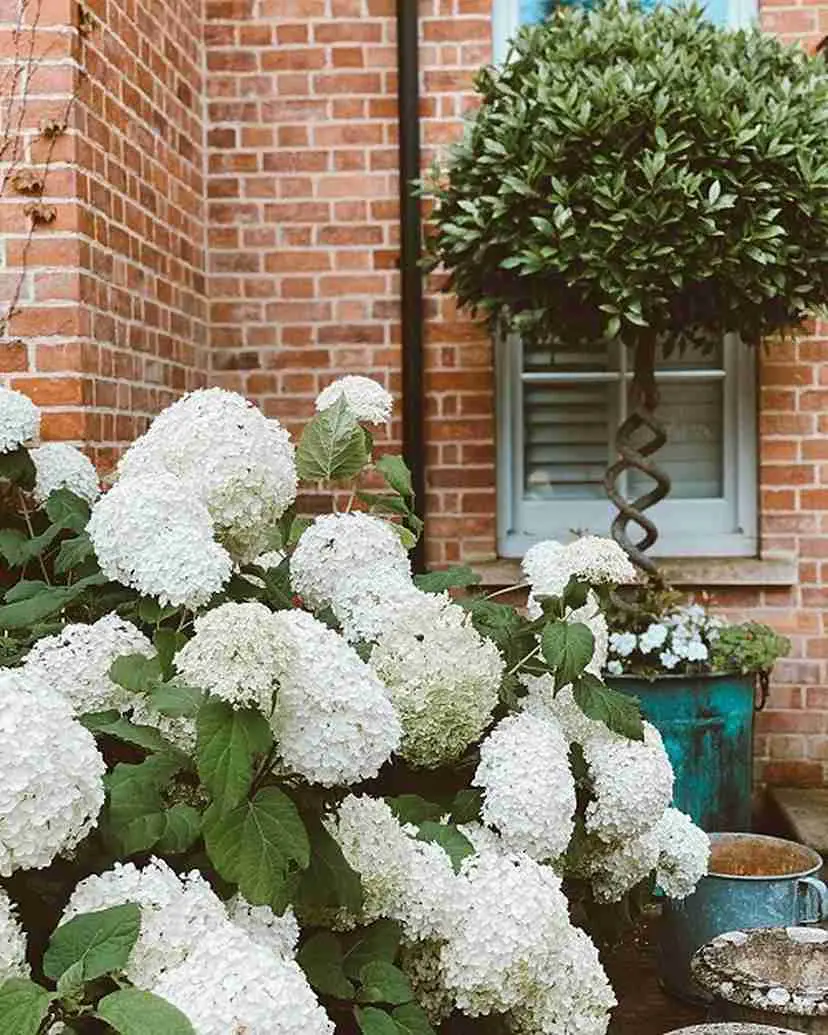
A potted spiral topiary stands next to a massive white hydrangea bush in front of a brick exterior. Potted metal containers add charming character to the patio space while grounding the bright blooms.
Combining structural topiary plants with loose flowering shrubs adds immediate architectural style to home entrances. Placing containers near patio walls shields vulnerable young stems from high afternoon heat.
Modern White Raised Planter
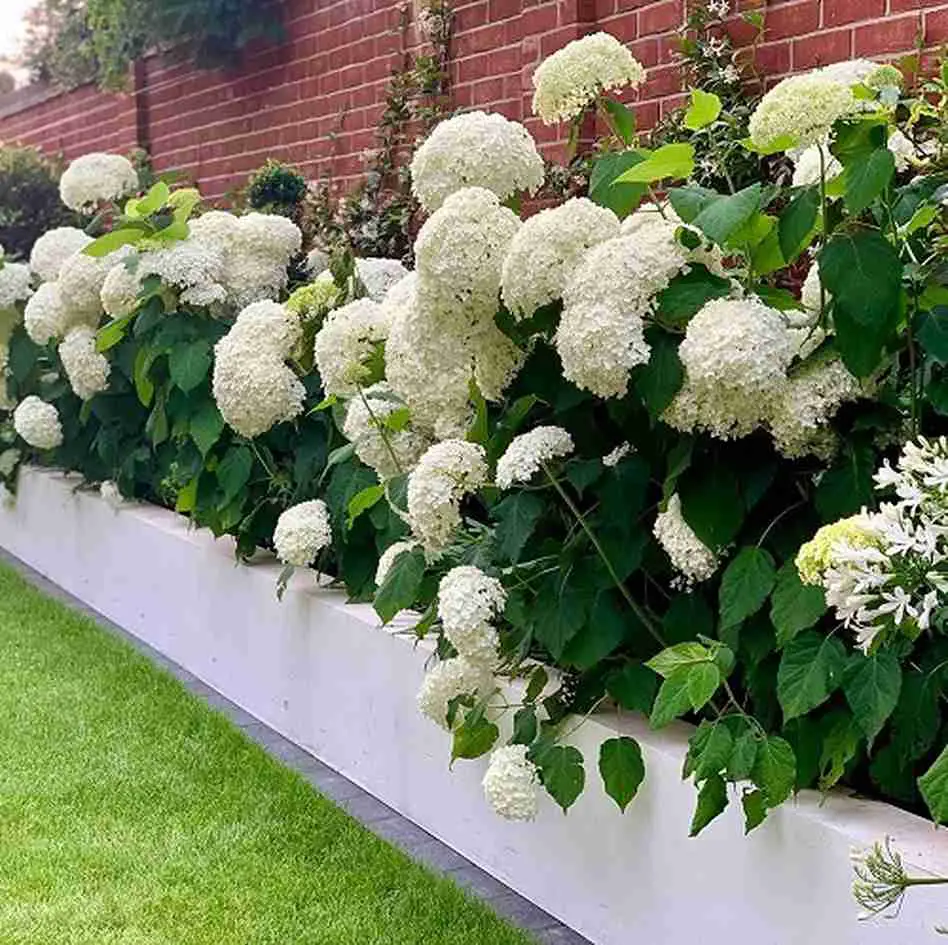
Clean white planter boxes hold a dense hedge of white hydrangeas alongside a neatly manicured green lawn. The crisp white masonry enhances the natural green and white palette of the flowering garden.
Using crisp white planter edges creates a sleek modern look for contemporary yard layouts. Deep raised beds ensure excellent soil quality, giving roots plenty of room to expand each season.
Mulched Foundation Flower Bed
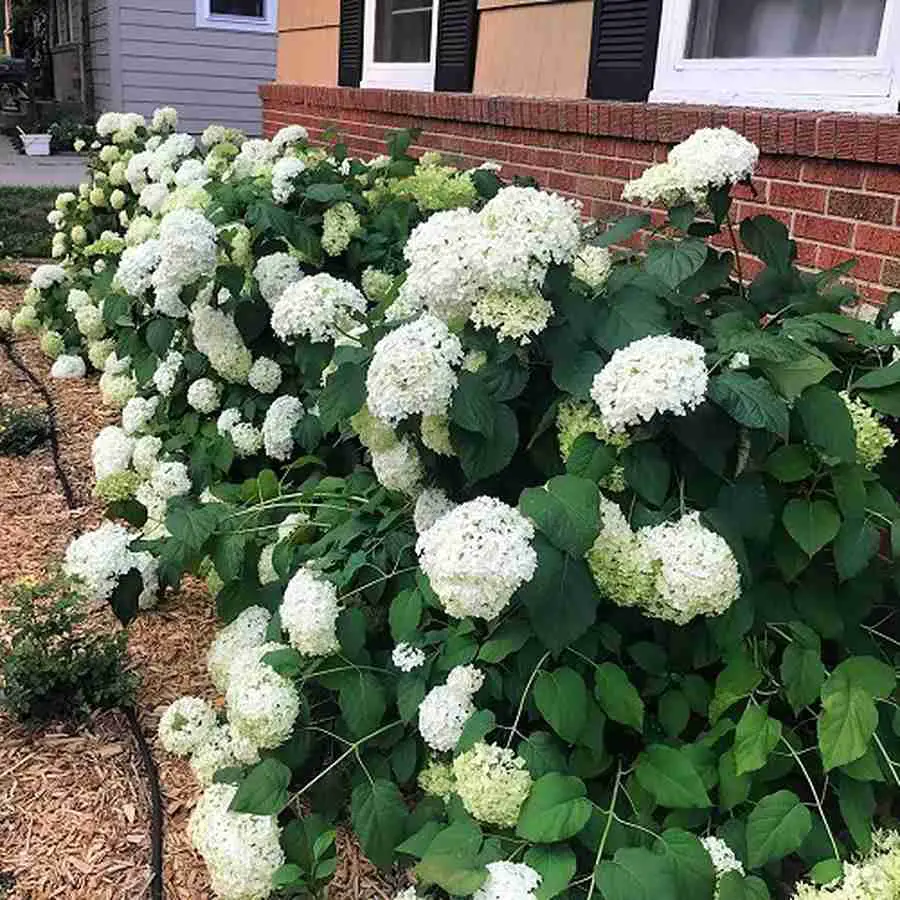
Wood mulch covers the soil beneath a long row of flowering shrubs growing along a brick home exterior. Bright white blooms pop against dark brown wood chips, giving your front yard a clean landscape appearance.
Spreading fresh wood mulch retains essential ground moisture while keeping weed growth under control. This setup protects lower branches from dirt splashes during heavy rain downpours.
Round Lawn Accent Shrub
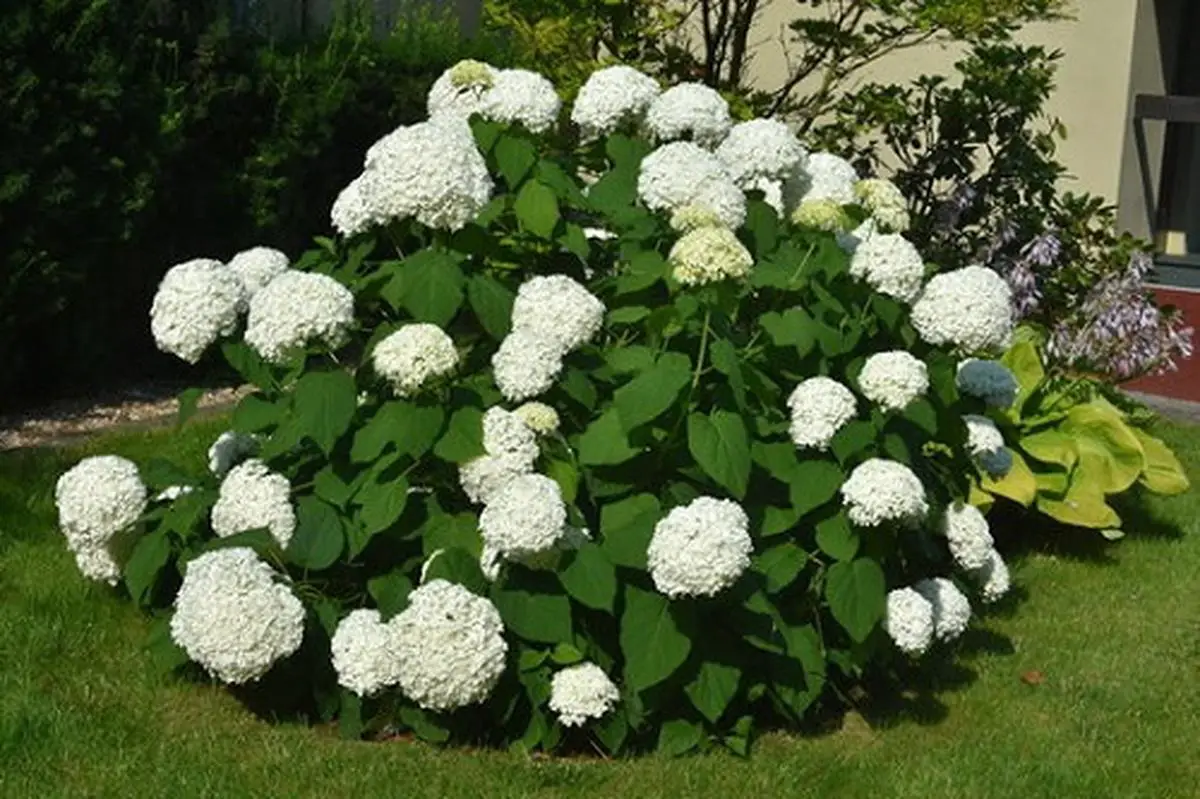
A solitary spherical bush filled with dense white flower heads sits directly on a open green lawn. Lush foliage forms a neat mound, creating a balanced focal point in the middle of your turf space.
Placing isolated flowering mounds on clear grass lets the bush expand naturally in all directions. Trim nearby grass edges regularly to keep the surrounding lawn crisp and tidy.
Mixed Shrub Border with Ornamental Grass
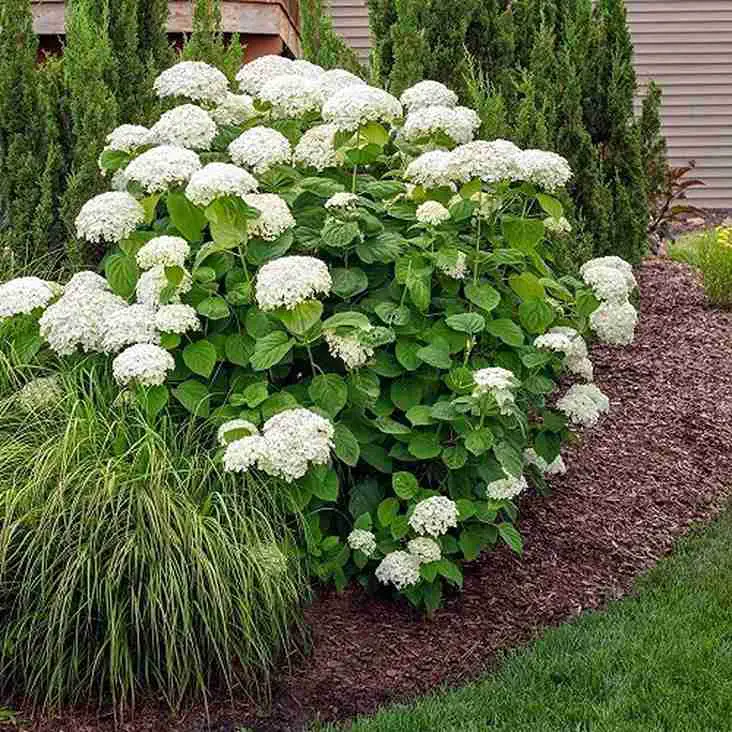
Feathery ornamental grass grows alongside a full white hydrangea bush near tall evergreen trees. Dark brown mulch defines the curved bed line, separating the plants from the manicured green lawn.
Combining ornamental grasses with broadleaf flowering shrubs introduces varied movement and texture to garden beds. Evergreen backdrops ensure year round green color even after summer blooms fade.
Stone Cottage Window Display

Massive flower clusters reach up toward traditional paned windows on a golden stone cottage front. White petals contrast beautifully against warm rustic masonry, creating classic curb appeal along the sidewalk.
Planting near cottage windows frames your home exterior views with soft natural blooms throughout summer. Leaving ample space from street walkways prevents heavy flower heads from drooping onto public footpaths.
Woodland Edge Shrub

Shaded garden corners come alive with a dense white flowering bush tucked against tall evergreen hedges. Overhanging tree foliage casts soft light across the white floral domes, creating a calm natural feel.
Utilizing partial shade areas allows white blooms to stay bright longer without scorching from intense sun exposure. Dark evergreen backgrounds make bright flower heads visually pop in shaded yard corners.
Conclusion
Annabelle Hydrangeas can add soft color, texture, and classic garden charm to many areas around the home. Their large white blooms work beautifully in borders, foundation beds, cottage gardens, and layered planting schemes.
Consider sunlight, moisture, mature size, and nearby plants when deciding where to place them. Combining Annabelle Hydrangeas with complementary shrubs, perennials, and foliage plants can create a balanced landscape while allowing their distinctive flowers to remain the main attraction.
Frequently Asked Questions
Where should I plant Annabelle Hydrangeas in landscaping?
Annabelle Hydrangeas can work well in garden borders, foundation beds, woodland edges, cottage gardens, and areas beside pathways. Choose a location with enough space for the shrubs to mature.
How big do Annabelle Hydrangeas grow?
Annabelle Hydrangeas commonly reach around 3 to 5 feet tall and wide. Growing conditions and pruning can influence their final size.
What plants look good with Annabelle Hydrangeas?
Hostas, ferns, coral bells, astilbe, boxwoods, and shade tolerant ornamental grasses can complement their large white flowers. Select companions with similar growing requirements.
Do Annabelle Hydrangeas prefer sun or shade?
They generally grow well in partial shade but can tolerate more sun when they receive adequate moisture. Afternoon shade can be helpful in warmer climates.
Can Annabelle Hydrangeas be planted along a house?
Yes. Their rounded form and white blooms can work beautifully in foundation landscaping. Leave enough room between the plants and building for mature growth and airflow.
How far apart should Annabelle Hydrangeas be planted?
Spacing of roughly 3 to 5 feet often gives individual shrubs room to develop. The exact distance can vary depending on the desired look and growing conditions.