Arborvitae and Hydrangeas can look beautiful together, but combining them without considering height, spacing, and color can leave the landscape feeling crowded.
Tall evergreen Arborvitae provide structure and year round greenery, while Hydrangeas bring large blooms and softer shapes to garden beds. Giving both plants enough room to mature helps create attractive layers without one overwhelming the other.
Once you balance their different heights, textures, and growing needs, this pairing can create a polished landscape around your home.
In this article, I’ll share 17+ Arborvitae and Hydrangea landscaping ideas to inspire your outdoor space.
Let’s get started!
Tall Arborvitae Privacy Hedge with Garden Bench

Tall green arborvitae trees stand in a neat row to create a living screen along a paved stone walkway. potted plants rest beside a wooden bench, providing a quiet seating area nestled in the shade.
Low boxwood hedges frame the path opposite colorful hydrangeas and decorative garden statues. This layout offers structure while adding privacy to your side yard.
Backyard Lawn Border with Stepping Stones and Arborvitae

Stepping stones slice through lush green turf leading toward comfortable patio chairs. Conical arborvitae trees form a dense green backdrop along the property boundary line.
Flowering hydrangeas, low shrubs, and ornamental grasses line mulch beds on both sides. This arrangement creates a clear pathway while framing the open yard space.
Stone Patio Enclosed by Tall Arborvitae and Hydrangeas

Lush arborvitae trees stand shoulder to shoulder behind a spacious white stone patio setup. Modern patio chairs gather around a central table to host outdoor conversations.
Massive white hydrangeas bloom alongside stone steps and terraced house walls. The dense evergreen row guards the seating zone from neighboring views.
Brick Walkway Bordered by Colorful Perennials and Evergreens

Red brick paving leads visitors directly past vibrant flowering garden beds to an outdoor patio. Compact arborvitae trees rise above rounded boxwood shrubs to give the entrance vertical height.
Spiky purple flowers and soft pink blooms crowd the path edge in rich textures. The classic brick path highlights colorful plants next to light siding walls.
Gravel Path Escorted by Cone Arborvitae and Globe Shrubs

Square stone pavers lead straight down a gravel walkway toward a classic stone birdbath centerpiece. Pyramidal arborvitae screen the fence line alongside neat rows of spherical evergreen shrubs.
Dense green foliage hugs the building foundation to create a symmetrical garden aisle. The birdbath focal point draws your eyes straight down the organized gravel corridor.
Outdoor Fireplace Screened by Arborvitae and Grasses

A stacked stone fireplace stands proudly beside an outdoor covered patio area. Green arborvitae trees line up directly behind the stone wall to add height and privacy.
Tall ornamental grass clumps add soft texture right next to a wooden garden arbor. This layout shields your outdoor lounge space from windy conditions and open views.
Curved Flagstone Walkway with Slim Arborvitae and White Tulips

Flagstone pavers curve gracefully past a small tier fountain wrapped in brick edging. Slender emerald arborvitae rise high against a dense privacy wall to add height.
Bright white tulips and low greenery accent the edge of the stone walking path. The gentle curve invites visitors to stroll through the garden at a slow pace.
Gravel Garden Pathway Guided by Boxwood and Arborvitae

Fine gravel covers a long garden trail leading straight toward a dark iron gate entrance. Cone shaped arborvitae stand tall behind neatly trimmed boxwood hedges along the border.
Shade lovers like hostas and ferns nestle close to stone home walls under mature shade trees. The tidy hedgerow guides visitors directly down the quiet backyard corridor.
Bright Patio Dining Space Framed by Tall Arborvitae
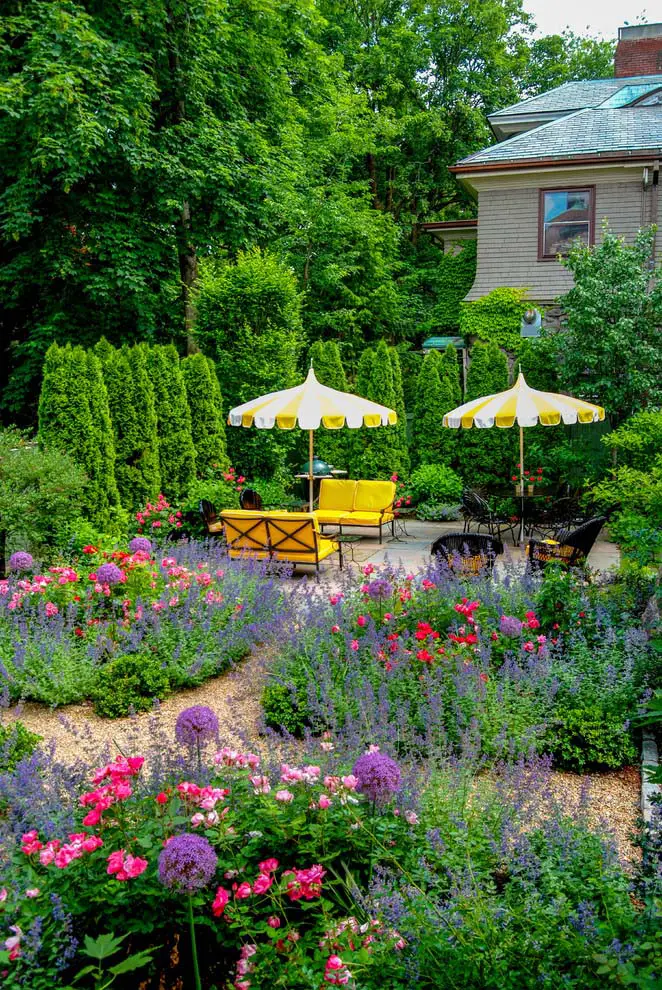
Yellow umbrellas brighten an expansive outdoor stone patio fitted with matching lounge seating. A tall arborvitae wall encircles the entire seating area to create a secluded outdoor room.
Purple allium globes and catmint flowers spill over gravel garden paths in front. Bright furniture choices make the green plant wall pop with summer energy.
Paver Driveway Bordered by Terraced Hedges and Arborvitae

Cobblestone pavers sweep past layered garden terraces filled with manicured green shrubs. Potted conical arborvitae rest along stone steps leading straight to the front porch.
Red Japanese maples and low groundcovers offer rich texture contrasts against green foliage borders. This multi tier design elevates front yard curb appeal effortlessly.
Rock Rimmed Garden Bed Featuring Arborvitae and Lawn

Natural fieldstones outline a curved garden bed tucked against a backyard wooden fence line. Four arborvitae shrubs stand together in a row behind leafy hosta plants.
Green grass stretches across the yard to meet dark mulch planting zones. Simple stone borders keep mulch neatly contained away from your main lawn area.
Conclusion
Arborvitae and Hydrangeas create a beautiful combination of evergreen structure and colorful seasonal blooms. They can work together around foundations, along property lines, beside entrances, or in layered garden beds.
Plan around the mature size, sunlight, moisture needs, and spacing requirements of each variety before planting. Using Arborvitae as a taller backdrop and Hydrangeas toward the front can create natural depth while allowing both plants to stand out throughout the landscape.
Frequently Asked Questions
Do Arborvitae and Hydrangeas look good together?
Yes. Arborvitae provide upright evergreen foliage, while Hydrangeas add rounded forms and large flowers. Their contrasting shapes and textures can create an attractive layered garden.
Can Hydrangeas grow in front of Arborvitae?
Yes. Hydrangeas can be planted in front of Arborvitae when both plants have enough space to reach their mature sizes. The taller evergreens can create a green backdrop behind the flowering shrubs.
How far apart should Arborvitae and Hydrangeas be planted?
Spacing depends on the specific varieties you choose. Check their expected mature widths and leave enough room to reduce crowding and maintain good airflow.
Which Hydrangeas look good with Arborvitae?
Panicle, smooth, and bigleaf Hydrangeas can all complement Arborvitae in suitable growing conditions. Limelight and Annabelle Hydrangeas are popular options for creating contrasting blooms against evergreen foliage.
Where can I use Arborvitae and Hydrangeas in landscaping?
This combination can work well in foundation beds, privacy borders, property lines, entrance gardens, and layered backyard landscapes.
What should I consider before planting them together?
Consider sunlight, soil drainage, moisture, mature plant size, and local growing conditions. Select varieties whose needs are compatible and provide enough room for both plants to develop.