Hydrangea companion plants can help turn a simple hydrangea bed into a layered, colorful, and beautifully balanced garden.
Hydrangeas already make a gorgeous statement on their own…
… but pairing them with the right plants can make the entire landscape feel fuller and more intentional!
That’s why choosing hydrangea companion plants is such an important part of planning a beautiful garden bed.
I love how hostas, ferns, ornamental grasses, flowering perennials, and evergreen shrubs can complement those big hydrangea blooms while adding different textures, heights, and seasonal interest.
Whether you’re planting around an established shrub or designing a completely new garden bed, these combinations offer plenty of inspiration.
They’re beautiful, versatile, and perfect for creating a hydrangea garden that looks thoughtfully designed from spring through fall. 🌿💐
(🌸 Looking for more hydrangea inspiration? Explore our Hydrangea Landscaping, Limelight Hydrangea Landscaping, Annabelle Hydrangea Landscaping, Arborvitae and Hydrangea Landscaping, and How to Make Hydrangeas Blue Using Vinegar.)
Astilbe

Scientific name: Astilbe
Zones: 3 to 9 (depending on the variety)
Exposure: Shade to sun (depending on the variety)
Height: 18″ to 48″ (depending on the variety)
Width: 18″
Bloom Time: Early to mid summer
Bloom color: Pink, red, white
Astilbe features feathery, plume like blooms that offer a striking contrast to broad hydrangea flower heads. The soft plumes add rich texture, vibrant color, and depth to shaded garden spots.
Tall pink spires rise gracefully next to soft blue hydrangeas and broad foliage in the photo. Planting these two options side by side creates a beautifully layered look in damp garden beds.
Hosta

Scientific name: Hosta
Zones: 3 to 9
Exposure: Partial shade to full shade
Height: 6″ to 36″ (depending on the variety)
Width: 12″ to 48″
Bloom Time: Mid to late summer
Bloom color: Lavender, white
Lush foliage surrounds the garden path to create a clean border beneath big leaf flower clusters. These broad leaves trap ground moisture and reduce weed growth around heavy stems.
Striking variegated varieties stretch alongside purple and pink shrubs in this brick pathway scene. Their soft low profile balances taller flowering branches above.
Japanese Forest Grass

Scientific name: Hakonechloa macra
Zones: 5 to 9
Exposure: Partial shade to full shade
Height: 12″ to 24″
Width: 18″ to 24″
Bloom Time: Late summer
Bloom color: Yellow green
Slender cascading blades spill over raised planter edges with effortless grace. Bright arching leaves soften hard wooden structures while adding motion to static garden beds.
Fine striped foliage cradles deep purple mophead blossoms in this wooden planter box. The arching stems create an airy foundation for dense floral heads.
Ferns

Scientific name: Polystichum acrostichoides
Zones: 3 to 8
Exposure: Full shade to partial shade
Height: 18″ to 24″
Width: 18″ to 24″
Bloom Time: Non-flowering
Bloom color: None
Feathery fronds bring woodland charm and intricate patterns to shady garden corners. Dense root systems thrive under similar soil moisture conditions without crowding neighboring plants.
Vibrant chartreuse fronds anchor the lower border next to variegated hostas and pale blue flower masses. Their delicate structure adds lush greenery below upright spires.
Coral Bells

Scientific name: Heuchera
Zones: 4 to 9
Exposure: Full sun to full shade
Height: 8″ to 18″
Width: 12″ to 18″
Bloom Time: Late spring to early summer
Bloom color: Pink, white, red
Deep purple foliage delivers striking year round color around the base of wooden planters. Compact mounds stay low to the ground and fill empty spots in partially shaded borders.
Rich plum leaves form a dramatic carpet alongside potted annuals and tall green stems in this mulch bed. Tiny floral spikes drift upward to add subtle texture.
Marguerite Daisy

Scientific name: Argyranthemum frutescens
Zones: 10 to 11 (grown as annuals elsewhere)
Exposure: Full sun to partial shade
Height: 18″ to 36″
Width: 18″ to 36″
Bloom Time: Spring to autumn
Bloom color: Yellow, white, pink
Classic daisy blossoms burst with bright energy beside structural stone walls. Constant blooms attract pollinators while brightening up shaded garden corners.
Sunny yellow centers and creamy petals frame a soft pink hydrangea along a paved garden walk. Compact green leaves create a tidy backdrop for delicate petals.
Delphinium

Scientific name: Delphinium
Zones: 3 to 7
Exposure: Full sun to partial shade
Height: 36″ to 72″
Width: 12″ to 24″
Bloom Time: Early to mid summer
Bloom color: Blue, purple, white, pink
Stately flower towers extend vertical lines high above lower garden borders. Vibrant cobalt petals mirror blue flower heads to create rich visual harmony.
Deep blue spires reach toward a wooden garden gate alongside bright white daisies. Their impressive height adds strong architectural presence behind rounded bushes.
Daylily

Scientific name: Hemerocallis
Zones: 3 to 9
Exposure: Full sun to partial shade
Height: 12″ to 36″
Width: 12″ to 24″
Bloom Time: Early summer to autumn
Bloom color: Red, orange, yellow, pink, purple
Grassy foliage mounds offer resilient ground coverage underneath airy panicle branches. Trumpet shaped flowers pop against dense leafy backgrounds for midsummer interest.
Warm crimson petals contrast sharply with lacecap florets and creamy white panicles in this mixed bed. Strappy green leaves bring movement to the lower planting layer.
Stonecrop Sedum

Scientific name: Hylotelephium spectabile
Zones: 3 to 9
Exposure: Full sun to light shade
Height: 18″ to 24″
Width: 18″ to 24″
Bloom Time: Late summer to autumn
Bloom color: Pink, magenta, red
Fleshy succulent leaves hold up remarkably well as summer transitions into cool autumn weather. Flat flower clusters provide sturdy landing pads for bees and butterflies.
Rose pink blooms blanket the foreground beneath large conical panicles in late afternoon light. Thick stems form a neat border along lush garden edges.
Coneflower

Scientific name: Echinacea purpurea
Zones: 3 to 9
Exposure: Full sun to partial shade
Height: 24″ to 48″
Width: 18″ to 24″
Bloom Time: Mid summer to autumn
Bloom color: Pink, magenta, purple, yellow, white
Daisy like petals fan out from raised central cones to create strong focal points in sunny borders. Hardy stems support long lasting blooms that tolerate hot afternoon conditions.
Bright magenta rays pair with golden marigolds beneath creamy white panicle blooms in this vibrant layout. Dark green leaves carpet the soil to keep roots cool.
Black Eyed Susan

Scientific name: Rudbeckia fulgida
Zones: 3 to 9
Exposure: Full sun to partial shade
Height: 24″ to 36″
Width: 12″ to 24″
Bloom Time: Summer to early autumn
Bloom color: Yellow, orange
Golden daisy blossoms surround dark brown centers to supply bright summer color. High heat tolerance makes them reliable choices for sunny garden borders.
Golden petals form a dense sea beneath soft cream panicles in this open bed. Slender stems hold every bloom upright alongside lush green leaves.
Clematis

Scientific name: Clematis
Zones: 4 to 9
Exposure: Full sun to partial shade
Height: 6′ to 12′
Width: 3′ to 6′
Bloom Time: Late spring to early autumn
Bloom color: Purple, lavender, pink, white, blue
Slender climbing vines weave naturally through sturdy shrub branches. Large starry petals bring extra color to upper leafy growth.
Soft lavender blooms trail across dark green leaves and wooden supports in this close view. Delicate central stamens add detailed beauty to every flower head.
Roses

Scientific name: Rosa
Zones: 4 to 11
Exposure: Full sun
Height: 2′ to 6′
Width: 2′ to 4′
Bloom Time: Late spring to autumn
Bloom color: Pink, red, white, yellow, orange
Classic cupped blossoms bring timeless garden romance alongside big leaf mopheads. Constant blooming cycles supply rich fragrance through warm summer months.
Soft pink petals pop against a backdrop of deep blue flower clusters. Lush green leaves carpet the soil beneath vibrant garden stems.
Boxwood

Scientific name: Buxus
Zones: 5 to 9
Exposure: Full sun to full shade
Height: 2′ to 8′
Width: 2′ to 8′
Bloom Time: Spring (inconspicuous)
Bloom color: Greenish yellow
Tidy evergreen hedges offer clean lines and steady structure all year. Dense small leaves frame floppy flower masses with formal elegance.
Crisp green borders frame mass plantings of creamy white mopheads in this formal garden bed. Sculpted foliage maintains order beneath heavy summer blooms.
Japanese Maple

Scientific name: Acer palmatum
Zones: 5 to 8
Exposure: Partial shade to full sun
Height: 6′ to 25′
Width: 6′ to 20′
Bloom Time: Spring (inconspicuous)
Bloom color: Reddish purple
Feathery cutleaf foliage delivers rich burgundy hues throughout the growing season. Fine branch structures create architectural backdrop contrast against rounded shrub forms.
Lacy dark red leaves sweep gracefully past bright blue mopheads in this shaded spot. Delicate leaf textures enhance the surrounding green growth.
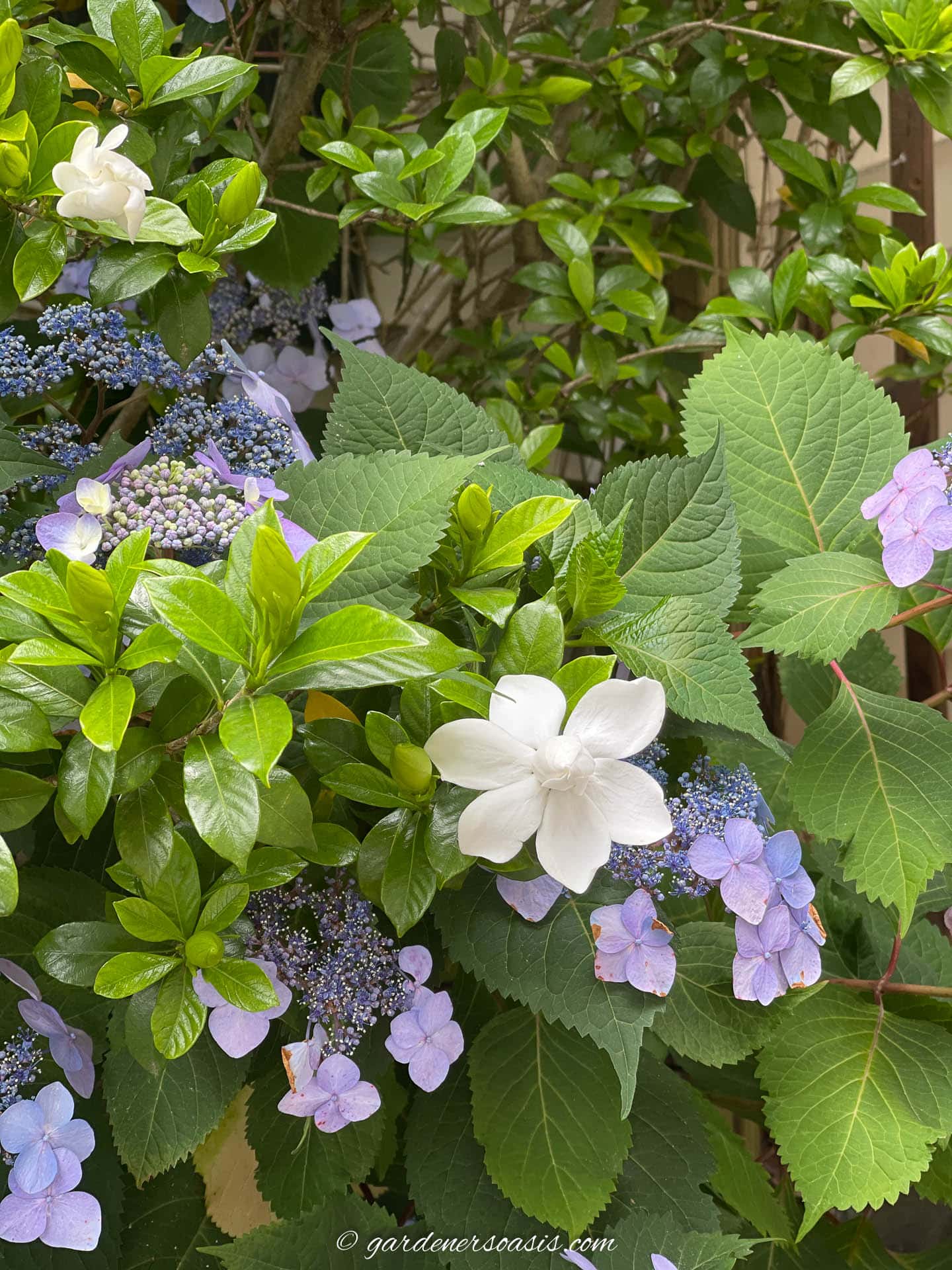
Gardenia
Scientific name: Gardenia jasminoides
Zones: 8 to 11
Exposure: Partial shade to full sun
Height: 3′ to 8′
Width: 3′ to 6′
Bloom Time: Late spring to summer
Bloom color: Creamy white
Glossy dark leaves stay green through every season while supporting fragrant blooms. Intensely sweet scent pairs with delicate lacecap textures.
Crisp white petals stand out sharply against rich lacecap florets in this close shot. Thick shiny leaves provide a polished framework for both plants.
Rose of Sharon

Scientific name: Hibiscus syriacus
Zones: 5 to 9
Exposure: Full sun to partial shade
Height: 8′ to 12′
Width: 6′ to 10′
Bloom Time: Mid summer to autumn
Bloom color: Purple, blue, pink, red, white
Upright woody branches elevate tropical style blossoms high above lower shrub borders. Continuous late summer blooming fills gaps when other garden plants fade.
Soft purple hibiscus flowers sway on tall branches directly above rich blue mopheads. Natural stone paths reflect sunlight around the base of both shrubs.
Crape Myrtle

Scientific name: Lagerstroemia
Zones: 6 to 10
Exposure: Full sun
Height: 6′ to 30′
Width: 6′ to 15′
Bloom Time: Mid summer to autumn
Bloom color: Pink, red, purple, white
Vibrant ruffled flower clusters bloom high above mixed garden borders. Multi-stemmed branches add magnificent height while filling sunny backdrops with color.
Deep magenta clusters cascade downward over creamy panicles and soft purple blossoms. Dense green foliage creates a rich background throughout the scene.
Arborvitae

Scientific name: Thuja occidentalis
Zones: 3 to 7
Exposure: Full sun to partial shade
Height: 10′ to 30′
Width: 3′ to 10′
Bloom Time: Non-flowering
Bloom color: None
Feathery evergreen sprays supply reliable structure alongside gravel garden paths. Golden and deep green hues offer year round visual backdrop stability.
Golden fan-like fronds capture backlighting beside a decorative iron archway. Soft needle textures contrast cleanly with white flowering branches.
Impatiens

Scientific name: Impatiens walleriana
Zones: 10 to 11 (grown as annuals elsewhere)
Exposure: Partial shade to full shade
Height: 6″ to 30″
Width: 12″ to 24″
Bloom Time: Spring through autumn
Bloom color: Pink, red, white, purple, orange
Bright low growing blooms carpet garden edges beneath clipped green hedges. Continuous flowers bring vibrant color to shaded ground level spots.
Vivid pink petals form a dense ground border along a green lawn edge. White snowball flower heads rise directly behind low hedge plantings.
Climbing White Rose

Scientific name: Rosa
Zones: 5 to 9
Exposure: Full sun
Height: 8′ to 12′
Width: 3′ to 6′
Bloom Time: Late spring to autumn
Bloom color: White
Delicate white blossoms scramble gracefully along classic garden fencing. Flexible stems weave through neighboring foliage to enhance border edges.
Creamy white blooms rise subtly above a dense row of blue mopheads along a white picket fence. Green leaves drape naturally over vertical wooden pickets.
FAQ
What plants grow well with hydrangeas?
Hostas, ferns, astilbe, heuchera, ornamental grasses, and certain evergreen shrubs can pair beautifully with hydrangeas. The best choices depend on the hydrangea variety and the site’s light, soil, moisture, and climate conditions.
What can I plant in front of hydrangeas?
Low-growing perennials and foliage plants can create attractive layers in front of hydrangeas. Hostas, heuchera, compact ornamental grasses, and shade-tolerant ground covers are popular options when their growing requirements match the location.
Can you plant hydrangeas with arborvitae?
Yes. Arborvitae can provide an evergreen backdrop that contrasts beautifully with hydrangea flowers. Give both plants enough room to reach their mature size without competing heavily for light and moisture.
What companion plants look good with Limelight hydrangeas?
Ornamental grasses, hostas, catmint, salvia, and evergreen shrubs can complement Limelight hydrangeas. Choose companions according to the amount of sunlight and moisture available in your planting area.
How do I create a layered hydrangea garden?
Place taller shrubs or evergreens toward the back, use hydrangeas through the middle, and add shorter perennials or ground covers toward the front. Repeating plants throughout the bed can help create a more cohesive landscape.
Conclusion
Hydrangea companion plants can bring extra texture, color, and depth to your garden while allowing those beautiful hydrangea blooms to remain the star of the landscape. Combining shrubs, perennials, grasses, and foliage plants can create a layered garden that stays interesting beyond the main flowering season.
Choose companion plants that suit the same growing conditions as your hydrangeas, then experiment with different heights, leaf shapes, and bloom colors. With thoughtful combinations, even a simple hydrangea bed can become a polished and inviting garden feature.
For more inspiration, explore our Hydrangea Landscaping, Limelight Hydrangea Landscaping, Annabelle Hydrangea Landscaping, Arborvitae and Hydrangea Landscaping, and How to Make Hydrangeas Blue Using Vinegar.