A productive garden does not have to look like rows of vegetables tucked away in a separate corner of the backyard.
Edible plants can become part of the landscape itself, bringing color, texture, fragrance, and fresh food into spaces normally filled with ornamental plants. The challenge is arranging everything so the yard still feels intentional rather than becoming an untidy vegetable patch.
Combining attractive edible plants with thoughtful spacing and structure can create a garden that looks beautiful throughout the growing season.
In this article, I’ll share 21 edible landscaping ideas for creating a yard that’s both attractive and productive.
Let’s take a look!
Raised Woven Garden Beds and Potted Herbs
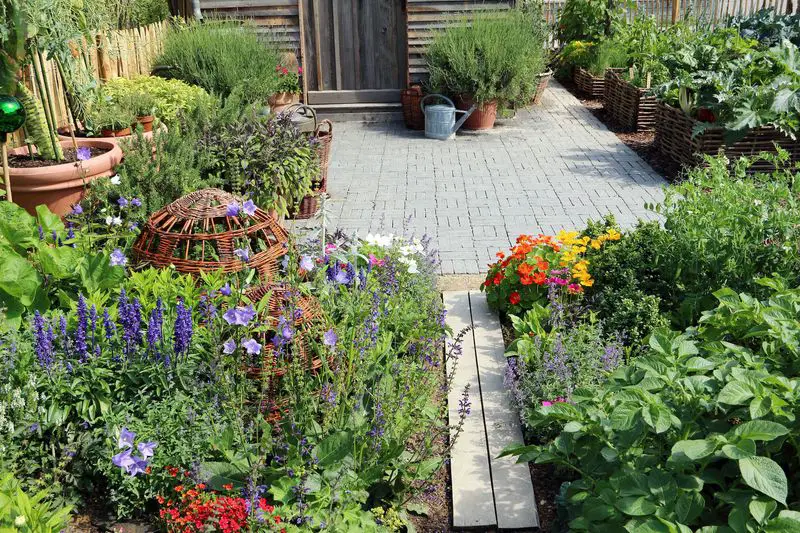
Woven wicker baskets frame neat planting zones along a stone pathway. Purple salvia blooms alongside vibrant orange nasturtiums and lush green crops. Terracotta pots near the wooden shed hold fragrant herbs like rosemary.
Paved stones provide easy access for harvesting fresh produce. Natural materials create structured borders while blending into the outdoor space. Fresh foliage covers the ground with rich colors and textures.
Spiral Stone Herb Garden
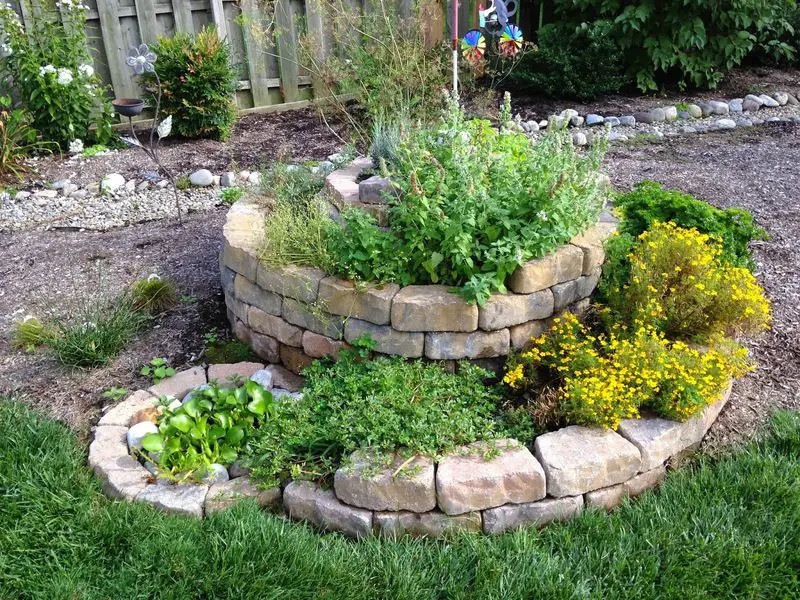
Stacked stone blocks form an ascending spiral structure in the center of the yard. Green herbs thrive at various levels alongside bright yellow marigolds near the base. Smooth gravel pathways surround this space-saving focal point.
Lush grass borders the outer ring of stacked masonry. A small water feature nestles into the bottom tier. Building upward maximizes soil depth while optimizing sun exposure for mixed plantings.
Gravel Patio with Flower Borders and Water Feature
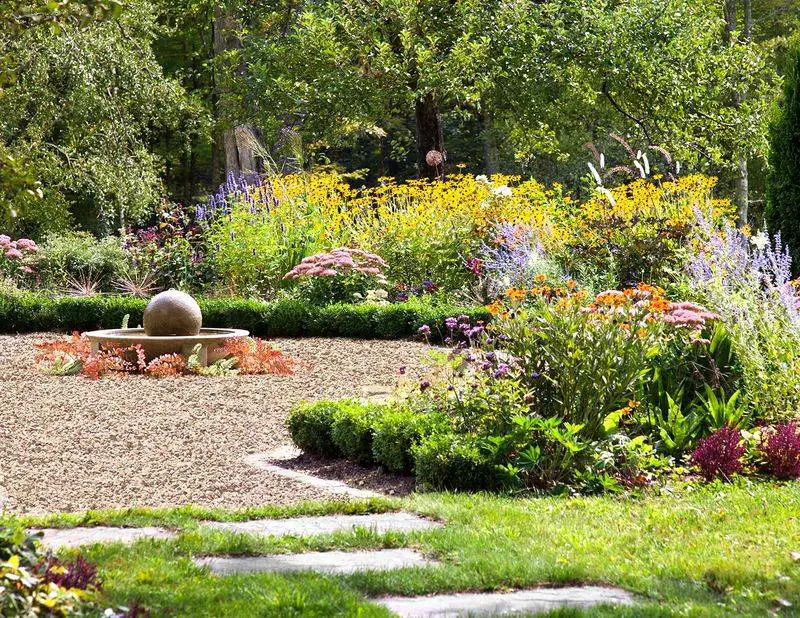
A central stone fountain sits gracefully upon a neat pea gravel patio. Surrounding flower beds display tall yellow black-eyed Susans and soft purple blossoms. Low-growing green hedges form a crisp border around the planted zones.
Stepping stones cut through the lush green lawn toward the seating layout. Lush trees overhead cast soft dappled shadows across the decorative yard. Bright colors mix seamlessly to create an inviting outdoor retreat.
Fresh Ripening Blueberries on the Vine
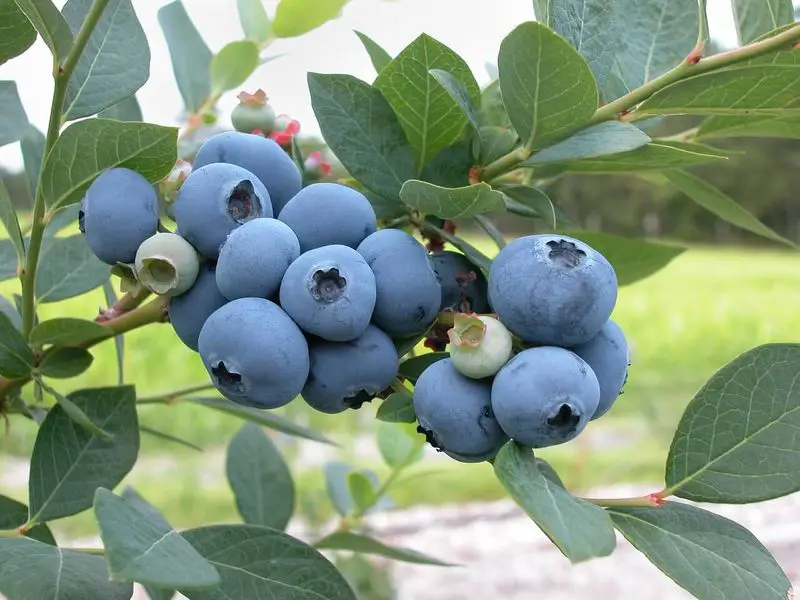
Clusters of plump blueberries hang heavily from delicate woody stems. Soft green leaves surround the fruit, showing shades ranging from pale green to deep violet. Natural sunlight highlights the smooth finish of each developing berry.
Growing fruit bushes directly in garden beds adds edible charm to ornamental hedges. Native soil conditions help these berry clusters mature evenly. Fresh picking provides home growers with quick harvests during warmer months.
Arched Garden Trellis Covered in Vines
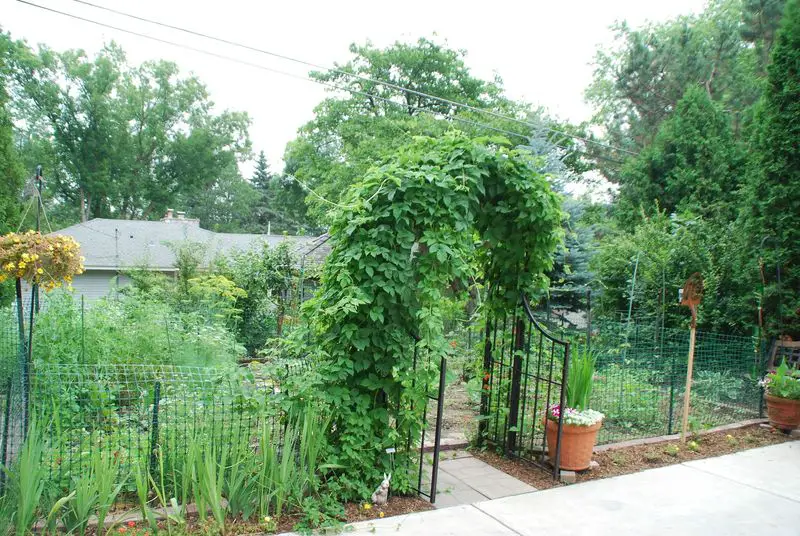
Green leafy vines climb high over an arched black metal gateway. Fenced garden beds display flourishing leafy plants and herbs inside the protected zone. Potted flowers rest near the brick base alongside a decorative garden figure.
Tall trees frame the background behind this charming entrance design. Mulched borders run smoothly parallel to the concrete walkway. Vertical trellising creates an elegant walkway while maximizing small growing spaces.
Fresh Walnuts Splitting on the Branch
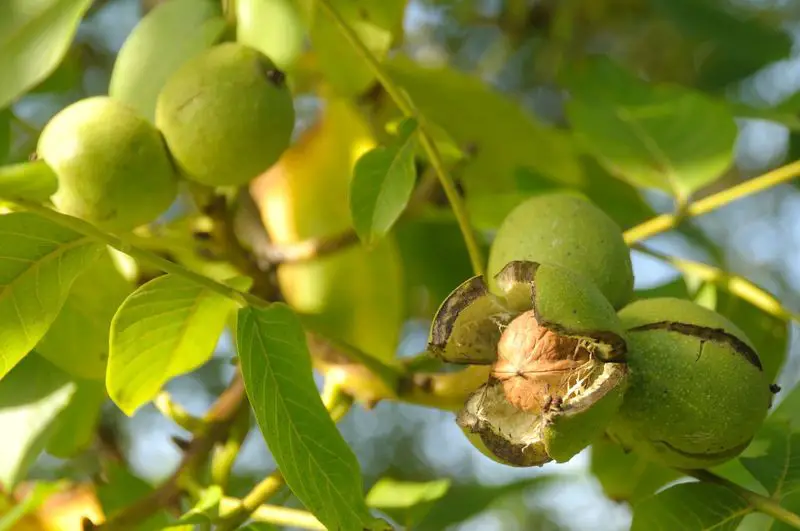
Green husks open naturally to reveal hard tan walnut shells inside. Bright leaves catch light along the sturdy tree branch. Clusters of fresh nuts hang together against a softly blurred background.
Planting nut trees adds shade and food production to large yards. Ripening fruit signals harvest time as husks split open during late season. Homeowners enjoy valuable crop yields year after year from established trees.
Purslane Spreading Ground Cover
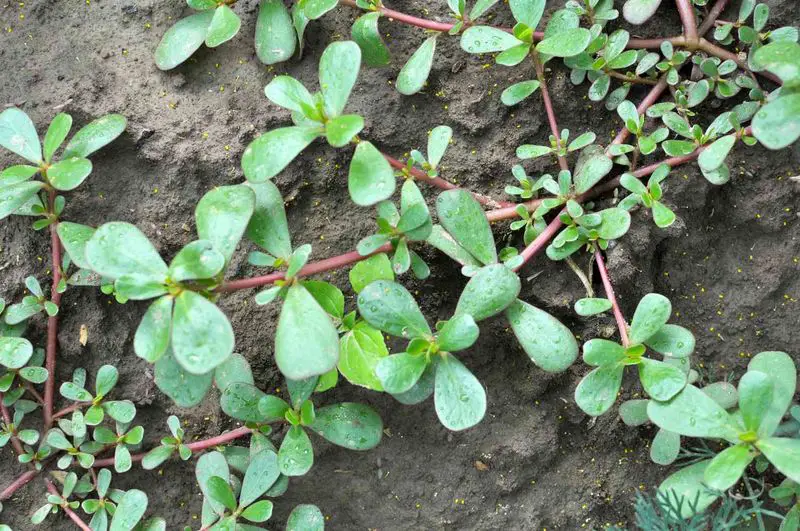
Succulent green leaves spread wide over dark damp soil. Reddish stems anchor the creeping plant firmly across the open ground. Tiny yellow specks scatter gently around the fleshy foliage.
Low-growing plants carpet empty garden spaces with thick edible greenery. Smooth leaves retain moisture efficiently during hot summer spells. Using leafy ground covers suppresses weeds while providing fresh greens for cooking.
Blooming Purple Chive Flowers
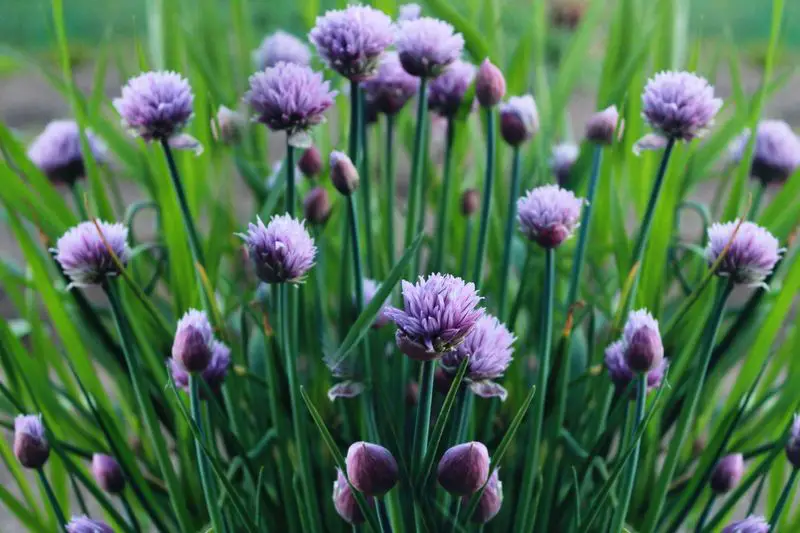
Slender green stems support dense round heads of light purple blossoms. Delicate petals bloom tightly together above fresh needle-like foliage. Soft sunlight illuminates the upright green shoots across the field.
Herbaceous borders offer striking color contrast next to standard landscape foliage. Vibrant flowers draw beneficial pollinators straight to nearby vegetable beds. Harvesting both the stems and edible blooms enhances summer dishes.
Potted Citrus Tree and Herb Border
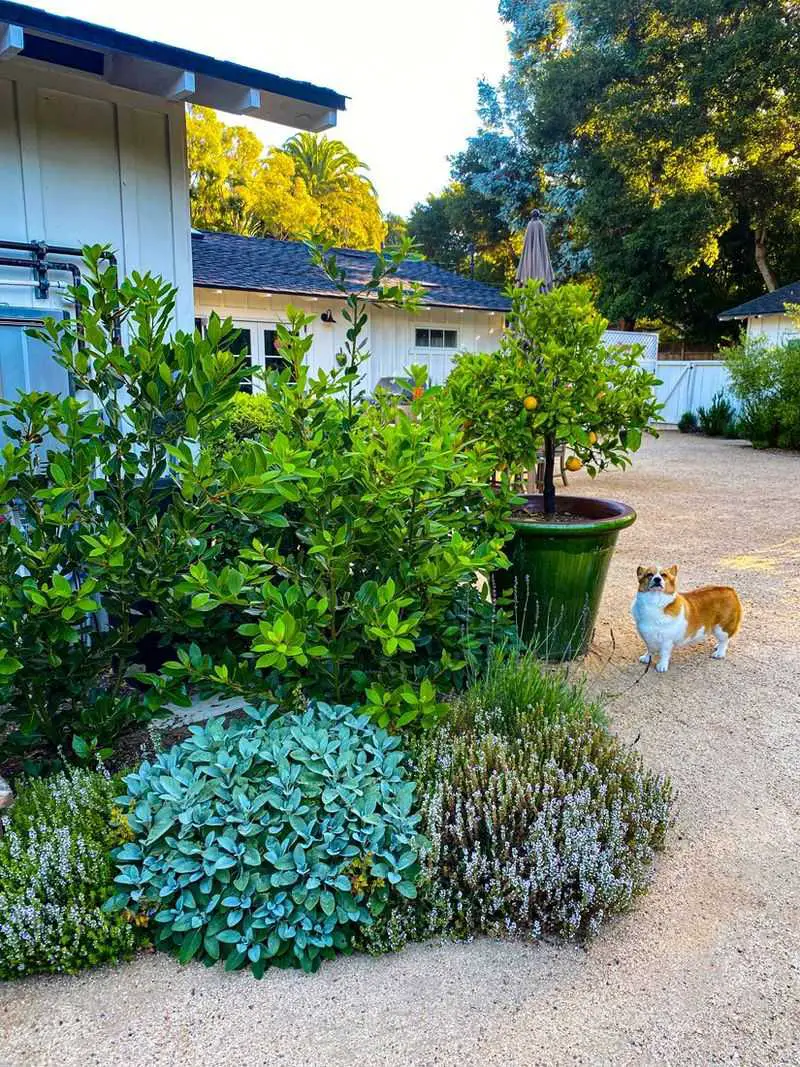
A potted lemon tree bearing bright fruit sits beside a gravel pathway. A corgi stands nearby along the neat gravel yard near crisp white buildings. Round bushes of sage and flowering thyme form a dense front border.
Tall bay leaf shrubs grow tightly against the house siding. Green containers elevate fruit production on hardscape surfaces. Combining aromatic herbs creates an inviting entry with pleasant scents.
Cranberry Bush with Bright Red Berries
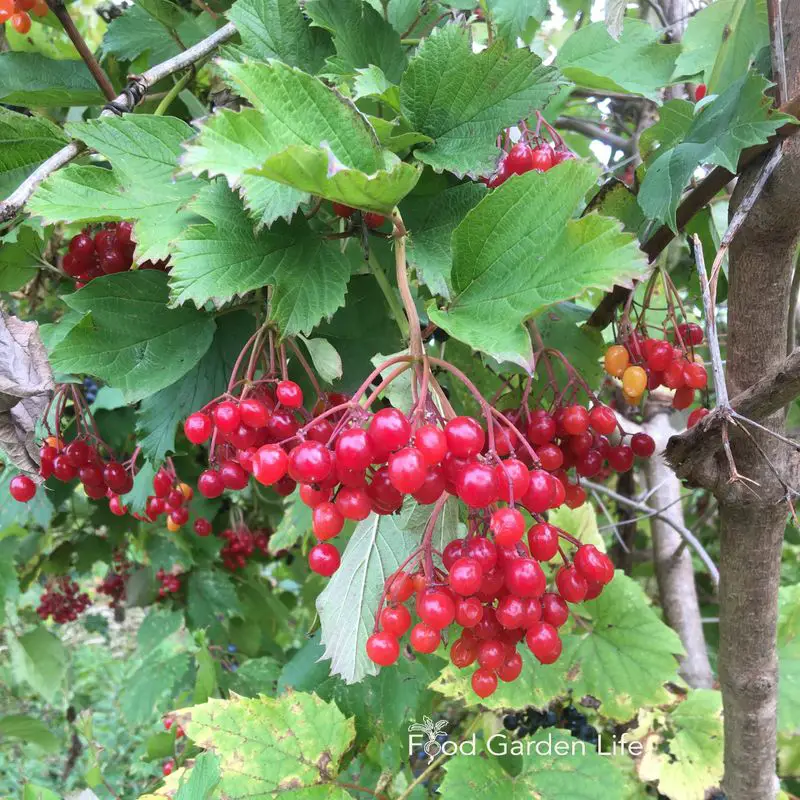
Glossy red berries hang in heavy clusters beneath lobed green foliage. Slender brown branches support the weight of mature fresh fruit. Broad leaves shade the vibrant crop from harsh direct sun.
Berry bushes add intense seasonal color to natural garden borders. Wild fruit species attract local birds while producing tart harvests. Compact growth habits allow these shrubs to fit easily into mixed beds.
Crisp Lettuce and Tall Kale Beds
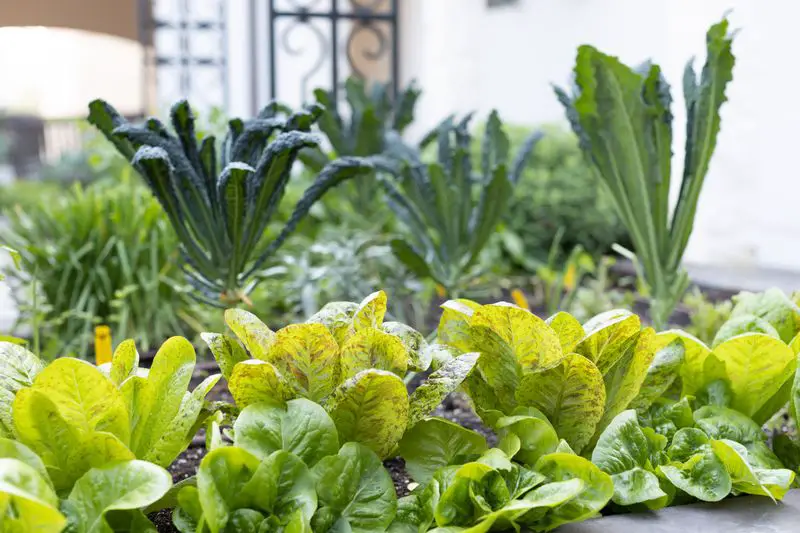
Bright green lettuce heads grow tightly in structured soil rows. Tall dark kale leaves rise behind the lower leafy greens. Sunlight reflects off the crisp textured foliage in this raised garden bed.
Tiering plant heights ensures every crop receives ample light exposure. Organized vegetable beds provide continuous harvests for daily meals. Neat stone edgings keep the growing area clean and well managed.
Grapevine Covered Patio Pergola
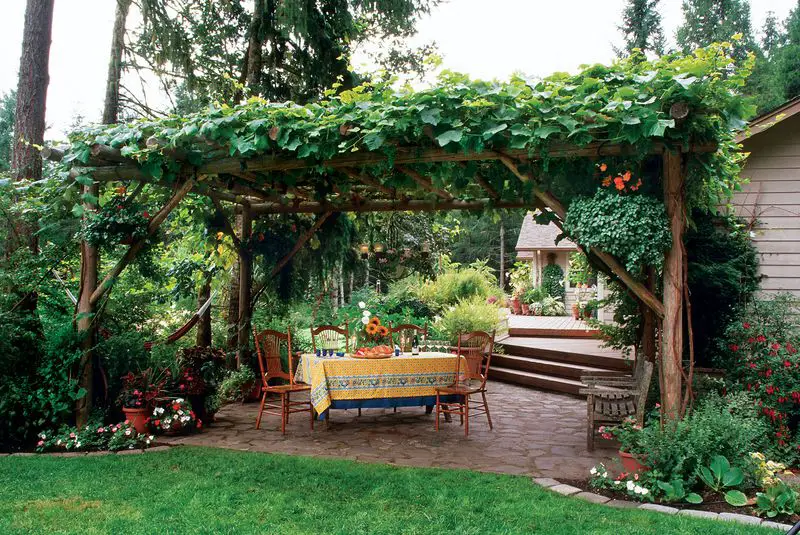
Thick green grapevines weave across the open beams of a wooden pergola structure. A set dining table sits directly on stone pavers beneath the shady living canopy. Wooden chairs surround the yellow table setting for outdoor meals.
Potted annuals edge the flagstone patio along a green lawn. Hanging baskets add color to the wooden supports framing the space. Growing fruiting vines overhead creates natural shade for sunny patio dining.
Potted Vegetables with Decorative Trellises
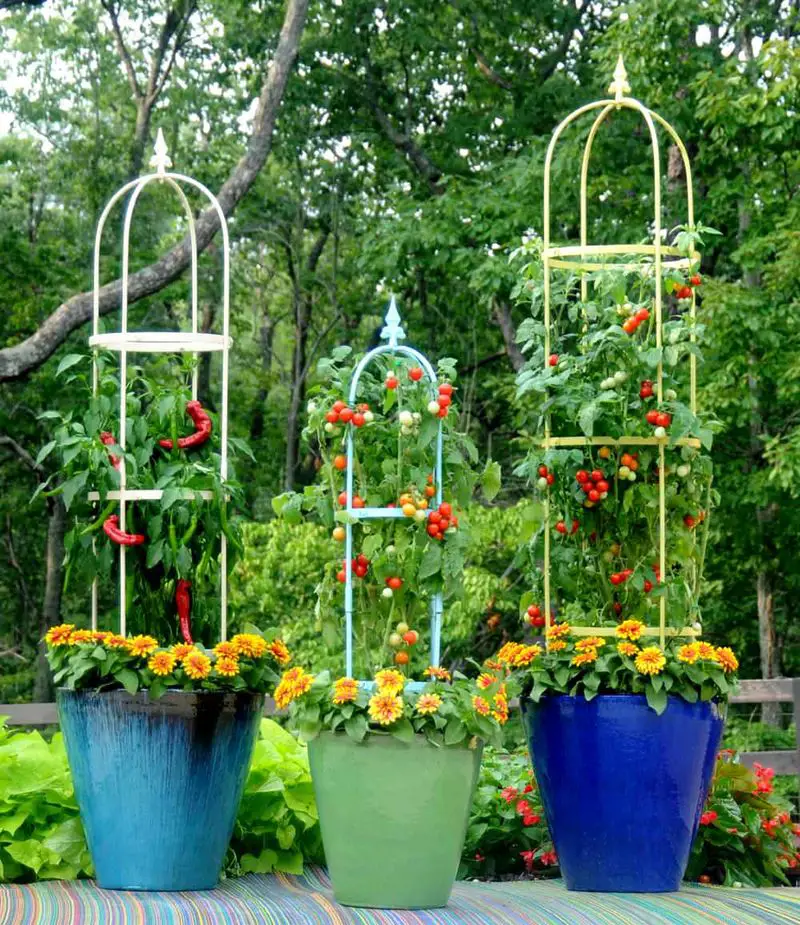
Colorful ceramic pots line up neatly with tall metal cages supporting growing plants. Bright red peppers and cherry tomatoes hang from vertical branches on white, light blue, and yellow frames. Yellow flowers bloom densely around the soil surface inside each pot.
Tall trees form a lush forest backdrop behind the outdoor dining surface. Glazed planters in shade variations elevate productive vegetables into decorative accents. Vertical cages maximize growing space while managing heavy plant yields.
Columnar Apple Tree in Flower Bed
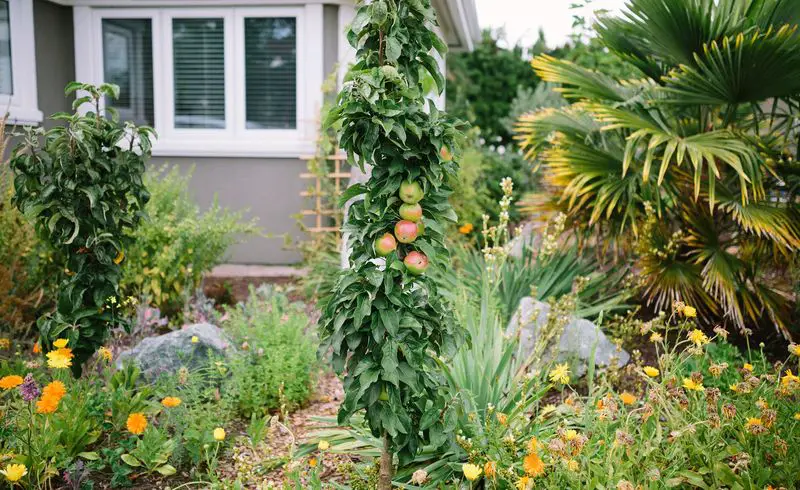
Slender columnar apple trees hold clusters of growing fruit along their main stems. Bright yellow flowers and soft ground cover plants encircle the base of the central trunk. Broad palm leaves add structural contrast to the surrounding garden bed.
Hardy perennials line the stone path near the house foundation. Native soil and light mulch keep the low roots cool and protected. Compact fruit varieties bring fresh harvesting directly into small backyard spaces.
Colorful Flower Path and Garden Bench
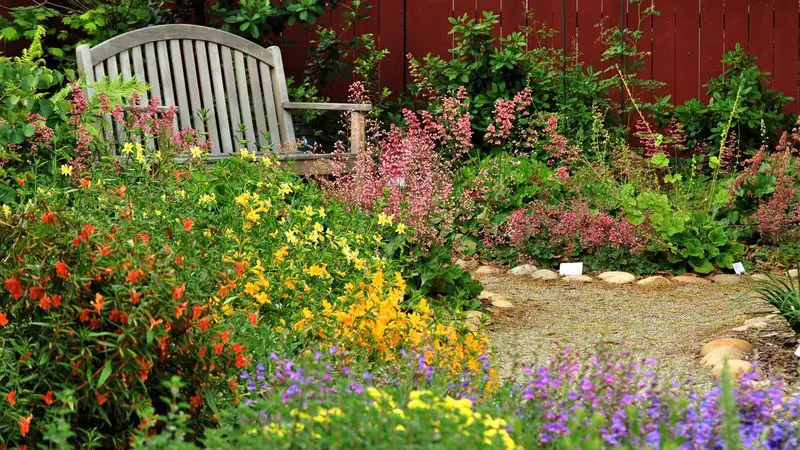
Vibrant orange flowers and tall pink coral bells frame a winding gravel pathway. A classic wooden bench sits nestled quietly against a rich red fence. Soft purple blooms edge the foreground near smooth river rocks.
Evergreen shrubs fill the background with deep green texture. Gravel pathways guide visitors through dense plantings toward comfortable seating. Blending edible herbs alongside ornamental flowers enhances visual charm across every season.
Vertical Wall Planter for Herbs and Tomatoes
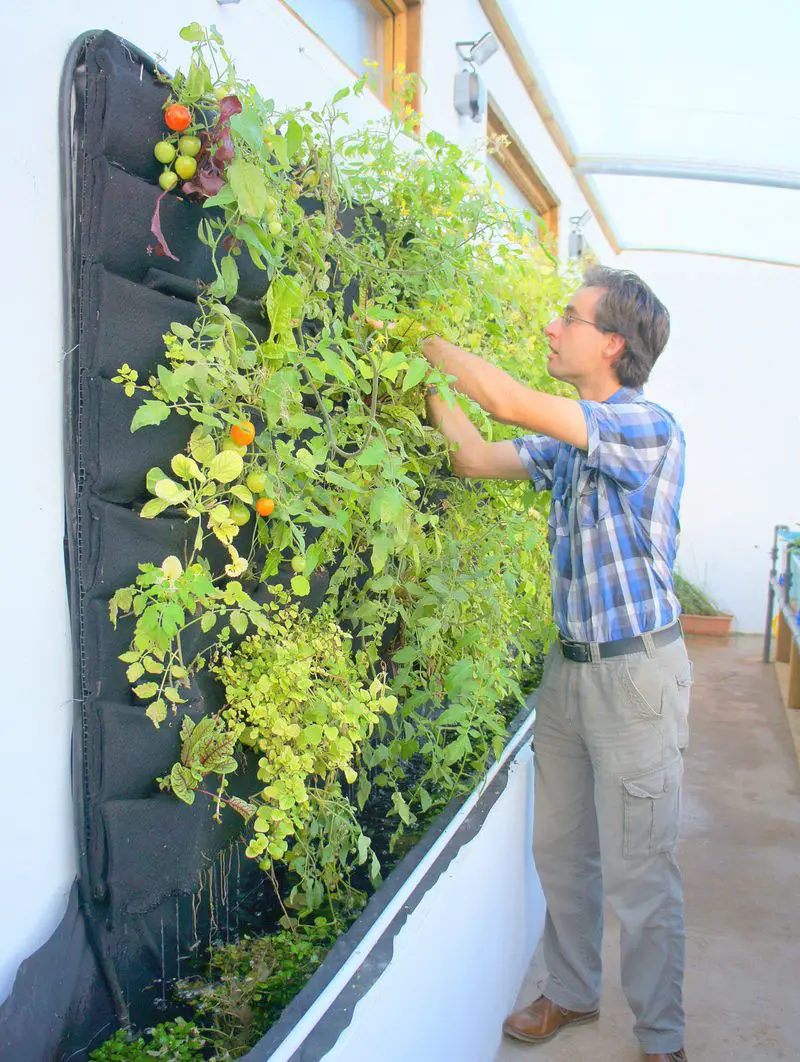
Black felt pockets mount directly onto a bright outdoor wall. A gardener inspects lush green tomato plants and leafy herbs filling the fabric vertical pockets. Ripe red and orange tomatoes hang down from trailing vines.
Water flows into a narrow base trough positioned beneath the wall structure. Vertical planters maximize small footprints by utilizing flat vertical surfaces. Compact arrangements allow year round growing inside sunrooms or greenhouses.
Symmetrical Vegetable Beds with Colorful Greens
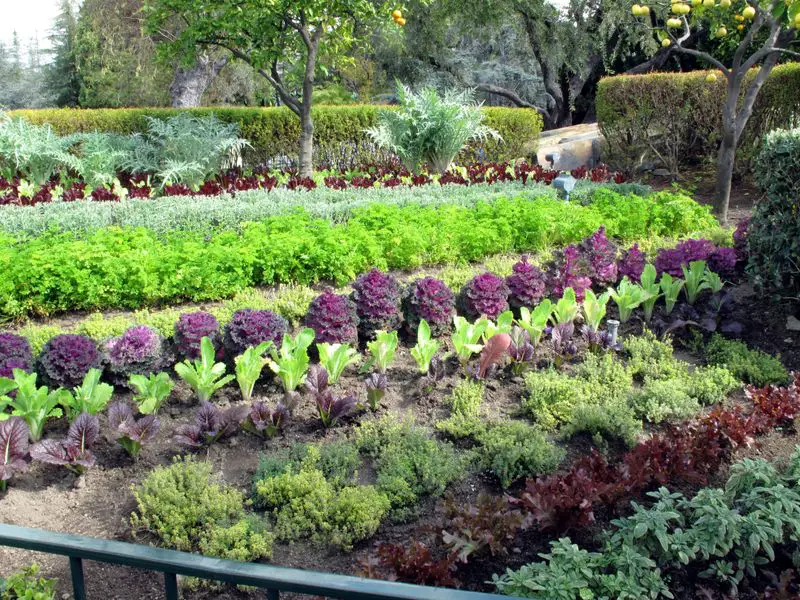
Neat rows of purple kale and light green lettuce line the garden bed. Dark red leafy greens alternate with bushy parsley to form vibrant natural stripes. Trimmed hedges and fruit trees surround the organized garden layout.
Low metal fencing protects the outer edges of the planted zone. Rich dark soil nourishes the tightly spaced edible varieties. Organizing vegetables by foliage color creates an attractive, decorative garden layout.
Wood Chip Mulched Beds with Stepping Stones
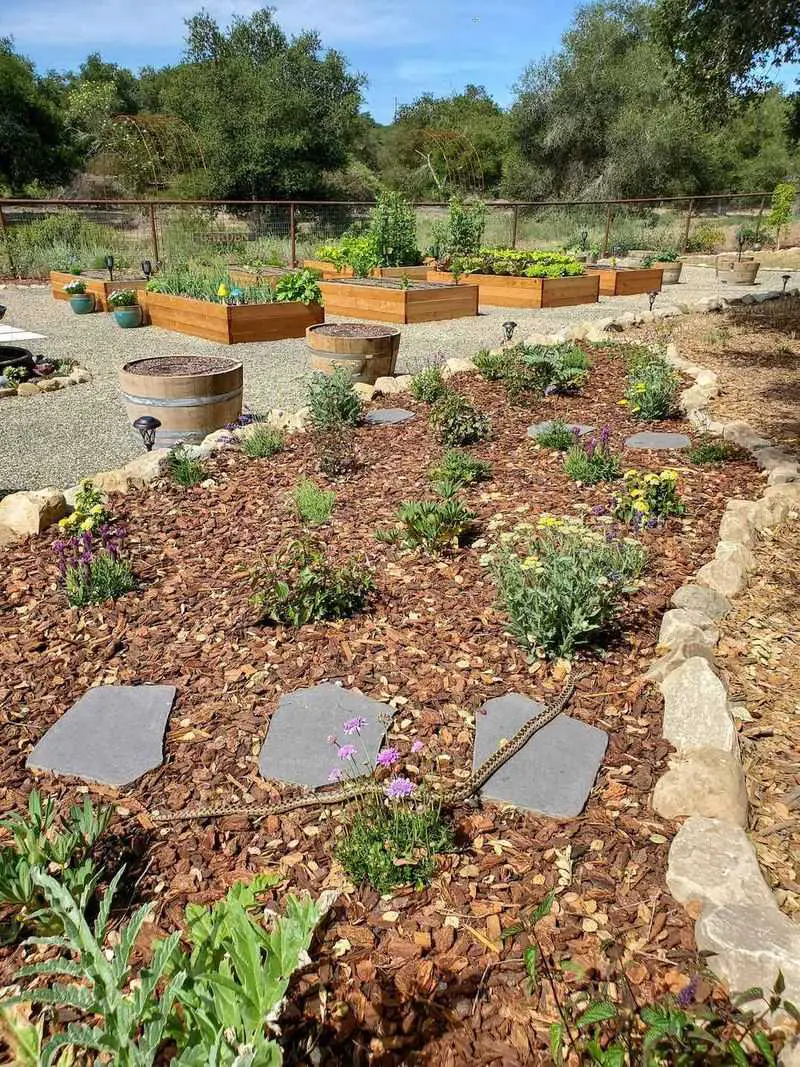
Flat grey stepping stones create a walking path through fresh wood chip mulch. Low growing herbs and flowering plants sprout along the mulched stone border. Large wooden garden boxes stand further back inside a fenced area.
Tall native trees outline the property edge beyond the garden area. Natural rock borders define the planting edges along the pathway. Organic mulch controls common weeds while conserving essential soil moisture.
Shiitake Mushrooms Growing on Wet Logs
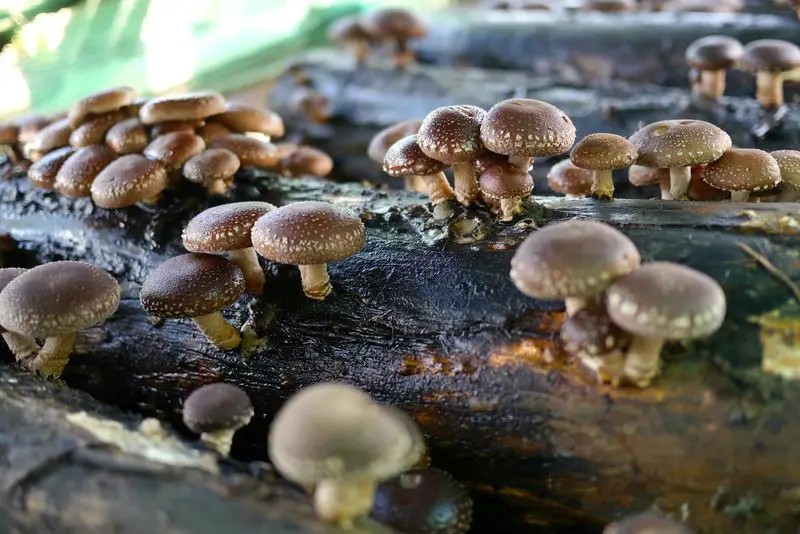
Brown shiitake mushroom caps sprout along dark moist tree logs. Tiny droplets of water cover the smooth rounded tops of each mushroom. White gills rest beneath the firm caps rising from damp bark.
Damp conditions nourish the developing fungal crops outdoors. Stacking inoculated logs in shady corners utilizes underused garden space. Growing edible mushrooms provides unique home harvests throughout cool seasons.
Climbing Vines Trained on Wire Trellis
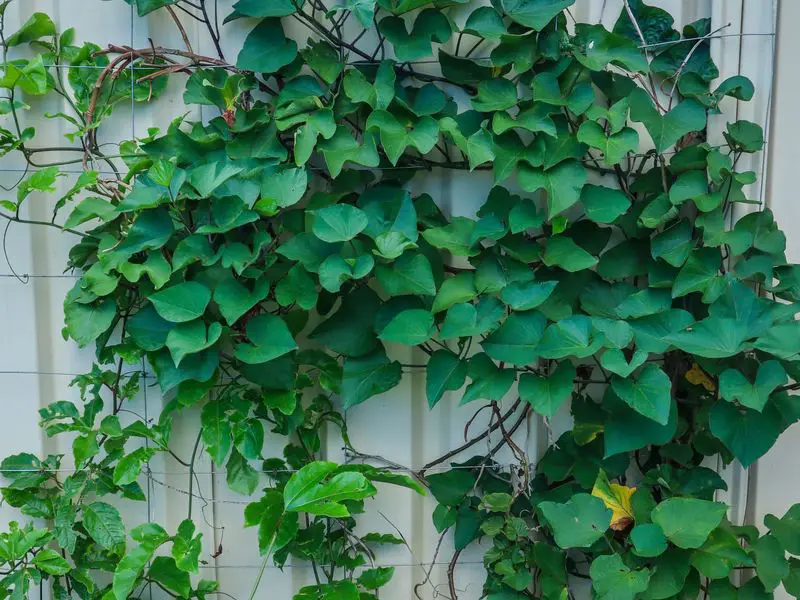
Heart shaped green leaves climb high across a thin wire grid. Sturdy brown vines weave through metal mesh mounted on a light wall. Broad foliage covers the flat vertical surface with dense green growth.
Trained vines turn blank exterior walls into lush living features. Wire lattices support heavy fruit or vegetable crops as they climb upward. Utilizing vertical space keeps garden footprints compact and easy to manage.
Conclusion
Edible landscaping brings beauty and function together by making food producing plants part of the overall garden design. Herbs, berries, vegetables, fruit trees, and edible flowers can add different heights, colors, and textures while providing something useful to harvest.
Start with plants suited to your climate, sunlight, soil, and available space. Mixing edible varieties with existing ornamental plants can make the transition feel natural. With thoughtful planning, even a front yard, patio, pathway, or small garden bed can become an attractive source of fresh seasonal food.
Frequently Asked Questions
What is edible landscaping?
Edible landscaping is the practice of incorporating food producing plants into decorative landscape designs. Vegetables, herbs, fruits, berries, and edible flowers can be grown alongside ornamental plants.
What plants work well for edible landscaping?
Herbs, strawberries, blueberries, dwarf fruit trees, lettuce, kale, peppers, tomatoes, beans, and many edible flowers can work well. Plant choices should match local growing conditions.
Can edible landscaping work in a front yard?
Yes. Attractive herbs, compact vegetables, berry shrubs, fruit trees, and flowering edible plants can be incorporated into front yard beds where local rules allow.
How can I make an edible garden look attractive?
Repeat plants throughout the landscape, define garden edges, combine different heights and textures, and use paths or containers to provide structure. Regular harvesting and pruning can also keep beds tidy.
Can I create edible landscaping in a small yard?
Yes. Containers, vertical supports, raised beds, dwarf fruit varieties, and compact herbs can provide useful harvests without requiring much ground space.
Can edible and ornamental plants grow together?
Yes. Many edible plants can be mixed with ornamentals when their sunlight, soil, watering, and spacing requirements are compatible. Make sure any products used around the planting area are appropriate for edible crops.