
Skip the intro · jump to the first idea ↓
Fall can be one of the most useful times to work in the garden. The intense heat begins to ease, growing conditions start to shift, and small jobs completed now can make the space easier to manage through the colder months.
Good Fall Gardening is not just about cleaning up leaves or removing plants that have finished for the season. It is also a chance to look closely at what is growing, deal with tired areas, prepare beds, protect useful plants, and make thoughtful changes before winter arrives.
You do not need to tackle everything at once either. A few well-chosen updates can make a noticeable difference.
The best approach depends on what your garden actually needs. Some spaces may benefit from planting, while others need pruning, tidying, soil care, or better seasonal organization.
The ideas ahead will focus on practical details you can adapt to your own outdoor space, with each one based on a real visual example.
Divide Vegetable Beds With a Simple Central Path
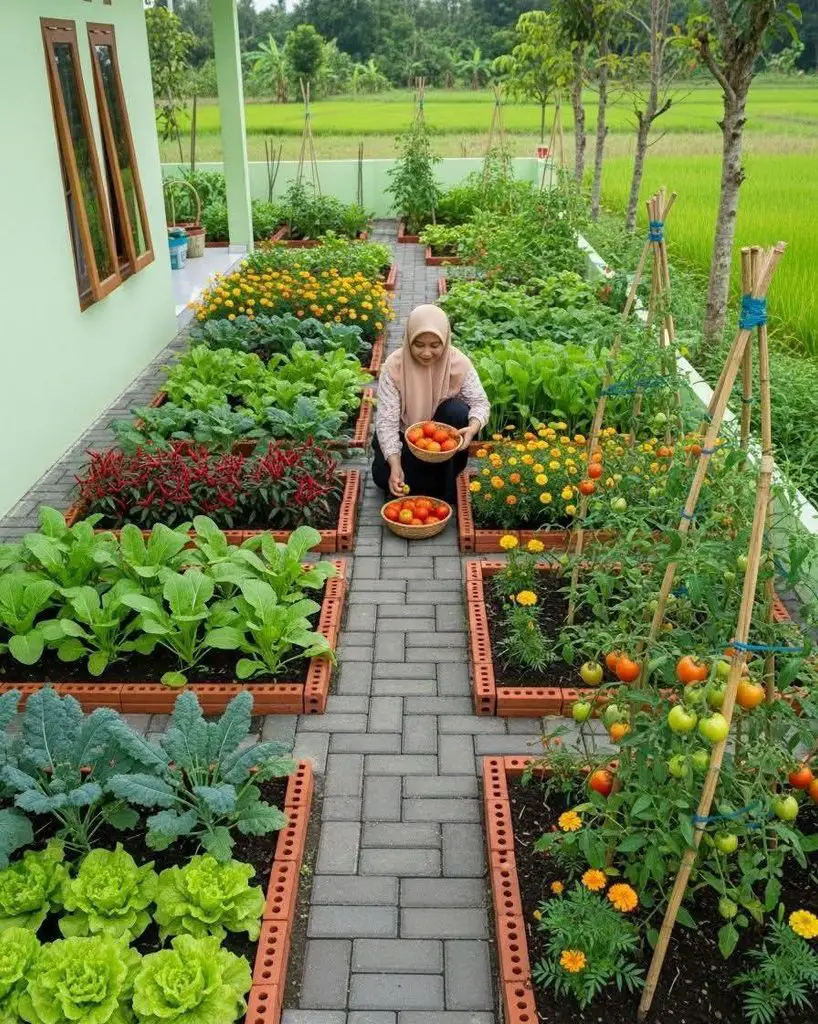
A clear walkway can make a packed vegetable garden much easier to manage. Here, rectangular beds sit on both sides of a paved central path, leaving room to reach leafy greens, tomatoes, peppers, and flowering plants without stepping into the growing areas.
The layout also gives taller tomato plants their own supported space. Bamboo stakes keep the growth upright, while lower crops fill the neighboring beds. Bright flowers placed among the vegetables bring another layer of color without taking over the layout.
For a similar fall garden setup:
- Keep the main walking route open.
- Group crops into defined beds.
- Support tall plants before they lean across the path.
- Use bed edges to keep soil away from the paving.
Turn Your Fall Harvest Into a Colorful Seasonal Display
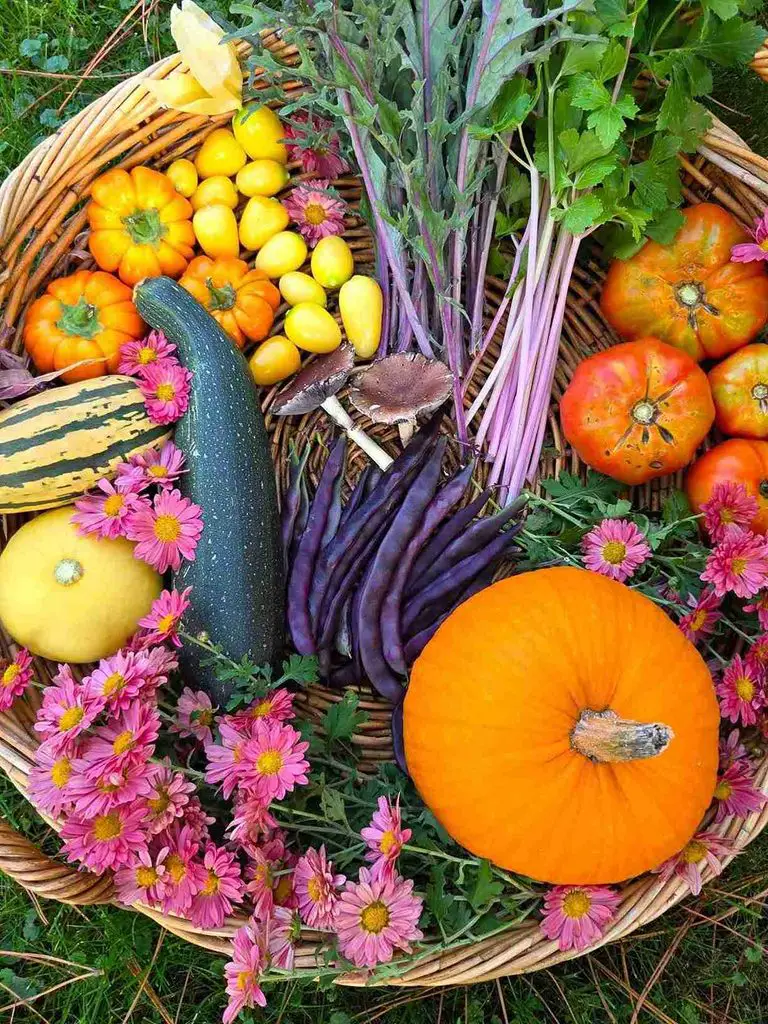
A fall harvest does not need to disappear into separate storage baskets the moment it is picked. Bringing different shapes, sizes, and colors together makes it easier to appreciate what the garden produced while sorting everything for the kitchen.
The mix here works especially well because large orange squash and tomatoes anchor the arrangement, while smaller yellow produce, purple pods, leafy stems, and pink flowers fill the gaps.
A useful sorting trick: keep tender produce together for quicker use, while setting firmer squash and pumpkins aside for separate storage. Remove anything damaged before it sits beside the rest of the harvest.
🍂 Quick Harvest Check
Light the Garden Path for Darker Fall Evenings
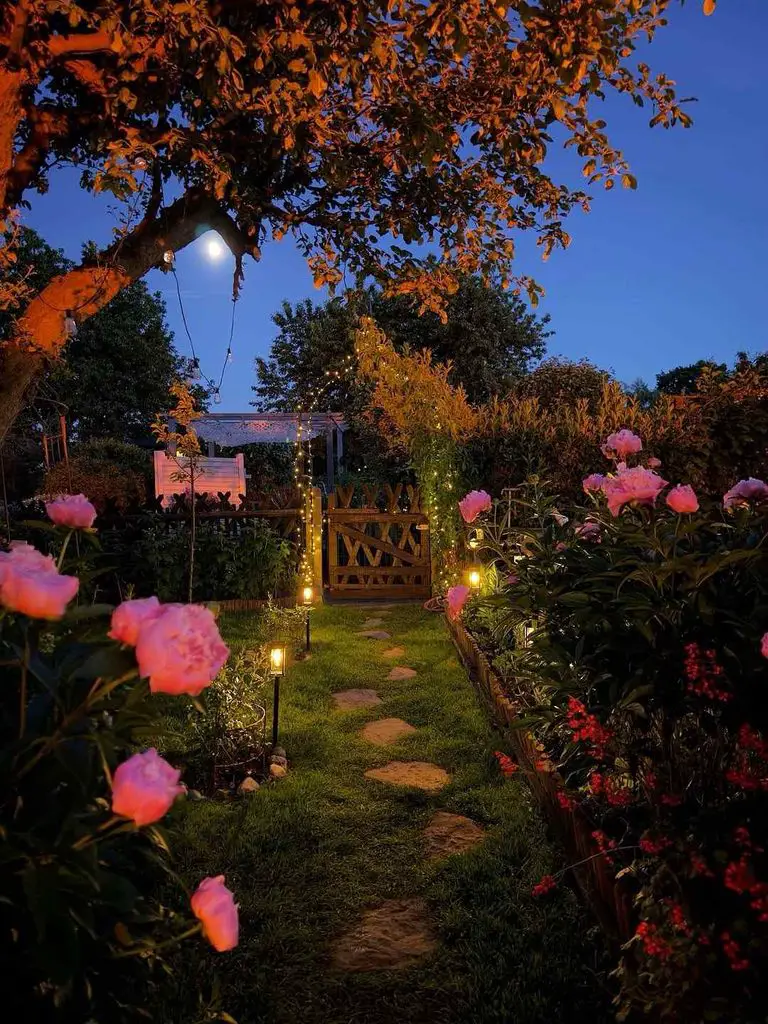
Shorter fall days can make a garden feel finished before the evening really begins. A few carefully placed lights keep the path visible while drawing attention toward the gate and surrounding plants.
Here, low lights follow the stepping-stone route, while warm string lights climb around the entrance. That combination works because the lighting appears at different heights instead of flooding the whole garden with one bright source.
Keep the placement purposeful. Use lower lights where people walk, then reserve decorative lighting for focal points such as a gate, arbor, or established tree.
Turn a Garden Structure Into a Flower-Covered Focal Point
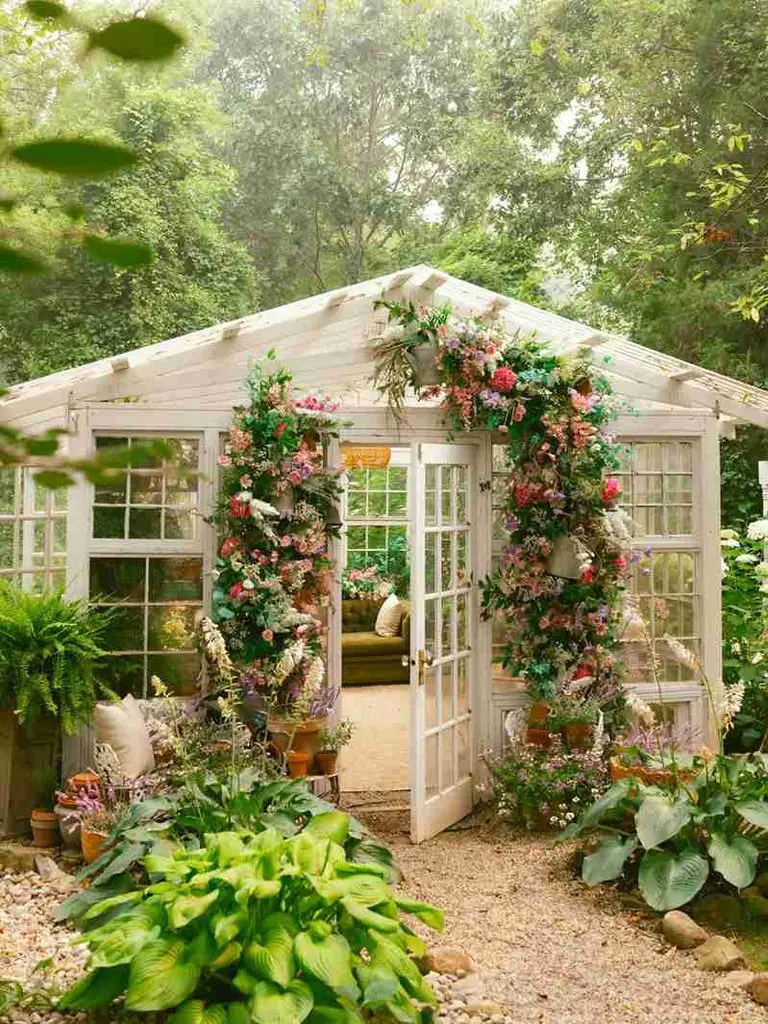
A small greenhouse or garden room can become part of the planting scheme instead of sitting separately from it. Here, flowers and trailing greenery climb around the doorway, creating a strong vertical feature while the surrounding leafy plants keep the base lush.
The trick is to concentrate the decoration around the entrance rather than covering every surface. That keeps windows and doors visually open while still giving the structure a garden-grown character.
For fall: swap fading flowers as needed, tidy loose growth around the doorway, and keep plants from blocking the entrance. Containers near the structure can also make seasonal changes easier.
Concentrate flowers and greenery around the doorway.
Use containers below to continue the planting toward ground level.
Avoid letting plants interfere with doors and walking space.
Do not bury every window beneath decorative growth.
Create a Fall Sitting Spot Beneath Flowering Branches
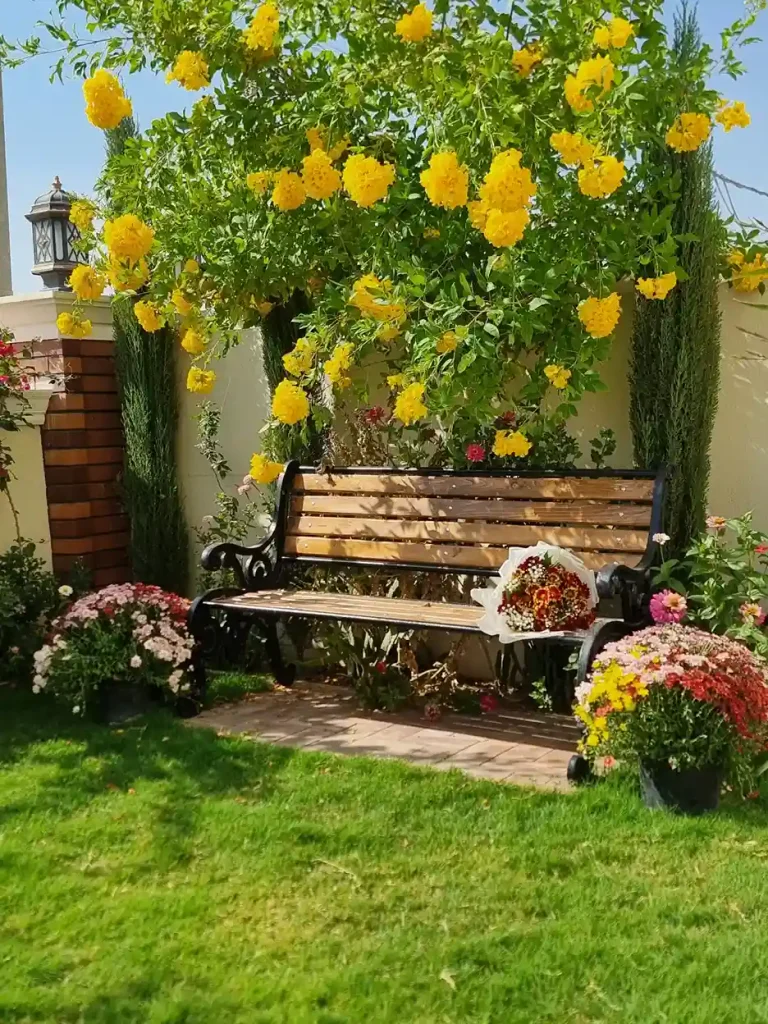
A garden bench feels more intentional when planting surrounds it instead of leaving it isolated on the lawn. Here, the wooden seat sits beneath arching branches filled with yellow flowers, while large containers of pink and burgundy blooms frame both sides at ground level.
That high and low layering gives the corner a sheltered feeling without hiding the bench.
For a similar fall setup, place seasonal containers beside an existing seat and use taller planting behind it for depth. Keep the area directly in front open so the bench stays easy to reach.
Small detail that matters: trim any low branches that interfere with sitting or walking while keeping enough overhead growth to preserve the enclosed garden feel.
Layer the planting around the seat, not across it. Flowers at ground level and taller growth behind or overhead can define the corner while keeping the sitting area open.
Layer Flowers Around a Small Garden Water Feature
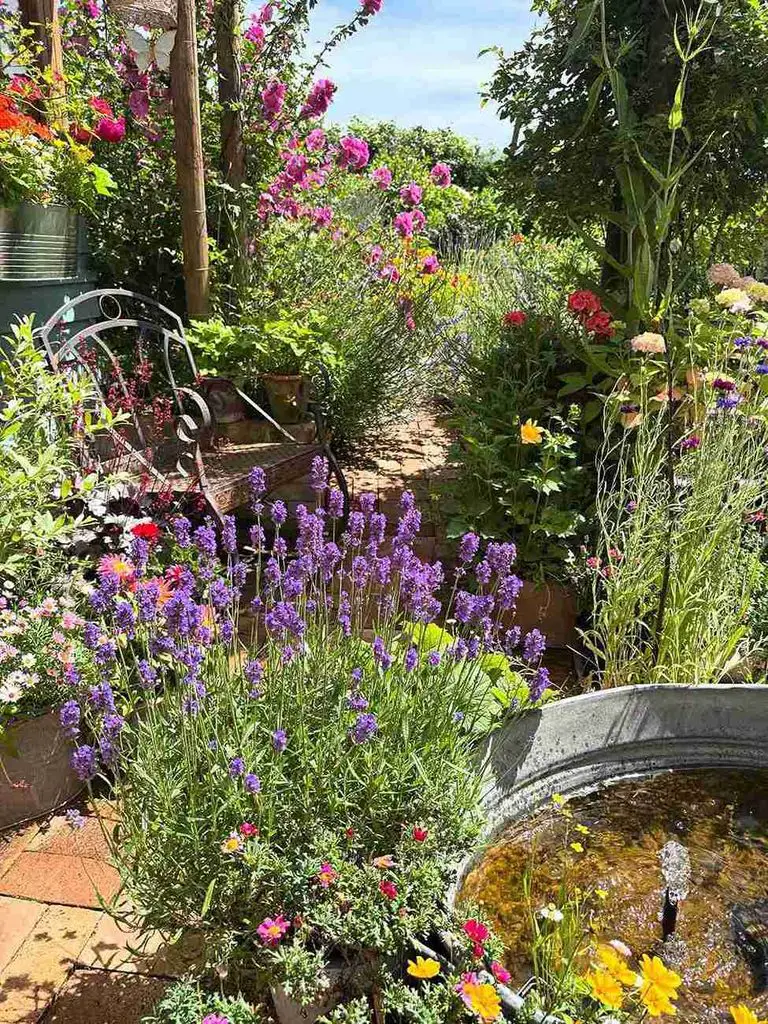
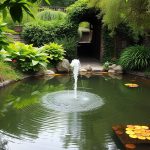
A small water feature can become a strong garden focal point without needing much open space. Here, the round basin sits directly beside dense planting, with tall purple flower spikes, low colorful blooms, and taller greenery surrounding it.
The varied heights are what make the arrangement work. Low flowers soften the hard rim, medium plants provide color, and taller growth creates a lush backdrop without completely hiding the water.
Keep a small section of the basin accessible for cleaning and maintenance. Plants can grow close to the edge, but avoid letting dense stems make the water feature difficult to reach.
Start low. Place compact flowers near the basin to soften the visible edge.
Add middle height. Use upright flowering plants to connect the water feature with the surrounding beds.
Keep one side open. Leave enough access for removing debris and caring for the water feature.
Mix Raised Vegetable Beds With Flowering Borders
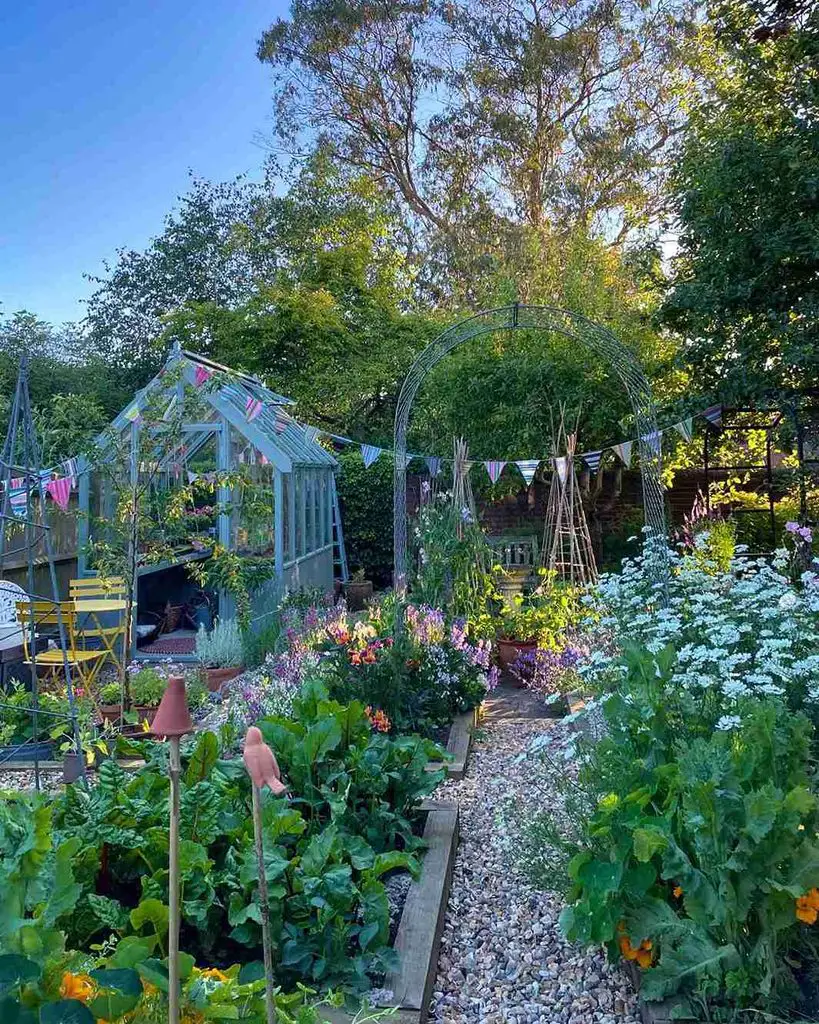
Vegetable beds do not have to sit apart from the decorative side of the garden. This space blends broad leafy crops with tall white flowers, colorful blooms, climbing supports, and a greenhouse, giving the productive area a much softer look.
The narrow gravel path is especially useful. It separates the beds clearly and provides access for harvesting without sacrificing much growing space.
Copy the layering: keep vegetables in defined beds, let flowering plants soften selected edges, and use tall supports toward the back where they will not crowd shorter growth. A simple arch can also mark the transition between different garden areas.
| Garden Area | Useful Role |
|---|---|
| Raised beds | Keep productive crops grouped and accessible. |
| Flowering edges | Soften the boundaries between paths and vegetables. |
| Vertical supports | Move taller growth upward instead of across neighboring plants. |
Train Tomato Plants Upward for an Easier Fall Harvest
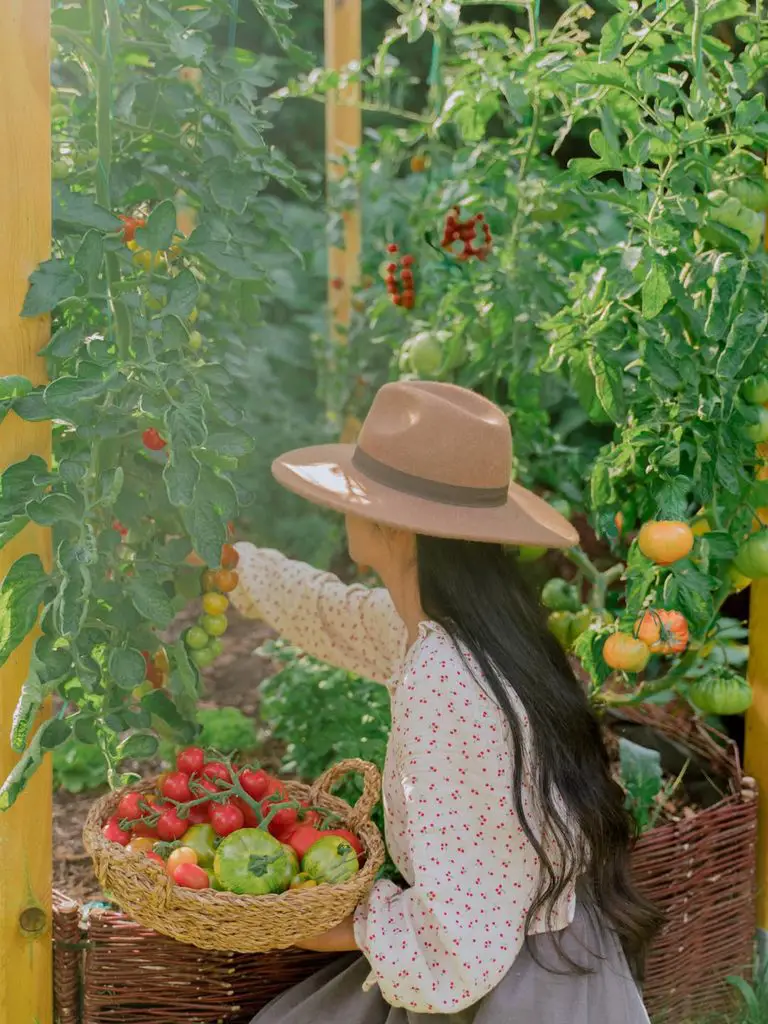
Tomato plants can become dense and difficult to reach as the season progresses. Here, tall vines are trained vertically along sturdy wooden supports, keeping clusters of ripening tomatoes visible and accessible instead of letting stems spread across the growing area.
The biggest advantage is organization. Upright growth creates a narrow harvesting aisle and makes it easier to spot fruit at different stages of ripeness.
As fall approaches, check the supports and ties while picking. Heavy fruiting branches may need extra support, especially where several tomatoes hang together. Remove tomatoes gently rather than pulling hard enough to bend the supporting stem.
🍅 Fall Tomato Check
Let Fall Flowers Spill Naturally Along a Gravel Path
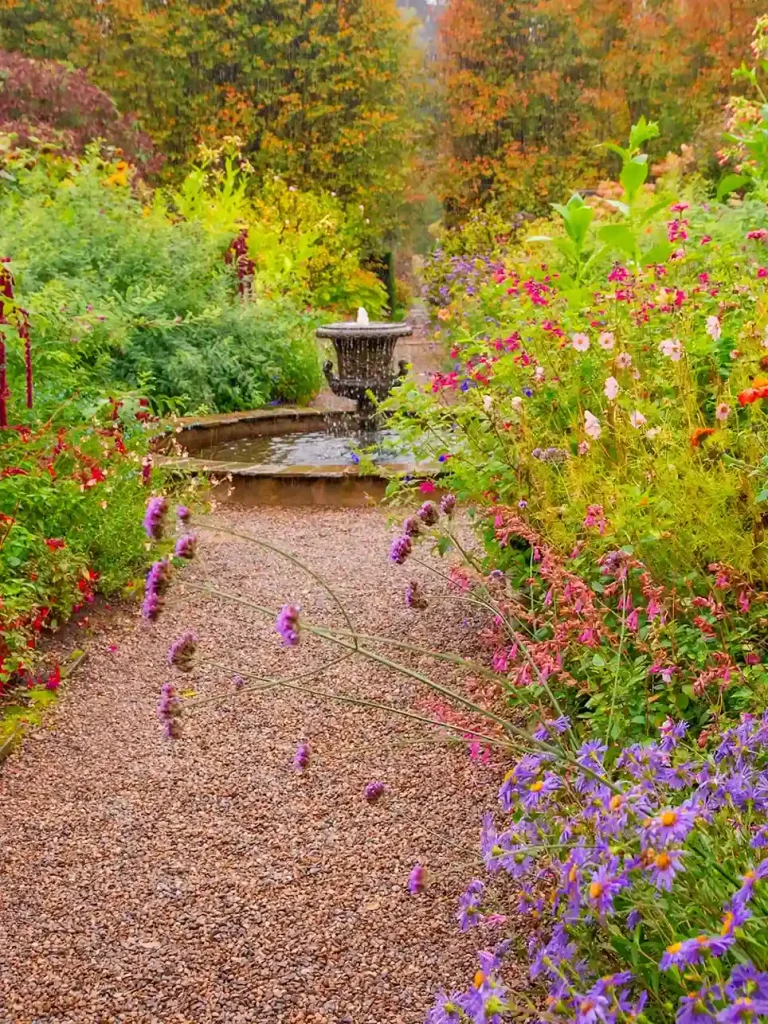
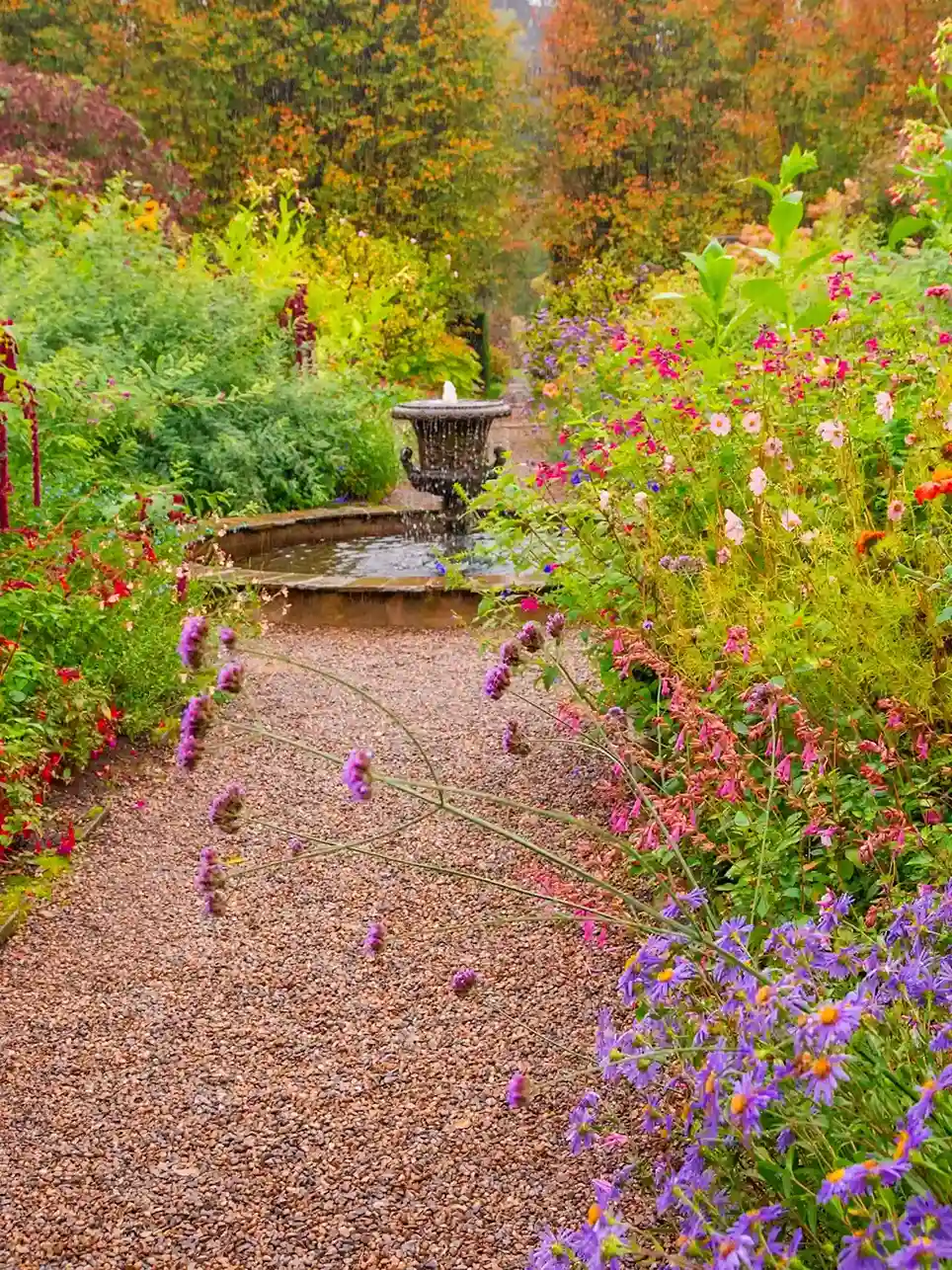
Formal edging is not always necessary to make a garden path feel intentional. Here, tall pink, purple, and red flowers lean toward a broad gravel walkway, creating a loose border that feels full without hiding the route.
The strongest move is the contrast between the simple path and densely planted edges. Taller flowers sit farther back, while lower blooms occupy the foreground. The fountain at the end gives the eye a clear destination.
For fall maintenance, cut back only the stems that obstruct comfortable walking. Leaving some flowering growth along the edges preserves the abundant look while keeping the center of the path usable.
Cutting every plant back to a rigid edge can remove the loose, overflowing character of a flower-filled path.
Allow selected flowers to lean toward the gravel, then trim stems only where they interfere with the walking route.
Grow Pumpkins Over an Arch to Save Ground Space
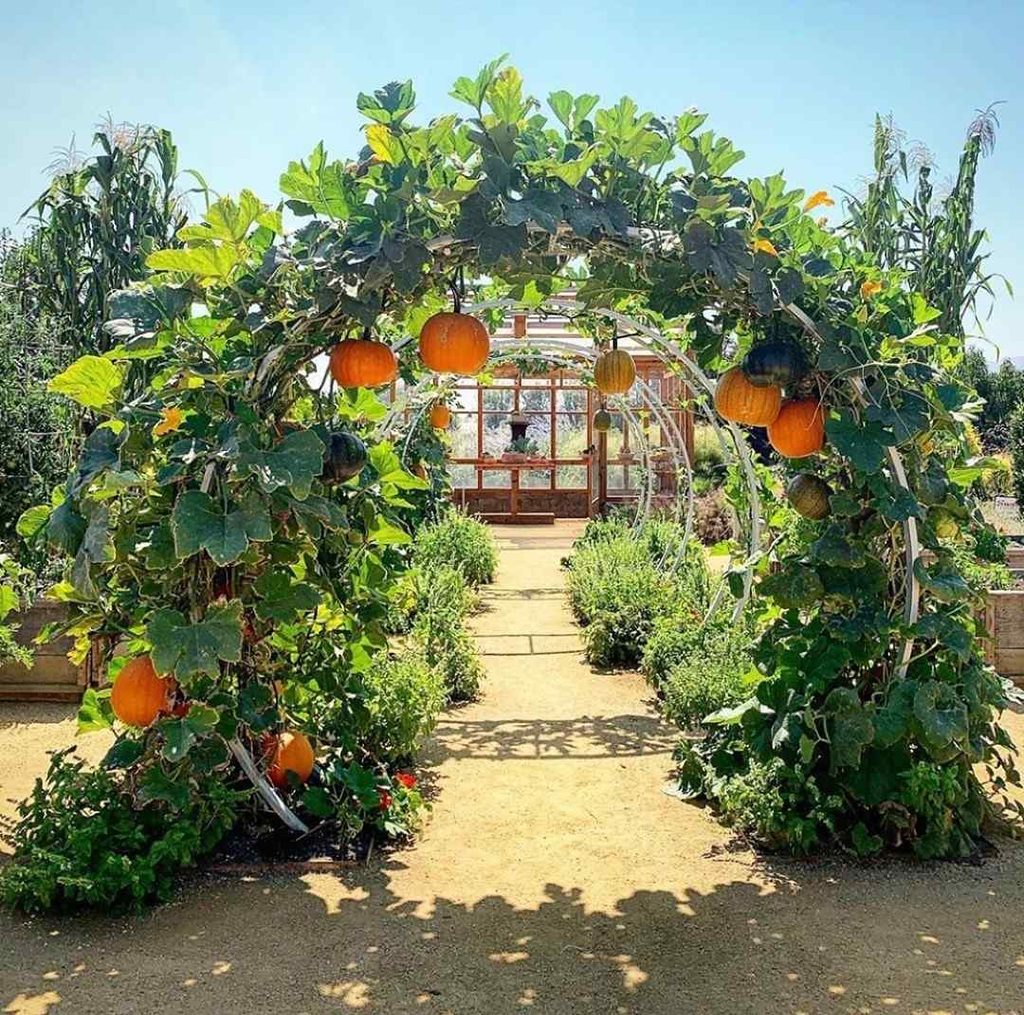
Pumpkin vines can take over a garden bed quickly, so directing them upward can make the growing area easier to organize. Here, vigorous vines cover a series of metal arches, with orange and green pumpkins hanging beneath the leafy canopy.
The arch also creates a dramatic entrance to the garden while keeping much of the vine growth away from the central walkway.
Pay attention to heavier fruit. As pumpkins develop, check that the vine and support remain secure. Keep the path underneath clear so hanging fruit and trailing stems do not interfere with regular garden access.
Guide sprawling vines over a sturdy arch to move leafy growth upward while preserving the walkway below. Keep developing fruit visible and check the structure regularly as the vines become fuller.
Use a Small Tree to Bring Fall Color Into a Seating Area
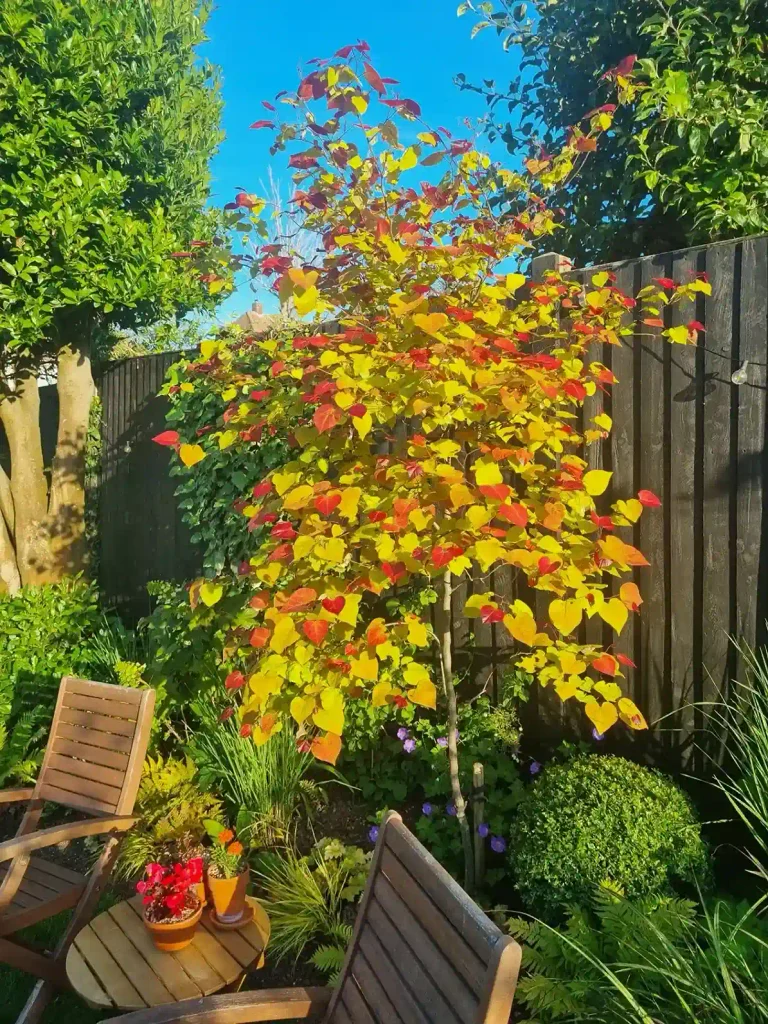
A compact tree can bring strong seasonal color into a garden without taking over the whole space. Here, yellow, orange, and red foliage rises directly behind a small seating area, making the changing leaves the main feature while clipped shrubs and grasses provide a green backdrop.
The placement matters. Instead of hiding the tree at the back of the border, it sits close enough to the chairs to be enjoyed from the seating area.
Keep surrounding plants lower around the trunk so the colorful canopy remains visible. Small containers on the table can repeat a little of that seasonal color at eye level.
Pack Raised Beds With Leafy Greens for a Productive Fall Garden
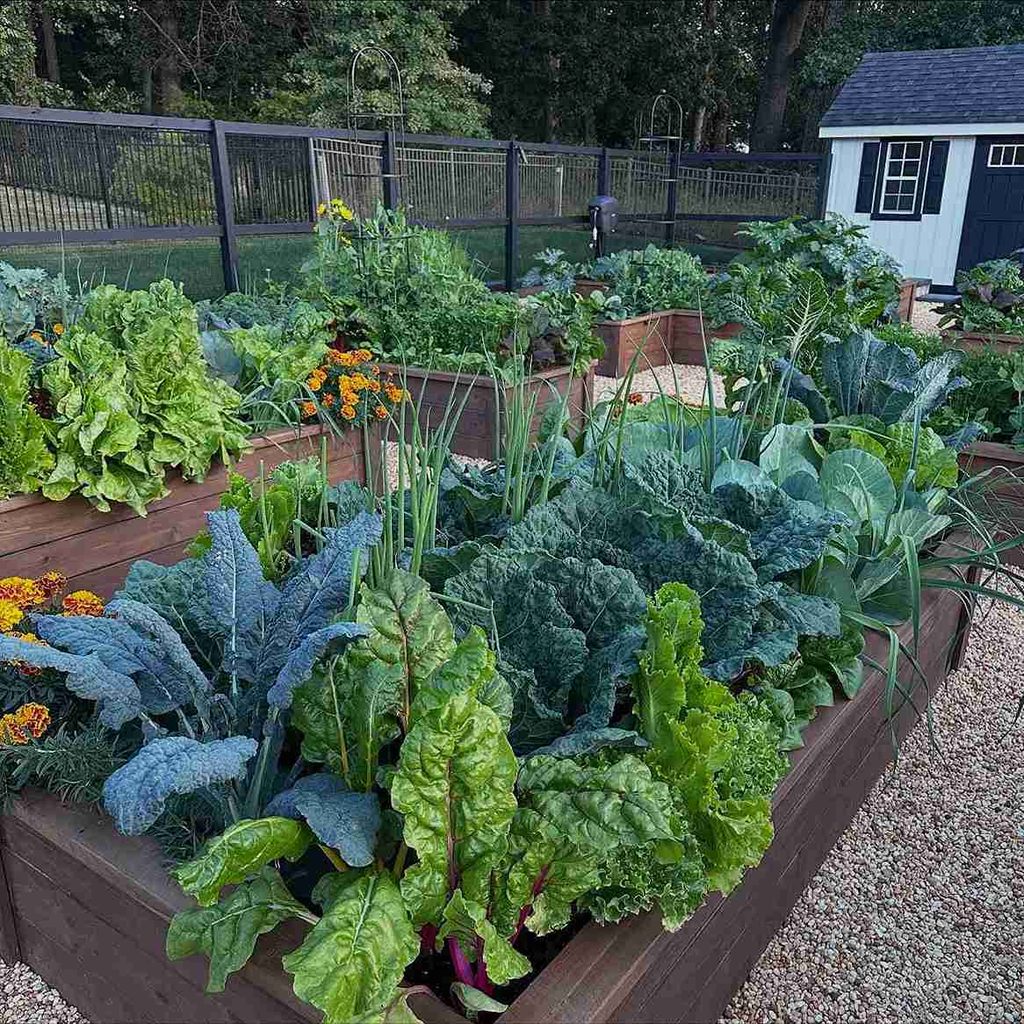
Raised beds can hold a surprising amount of fall produce when crops are arranged by height and growing habit. This garden uses broad leafy vegetables alongside upright, narrow leaves, filling the beds densely while keeping the gravel paths completely open.
The mix of leaf shapes also helps each bed stay visually organized. Large blue-green leaves create structure, softer greens fill smaller spaces, and upright plants break up the dense foliage.
One thing to watch: crowded beds still need regular checking. Harvest outer leaves as they mature and remove declining foliage so healthy plants are not buried beneath older growth.
🌱 Make Dense Fall Beds Easier to Manage
Keep taller, upright growth between broader leafy crops instead of filling every opening with plants of the same shape. Harvest mature outer leaves regularly and keep the bed edges accessible from the surrounding path.
Start Fall Vegetables With Healthy Young Plants
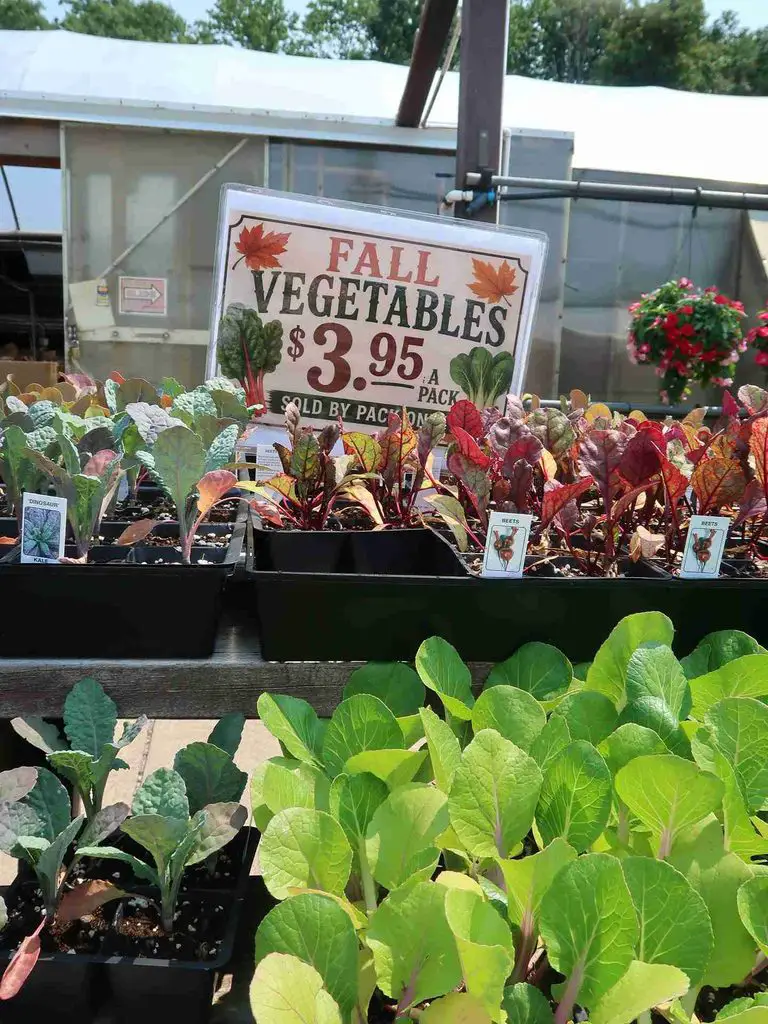
Fall planting becomes much easier when you begin with sturdy young plants that already have a good amount of leafy growth. The trays here contain several cool-season vegetables, including visibly labeled kale and beets, showing how different crops can be gathered before planting.
Look for plants with healthy foliage and enough room between leaves to inspect them properly. Skip plants with badly damaged leaves or obvious signs of stress.
Plan before planting: decide where each crop will go while the plants are still in their trays. Grouping similar vegetables together can make later watering, harvesting, and general fall garden care easier to manage.
🌱 Check Before You Plant
Conclusion
Fall is a good time to look at the garden with fresh eyes and decide what deserves attention before colder weather settles in. Good Fall Gardening can include harvesting vegetables, adding seasonal color, managing overgrown plants, improving pathways, supporting late crops, or simply creating a garden that is easier to enjoy.
You do not need to make every change at once. Choose the ideas that fit your available space, climate, and current plants, then build from there.
Save these ideas to your Pinterest gardening board so you can come back to them when you are ready to plan your fall garden.
Frequently Asked Questions
What should I do in my garden during fall?
Start by harvesting mature produce, removing unhealthy or damaged growth, tidying pathways, and checking plants that need support. Fall can also be a useful time for planting cool-season crops and preparing beds for the months ahead.
What vegetables are good for a fall garden?
Leafy greens and other cool-season vegetables are common choices for fall gardens. The best options depend on your local temperatures, expected frost dates, and how much growing time remains in the season.
When should I start planting a fall vegetable garden?
Work backward from your area’s expected first frost and check the growing time listed for each crop. Some vegetables need to be started while temperatures are still fairly warm so they have enough time to mature.
Should I clean up my entire garden in fall?
Not necessarily. Focus on removing diseased, badly damaged, or unwanted material and keeping important paths and growing areas manageable. Healthy plants and useful garden structure do not automatically need to be removed simply because the season is changing.
Can I still use raised beds for fall gardening?
Yes. Raised beds can work well for fall vegetables because they keep crops organized and make harvesting and routine care easier. Avoid overcrowding plants, and keep enough access around the beds for maintenance.
How can I add fall color without redoing my garden?
Work with focal areas first. Seasonal containers, colorful foliage, late flowers, and existing trees or shrubs can bring autumn color into seating areas, pathways, entrances, and garden beds without requiring a complete redesign.
How do I prepare my vegetable garden for colder weather?
Harvest crops as they mature, remove unhealthy plant material, tidy beds, inspect supports, and keep an eye on local temperatures. What needs additional cold protection will depend on the plants you are growing and your local climate.