
Skip the intro · jump to the guide ↓
September can make hydrangeas look more troubled than they really are. Flowers fade, a few leaves turn yellow or brown, and cooler nights slow new growth. This is also when many gardeners reach for the pruners or fertilizer, which can create problems for next year’s blooms.
These September Hydrangea Care Tips and common mistakes to avoid focus on what your plant actually needs as summer ends. You will check the hydrangea type, adjust watering based on the soil, and stop feeding before cold weather arrives. Later, you will handle cleanup, mulch, pests, fading flowers, and fall protection.
The biggest change this month is restraint. Your hydrangea is starting to prepare for colder weather. Pushing fresh growth with fertilizer or cutting healthy stems at the wrong time can work against that process.
Plan on spending about 20 to 40 minutes per shrub for the main monthly check, with extra watering only when the soil needs it. You do not need expensive gardening equipment. A pair of clean pruners, mulch, gloves, and a way to water slowly will cover most of the work.
By the end, your hydrangea will be cleaned up, properly watered, and ready to move deeper into fall.
Quick Navigation
What You Need
No moisture meter? Use your finger or a small trowel to check the soil below the surface.
September Hydrangea Care at a Glance
- Check your hydrangea type.
- Check the soil moisture.
- Water deeply when the soil starts to dry.
- Stop feeding your hydrangeas.
- Leave healthy stems alone.
- Remove damaged or diseased material.
- Remove fallen leaves around the base.
- Refresh mulch around the root zone.
- Check leaves for pests and disease.
- Leave fading flower heads when suitable.
- Protect container hydrangeas from early cold.
- Prepare your hydrangeas for colder fall weather.
Check your hydrangea type before doing fall work

Look at the flower shape, leaves, stems, and any plant label you still have. Bigleaf, mountain, and oakleaf hydrangeas often form flower buds on older wood, while many panicle and smooth hydrangeas bloom on new growth.
This matters because the wrong September cut can remove buds that would have become flowers next year. If you cannot identify the variety with confidence, take photos of the leaves and blooms and do not prune healthy stems yet.
Check the soil moisture before watering
Push your finger about 2 inches into the soil near the root zone, but not directly against the main stems. A small hand trowel works well if the soil is firm.
If the soil at that depth feels cool and damp, hold off on watering. If it feels dry, your hydrangea is ready for a drink. September temperatures can fall quickly, so watering on an automatic summer schedule may leave roots sitting in wet soil.
Water deeply when the soil starts to dry
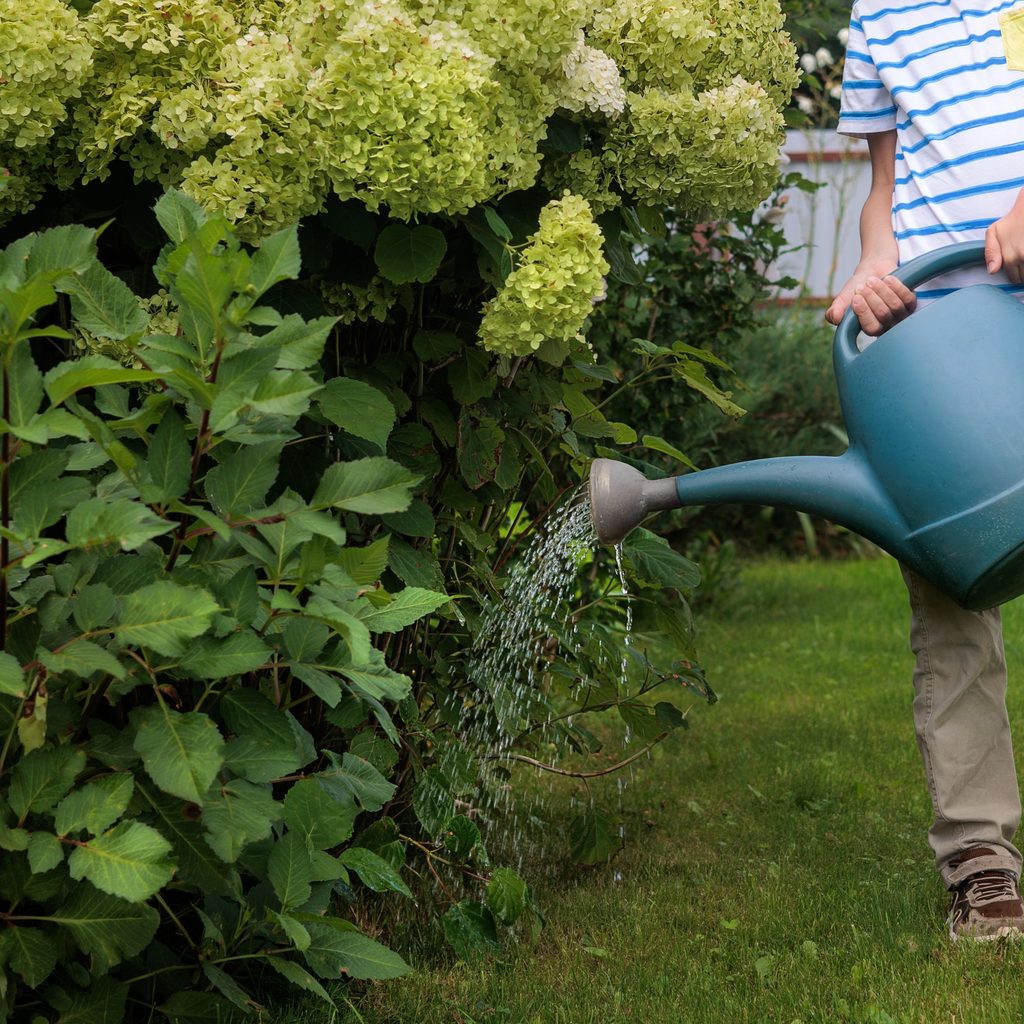
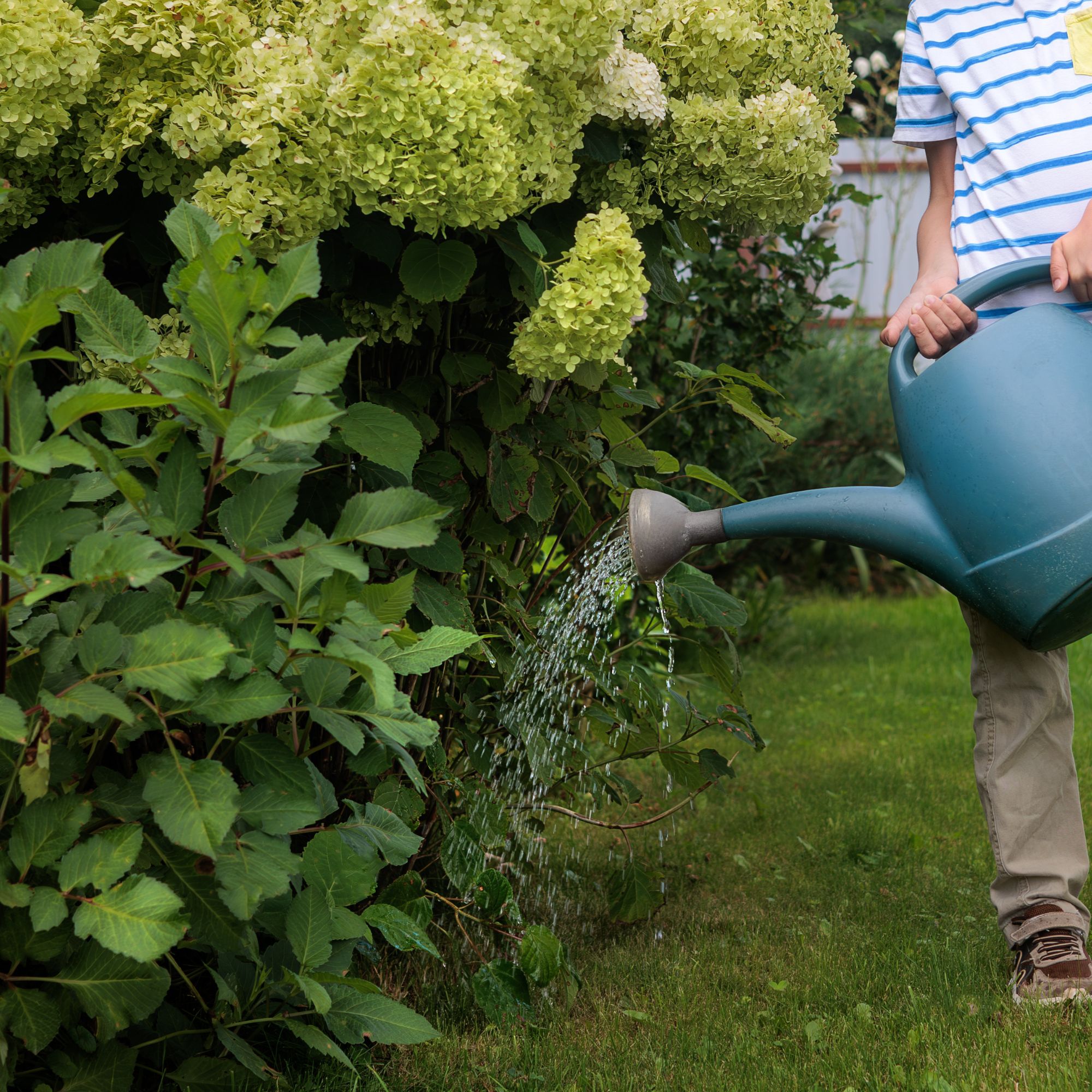
Aim the hose at the soil beneath the outer spread of the branches rather than spraying the leaves. Apply water slowly enough that it soaks in instead of running across the surface. For established garden hydrangeas, aim for roughly 1 inch of water per week from rain and irrigation combined, adjusting for heat, soil, and rainfall.
Morning is the better time to water. It gives any splashed foliage time to dry before cooler nighttime temperatures arrive.
Stop feeding your hydrangeas in September
Put away routine nitrogen-rich fertilizer once September arrives, especially in areas where frost and cold winters are approaching. Late feeding can encourage soft new shoots when the plant should be slowing its growth.
If your hydrangea looks pale or weak, do not assume fertilizer is the answer. Check moisture, drainage, pests, and leaf symptoms first. Save routine feeding for the appropriate growing-season schedule for your plant and climate. Your goal now is healthy, mature growth rather than a late flush of tender stems.
Leave healthy stems alone when pruning could remove next year’s flowers

Keep the pruners away from healthy stems unless you know exactly which hydrangea you have. Bigleaf and oakleaf hydrangeas can carry next year’s flower buds on old wood. Those buds may already be developing by August and September, so fall pruning can mean fewer flowers next year.
Panicle and smooth hydrangeas bloom on new wood, but you still do not need to rush into a major September pruning. Late winter or early spring is a good pruning window for these types.
Remove damaged or diseased plant material
Start with stems that are clearly dead, broken, or diseased rather than reshaping the shrub. Removing this problem growth is different from giving the whole hydrangea a fall haircut.
Clean your bypass pruners before the first cut. Wipe the blades with 70% rubbing alcohol, especially if you have used them on another plant.
For a dead or damaged stem, trace it back to healthy wood or its point of origin and make a clean cut. Avoid leaving long, ragged stubs. Removing dead, diseased, and damaged wood is standard maintenance even when larger pruning needs to wait.
Remove fallen leaves from around the base
Pick up spotted, badly discolored, or diseased leaves from beneath the shrub and place them in a garden-waste bag. Do not leave infected material sitting against the stems.
This small cleanup matters because some hydrangea leaf-spot pathogens can survive in diseased debris and return through splashing rain or irrigation. If the leaves show clear disease symptoms, avoid adding them to your home compost pile.
Healthy fallen leaves elsewhere in the garden do not require the same treatment. Focus this cleanup on material that could carry disease.
Refresh mulch around the root zone

Measure the existing mulch before adding more. You want a layer roughly 2 to 3 inches deep over the root area, rather than a growing mound that gets thicker every fall.
Spread fresh mulch outward beneath the branches, then pull it back from direct contact with the stems. Shredded bark, wood chips, or similar organic mulch works well.
Do not build a “mulch volcano” around the crown. The goal is to protect the shallow root zone and help the soil hold moisture, not bury the base of the shrub.
Check the leaves for September pests and disease
Choose several leaves from the bottom, middle, and outer parts of the shrub. Turn each one over and inspect the underside too.
Watch for purple or brown spots, white powdery patches, yellow stippling, webbing, distorted growth, or unusual leaf drop. Hydrangeas can develop Cercospora leaf spot, powdery mildew, spider mites, and other problems that produce different leaf symptoms.
Do not spray a pesticide because one leaf looks bad. Identify the symptom first. For leaf-spot problems, keeping foliage dry and removing infected debris are useful first steps.
Leave fading flower heads when they can provide winter interest
Keep healthy faded blooms in place if you like their dry fall and winter look. A flower turning tan, muted pink, rusty red, or brown does not mean the shrub is dying. Color changes as hydrangea flowers age are normal.
This is especially useful for panicle hydrangeas, whose dried flower heads can remain attractive through winter.
If you prefer a tidier plant, deadheading is possible, but avoid cutting far down healthy stems on an unidentified hydrangea. September is when some old-wood types already carry next year’s flower buds.
Protect container hydrangeas from early cold

Move the pot to a sheltered position once cold nights become regular. An unheated garage, protected porch, or spot beside a building can reduce exposure to drying winds and sudden temperature swings.
The roots of a potted hydrangea have less insulation than roots surrounded by garden soil. This makes container plants more exposed during cold weather.
Keep checking the potting mix during fall. Do not let it stay soaked, but do not allow the root ball to become bone-dry before winter either.
Prepare your hydrangeas for colder fall weather
Finish September by checking the shrub from top to bottom. Look for healthy stems, developing buds, moist but well-drained soil, a clear crown, and a proper mulch layer.
Do not cover the shrub heavily while the weather is still mild. Winter protection is more useful as genuinely cold weather approaches. In colder climates, vulnerable hydrangeas can later be protected with a cage filled with loose leaves or straw.
Most importantly, resist giving the shrub a last-minute haircut. Old-wood hydrangeas can already be forming next year’s flowers during August and September.
Common Mistakes & FAQ
September is a month when doing less can often help hydrangeas more. Many problems start when gardeners treat fading flowers, spotted leaves, or slower growth as signs that the shrub needs more fertilizer, water, or pruning. Hydrangeas naturally begin changing as fall approaches, and some leaf spotting is common late in the season.
5 September Hydrangea Mistakes to Avoid
These cautions line up with extension guidance: bigleaf and oakleaf types can bloom on old wood, late fertilizing can encourage cold-sensitive growth, and keeping foliage dry can help limit leaf-spot disease.
September Hydrangea Care FAQ
Usually, no. Avoid cutting healthy stems if you have a bigleaf, oakleaf, or unidentified hydrangea. Some types carry next year’s flower buds on old wood.
In cold-winter climates, avoid routine late feeding that pushes tender new growth. Follow your local growing schedule if you live in a warm climate with a much longer season.
Yes, when the soil needs it. Check moisture about 2 inches deep and water during dry periods. Do not keep already damp soil constantly wet.
Some color change comes with the season. Brown edges can also point to moisture stress, while brown or purple spots may come from leaf-spot disease. Check the whole plant before treating it.
You do not have to. Dried flowers can stay for fall and winter interest. If you deadhead an old-wood type, keep the cut close to the spent flower rather than cutting far down the stem.
It depends on the type and climate. Bigleaf hydrangeas can lose flower buds to winter cold, so plants in colder or exposed sites may benefit from added protection after dormancy begins.
Extension guidance supports continuing appropriate watering into fall, protecting vulnerable bigleaf types in colder areas, and leaving old-wood stems intact when there is a risk of removing future flowers.
Quick Reference Card & Conclusion
This final card compresses the monthly routine into something readers can screenshot or return to while working outside. The pruning reminder is especially important because bigleaf hydrangeas can form next year’s flower buds during August and September, while panicle and smooth hydrangeas are generally better suited to late-winter or early-spring pruning.
September Hydrangea Care Quick Reference
- Identify your hydrangea type.
- Check soil moisture about 2 inches deep.
- Water deeply when the root zone starts to dry.
- Stop routine late-season feeding in cold-winter areas.
- Leave healthy stems alone if pruning could remove flower buds.
- Remove dead, broken, or diseased growth.
- Clear diseased leaves and debris from the base.
- Maintain about 2 to 3 inches of mulch.
- Inspect both sides of the leaves for problems.
- Keep healthy fading flower heads if desired.
- Shelter container hydrangeas as temperatures fall.
- Plan winter protection for cold-sensitive plants.
Conclusion
Your hydrangea does not need a lot of fuss as summer ends. It needs steady moisture, a clean root area, sensible mulch, and healthy stems left where they belong.
Following these September Hydrangea Care Tips and common mistakes to avoid gives the plant time to slow down naturally and prepare for colder weather. Most important, you have avoided the fall pruning mistake that can cost old-wood hydrangeas next year’s flowers.
Check the plant again as colder weather arrives so you can add winter protection if your variety and climate require it.
Save this guide on Pinterest so your September hydrangea checklist is ready when you head back into the garden.