Creating a tropical garden sounds simple until you start choosing plants and realize just how many colors, leaf shapes, and growing habits are available.
Filling every corner with bold foliage may seem like the answer, but too many competing plants can make the garden feel crowded. Tropical landscaping looks more natural when different heights, textures, and shades of green work together.
Large leaves can provide structure, while colorful flowers and smaller plants bring contrast and personality to the space.
In this article, I’ll share 21 tropical garden plants to inspire a lush and vibrant outdoor retreat.
Let’s take a look!
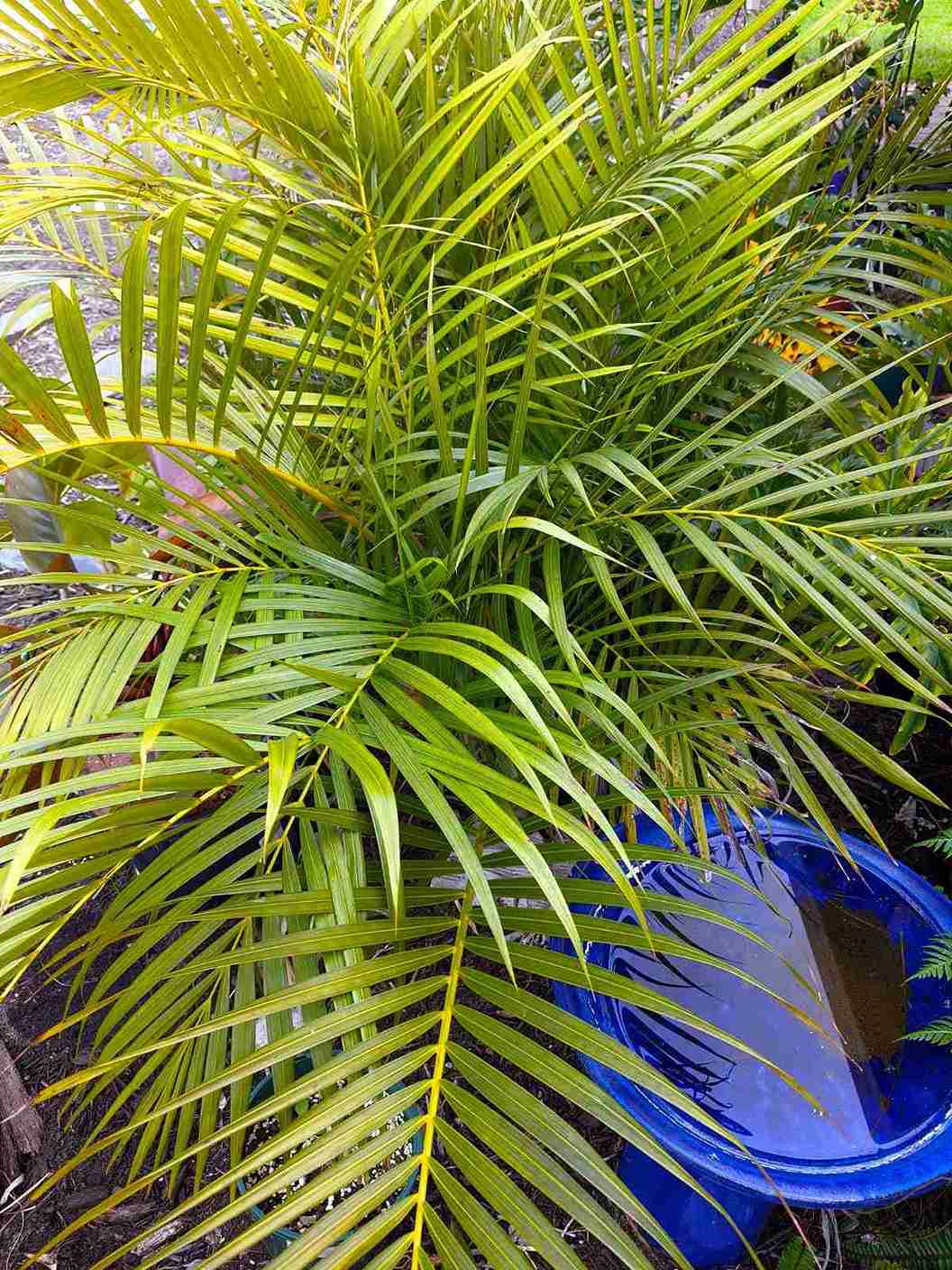
Areca Palm
Key Characteristics
- Height: 1.5 to 3 m (5-10 ft)
- Light: Bright, indirect light
- Watering: Keep soil moderately moist
- Soil: Well draining, peaty mix
- Toxicity: Non toxic to pets
Areca palms feature feathery, arching fronds that bring a soft structure to outdoor gardens. These golden green leaves fan out widely to fill empty spaces quickly.
Proper moisture keeps the foliage looking fresh and healthy all year long. Placing them in bright areas promotes full growth without burning the tender leaves.
Plant Care
Regular watering helps maintain rich leaf color during dry spells. Trimming yellow fronds near the base keeps the overall plant looking neat.
Tip: Position this plant near water features to enhance your tropical landscape design.
Plumeria (Frangipani)
Key Characteristics
- Height: 2 to 6 m (6.5-20 ft)
- Light: Full sun; needs direct light for flowers
- Watering: Water moderately during dry spells; keep dry in winter
- Soil: Well draining, sandy or loamy soil
- Toxicity: Toxic to pets
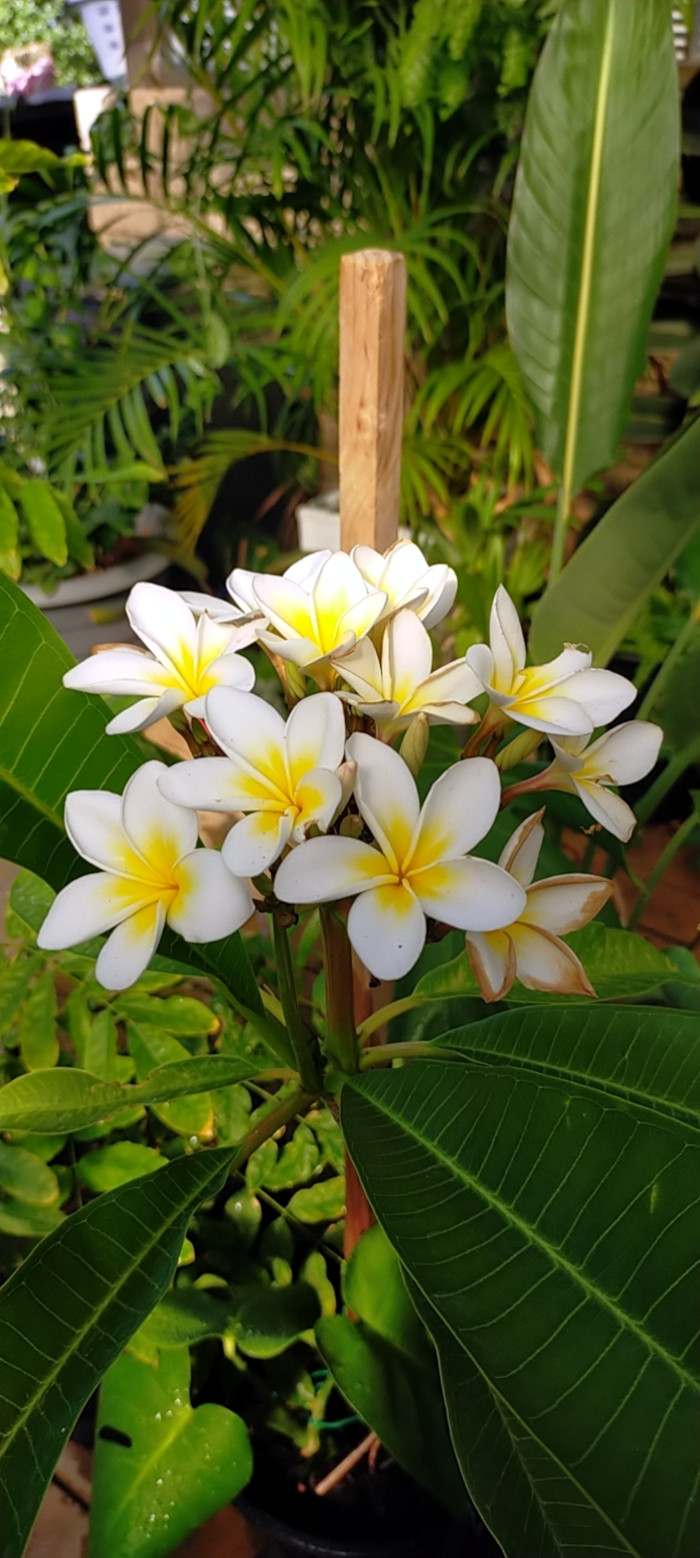
Plumeria features vibrant white flowers with rich yellow centers. These sweet blossoms release a fragrant scent that fills outdoor spaces every warm afternoon.
Growing them adds classic Hawaiian charm directly to home yards. Broad green foliage surrounds the flower clusters, creating strong visual contrasts.
Plant Care
Allow soil beds to dry out slightly between waterings to prevent root decay. Pruning stems during early spring encourages bushier growth and extra flower buds.
Tip: Plant this species near walkways or patio seating to enjoy the fragrant blooms up close.
Agave Attenuata (Foxtail Agave)
Key Characteristics
- Height: 1 to 1.5 m (3-5 ft)
- Light: Full sun to partial shade
- Watering: Low water needs; allow soil to dry completely
- Soil: Sandy, well draining succulent mix
- Toxicity: Mildly toxic to pets
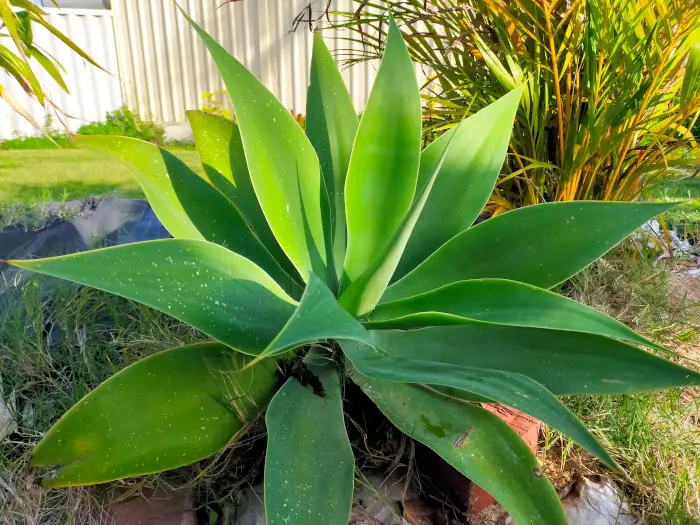
Smooth green leaves form a striking rosette shape without sharp foliage spines. Softly curved fronds create an architectural statement in rock borders or open ground.
Drought tolerance makes this succulent simple to grow in dry areas. Sunlight enhances leaf coloration while giving plants a clean, modern aesthetic.
Plant Care
Water sparingly since excess moisture causes base rot quickly. Removing old bottom leaves keeps the core rosette looking clean and tidy.
Tip: Pair this succulent with dark gravel mulch to make the bright green foliage pop visually.
Bird of Paradise (Strelitzia)
Key Characteristics
- Height: 1.5 to 2 m (5-6.5 ft)
- Light: Bright, indirect light or full sun
- Watering: Keep soil moist during spring and summer
- Soil: Rich, loamy, well draining soil
- Toxicity: Mildly toxic to pets
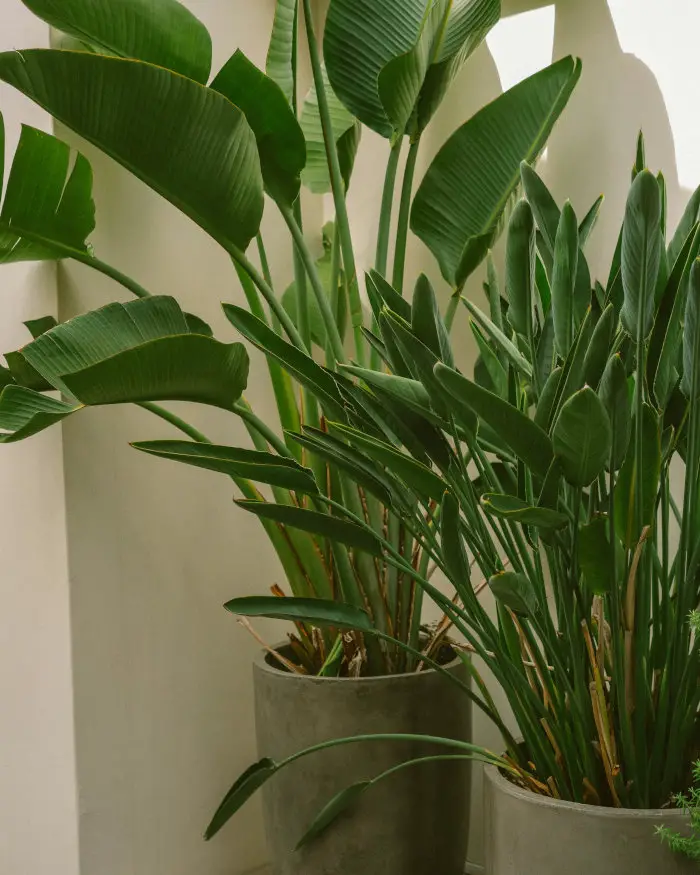
Large paddle shaped foliage stands tall inside large grey pots. Upright stems give modern courtyards a clean structure and lush green presence.
Thick foliage captures sunlight effectively while creating bold visual height. Layering potted specimens adds instant depth alongside outdoor walls.
Plant Care
Keep potted soil moist throughout warm active growing periods. Wipe down wide leaves occasionally to remove outdoor dust accumulation.
Tip: Group multiple containers together in bright corners to create a dramatic green backdrop.
Red-Edged Dracaena (Dragon Tree)
Key Characteristics
- Height: 1 to 3 m (3-10 ft)
- Light: Bright, indirect light; tolerates partial shade
- Watering: Water when top soil dries out
- Soil: Well draining potting soil
- Toxicity: Toxic to pets
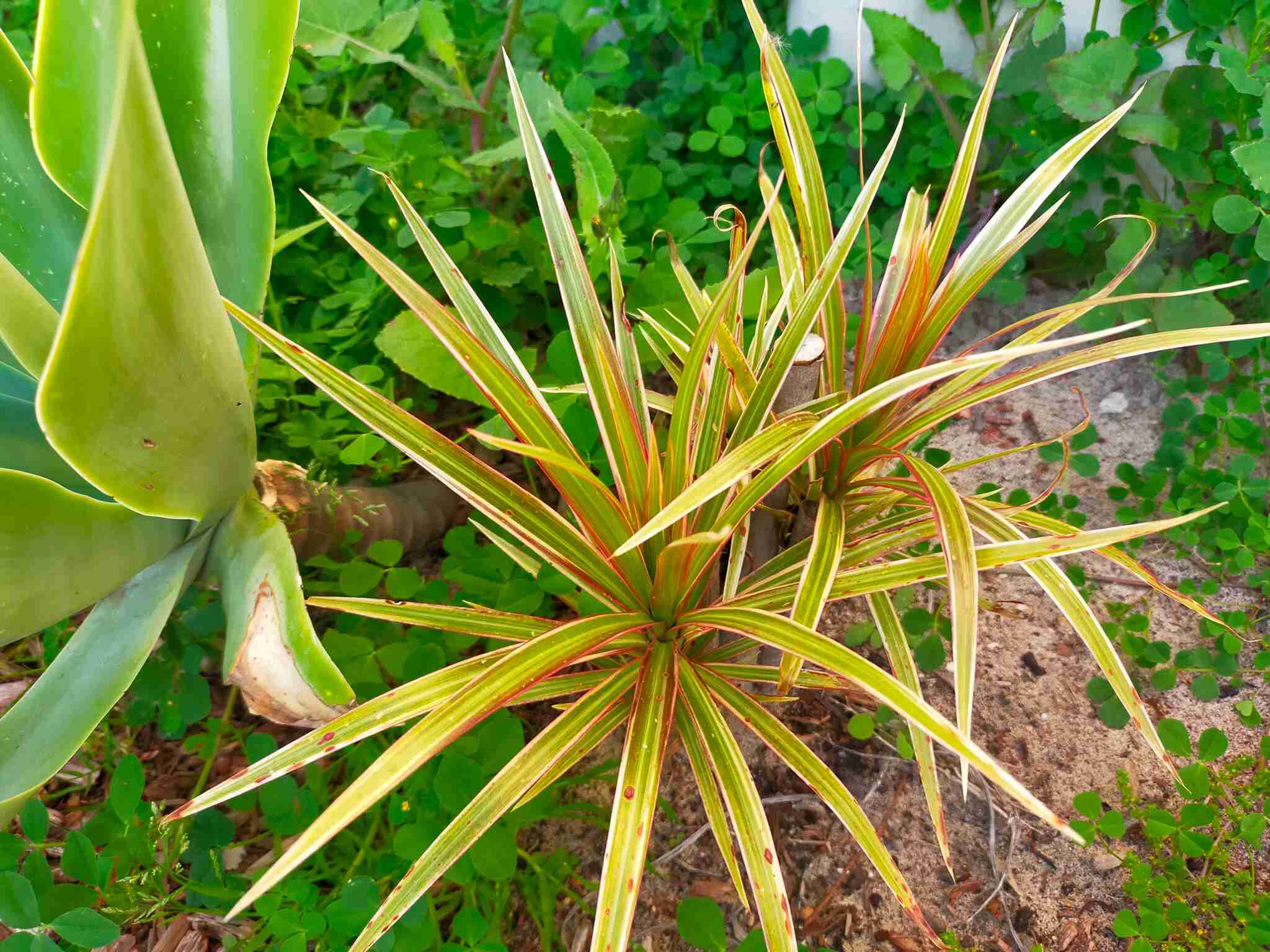
Spiky narrow leaves feature bright yellow centers edged with subtle red tones. Slender foliage fans outward from wooden central stems to form wild rosettes.
Vivid leaf margins bring immediate color accents into surrounding green landscapes. Low maintenance growth patterns make this variety very resilient outdoors.
Plant Care
Provide moderate moisture without letting roots sit in standing water. Protect thin foliage from harsh afternoon rays to prevent leaf tip burn.
Tip: Plant among low green groundcovers to showcase the unique spiky leaves and red margins.
Agapanthus (Lily of the Nile)
Key Characteristics
- Height: 0.5 to 1 m (1.5-3 ft)
- Light: Full sun to partial shade
- Watering: Regular watering; drought tolerant once established
- Soil: Well draining, fertile soil
- Toxicity: Toxic to pets
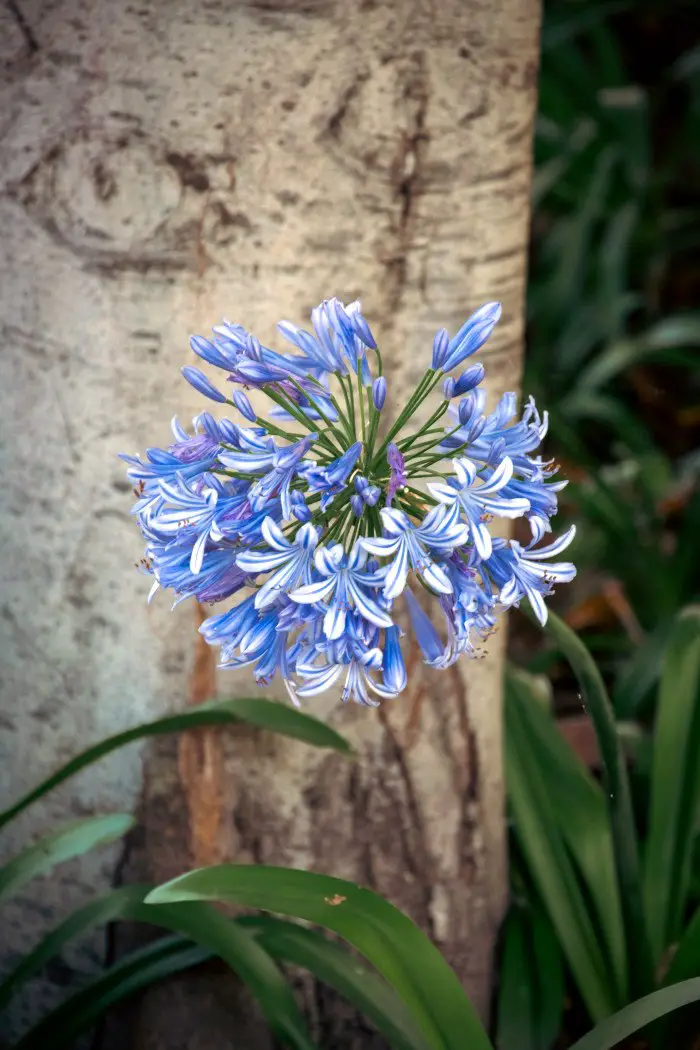
Globular clusters of trumpet shaped blue flowers bloom high above strappy green foliage. Stripe details on blue petals create stunning texture near tree trunks.
Upright flower stems add clear vertical points to garden borders. Long strappy leaves form dense clusters along ground level all year long.
Plant Care
Deadhead faded flower heads after blooming finishes to boost plant strength. Water steadily throughout summer periods to support strong flower stems.
Tip: Mass plant along garden borders for a dramatic display of blue spherical blossoms during summer.
Canna Lily
Key Characteristics
- Height: 1 to 2 m (3-6.5 ft)
- Light: Full sun for vibrant foliage colors
- Watering: High water needs; keep soil damp
- Soil: Rich, moist, organic soil
- Toxicity: Non toxic to pets
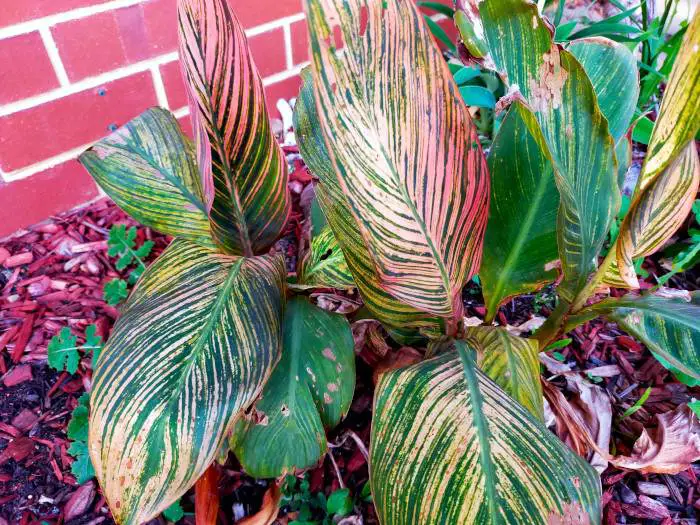
Striated leaves feature bold streaks of pink, green, and cream across broad surfaces. Variegated patterns catch light effortlessly along garden beds or brick pathways.
Lush foliage creates high visual impact even before bright flowers open up. Thick stems rise directly from underground rhizomes every growing season.
Plant Care
Keep surrounding ground consistently damp using organic wood bark mulch. Trim damaged outer leaves down to ground level to maintain neat visual lines.
Tip: Combine variegated varieties with dark green foliage plants to highlight these colorful leaf stripes.
Oyster Plant (Tradescantia Spathacea)
Key Characteristics
- Height: 0.3 to 0.5 m (1-1.5 ft)
- Light: Partial shade to full sun
- Watering: Moderate water; tolerates short dry periods
- Soil: Well draining soil mix
- Toxicity: Toxic to pets
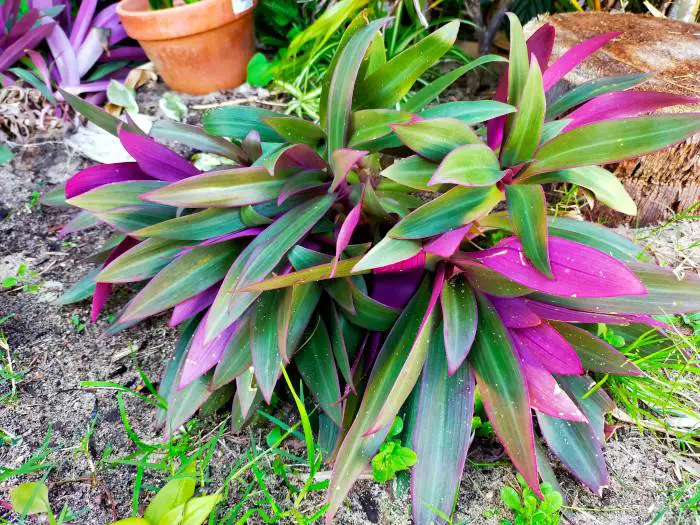
Sword like leaves showcase rich green tops with vibrant purple undersides. Spreading growth patterns turn this species into an impressive dense groundcover layer.
Colorful leaf contrast offers instant brightness along exposed garden soil or borders. Compact sizes fit easily into small planting spaces or patio containers.
Plant Care
Maintain well draining soil beds to prevent crown moisture accumulation. Divide crowded clumps during spring to spread rich purple coverage across garden areas.
Tip: Use along sunny borders so wind lifts the leaves and reveals the bright purple undersides.
Sword Fern (Nephrolepis)
Key Characteristics
- Height: 0.5 to 1 m (1.5-3 ft)
- Light: Partial to full shade
- Watering: Consistent moisture; keep soil damp
- Soil: Rich, organic, well draining soil
- Toxicity: Non toxic to pets
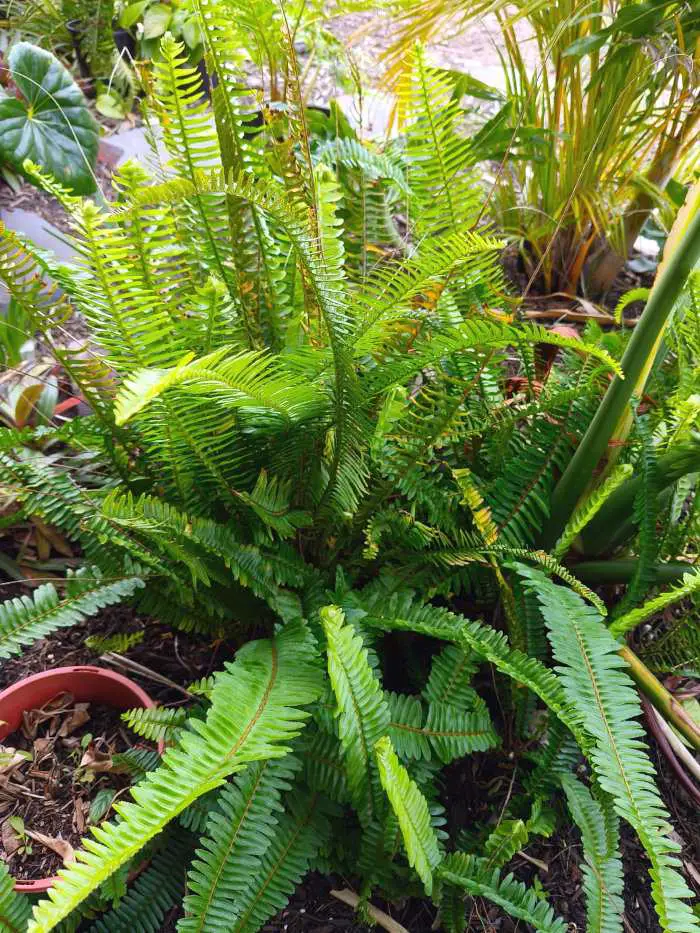
Bright green fronds arch outward in dense, feathery clusters. Upright leaves fill shaded garden beds with delicate natural textures.
Shade environments help foliage maintain rich coloration without scorching. Growing ferns creates lush understory layers beneath larger tropical trees.
Plant Care
Mist foliage during hot spells to boost surrounding air moisture. Prune old brown fronds at soil level to clear room for new fiddleheads.
Tip: Plant beneath tall palms to build a lush, multi-layered forest floor look.
Clumping Bamboo
Key Characteristics
- Height: 2 to 4 m (6.5-13 ft)
- Light: Full sun to partial shade
- Watering: Regular watering; keep root zone moist
- Soil: Fertile, well draining loamy soil
- Toxicity: Non toxic to pets
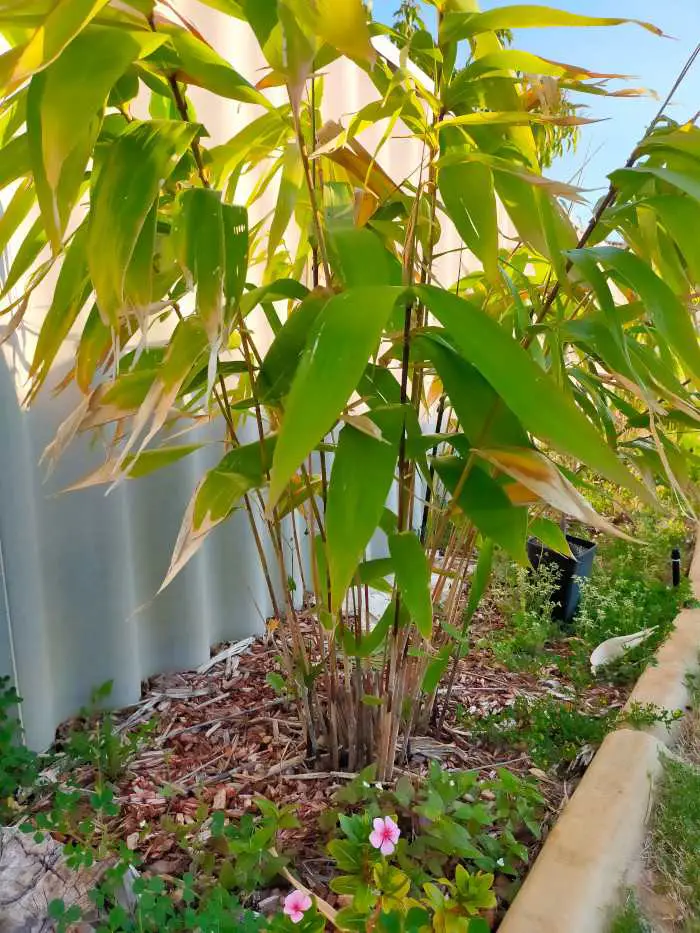
Slender canes grow tightly together to form natural privacy screens. Soft green leaves sway gently in outdoor breezes to add soothing movement.
Clumping growth habits keep root systems contained near planted areas. Wood mulch beds protect delicate young shoots emerging from soil bases.
Plant Care
Supply steady water during summer months to power quick vertical growth. Remove dry outer stems each spring to maintain clean visual lines.
Tip: Use along property fences to create an organic, living privacy wall.
Thaumatophyllum Xanadu
Key Characteristics
- Height: 0.8 to 1.2 m (2.5-4 ft)
- Light: Bright, indirect light or partial shade
- Watering: Water when top inch of soil feels dry
- Soil: Rich, well draining potting mix
- Toxicity: Toxic to pets
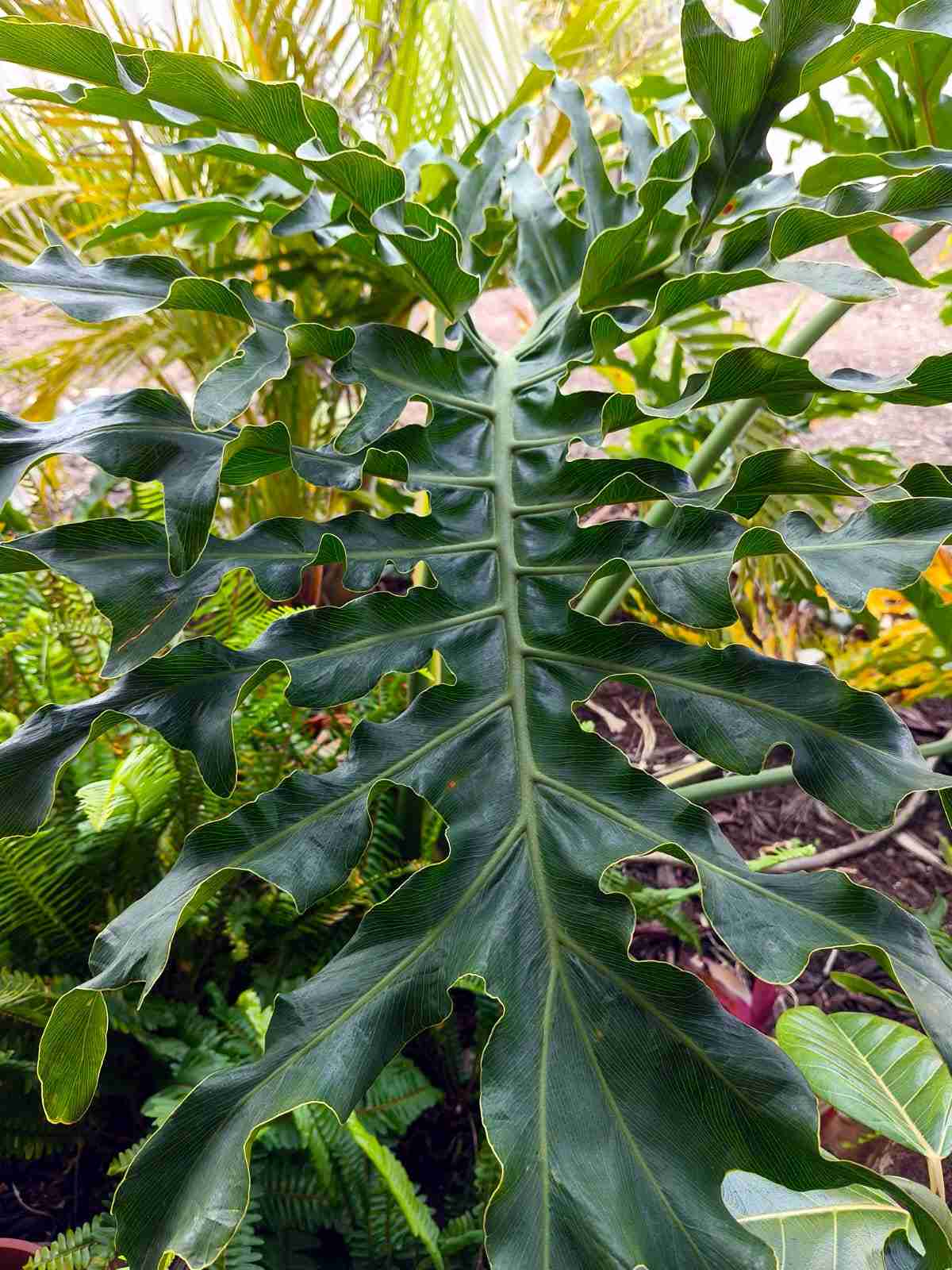
Deeply lobed green leaves display distinct rippled edges across wide surfaces. Thick glossy fronds create bold tropical shapes in shaded garden borders.
Low mounding forms fill understory spaces without overpowering nearby plants. Robust foliage resists heavy wind damage in sheltered outdoor locations.
Plant Care
Allow top soil layers to dry slightly between thorough waterings. Apply balanced liquid fertilizer during active spring growing seasons.
Tip: Pair with fine textured ferns to highlight the dramatic lobed leaf shapes.
Golden Bamboo
Key Characteristics
- Height: 3 to 6 m (10-20 ft)
- Light: Full sun to light shade
- Watering: Regular moisture; tolerates brief dryness once established
- Soil: Adapts well to most well draining soils
- Toxicity: Non toxic to pets
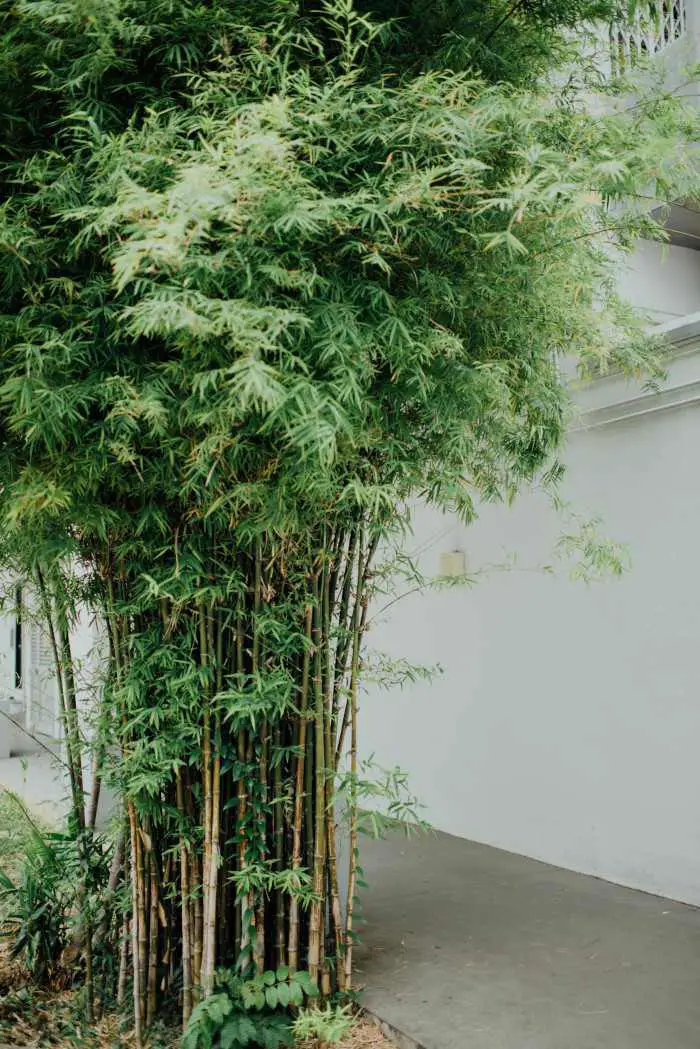
Tall golden stems rise high against building exterior walls. Airy green foliage forms dense upper canopies that soften hard architectural edges.
Vertical canes create strong structural accents in modern landscape schemes. Sun exposed canes develop rich yellow tones along polished stem surfaces.
Plant Care
Water deeply during dry summer periods to keep upper foliage dense. Thin out older central canes annually to encourage fresh cane growth.
Tip: Plant near white exterior walls to create striking geometric shadow patterns.
Rubber Plant (Ficus Elastica)
Key Characteristics
- Height: 2 to 5 m (6.5-16 ft) outdoors
- Light: Bright, indirect sunlight
- Watering: Water when top half of soil dries out
- Soil: Well draining potting soil
- Toxicity: Toxic to pets
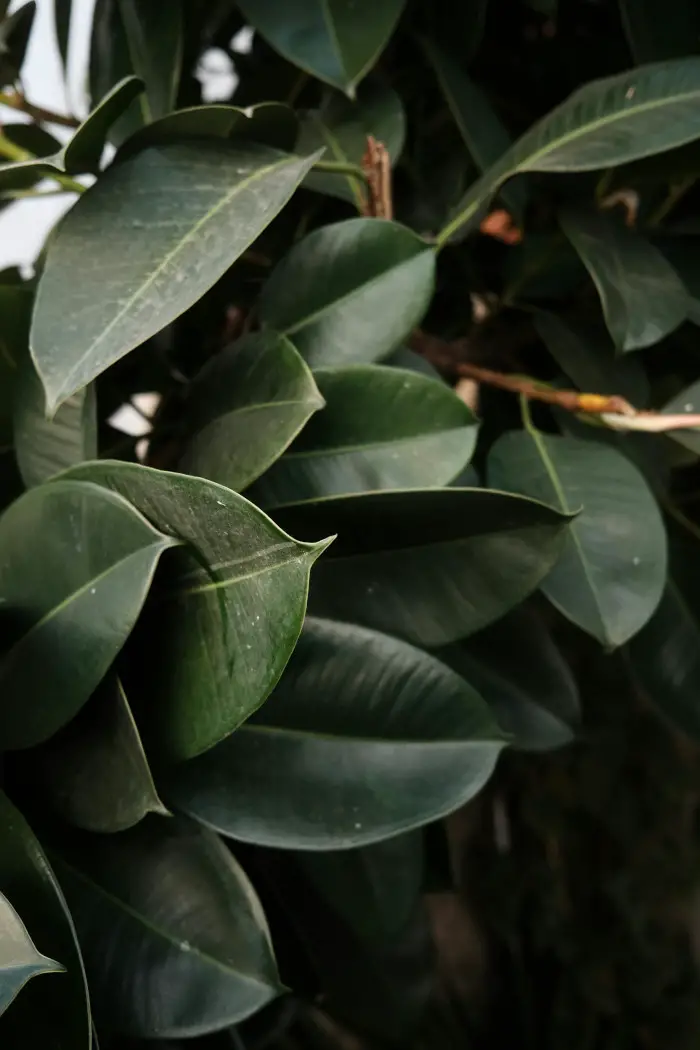
Thick oval leaves feature deep green glossy surfaces and sturdy central veins. Dense foliage creates a heavy, dramatic presence in shaded garden spots.
Leathery leaf textures naturally withstand warm outdoor humidity levels. Sturdy branches support broad leaves that cast pleasant garden shade.
Plant Care
Wipe wide leaves with damp cloths to clear dust build up. Avoid overwatering roots to prevent leaf drop near lower branches.
Tip: Position near garden pathways where glossy leaves catch filtered sunlight.
Asian Watermist (Pellionia)
Key Characteristics
- Height: 0.2 to 0.4 m (0.5-1.3 ft)
- Light: Partial shade to medium shade
- Watering: High water needs; keep soil damp
- Soil: Rich, moist organic soil
- Toxicity: Non toxic to pets
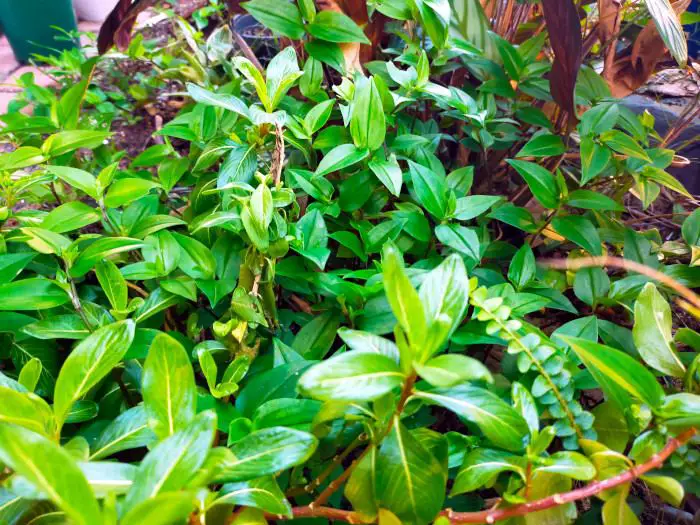
Smooth green leaves spread low to form vibrant groundcover mats. Soft trailing stems root easily across damp soil beds beneath taller shrubs.
Dense leaf layers suppress weeds effectively while holding ground moisture. Bright foliage adds fresh green tones across dark garden soil areas.
Plant Care
Keep planting beds consistently damp to support rapid spreading growth. Trim back runner stems occasionally to manage spread along pathway edges.
Tip: Grow as a living mulch beneath leggy shrubs to fill empty ground space.
Variegated Croton
Key Characteristics
- Height: 1 to 1.8 m (3-6 ft)
- Light: Bright direct sunlight for best color
- Watering: Regular moisture; avoid soggy roots
- Soil: Well draining, nutrient rich soil
- Toxicity: Toxic to pets
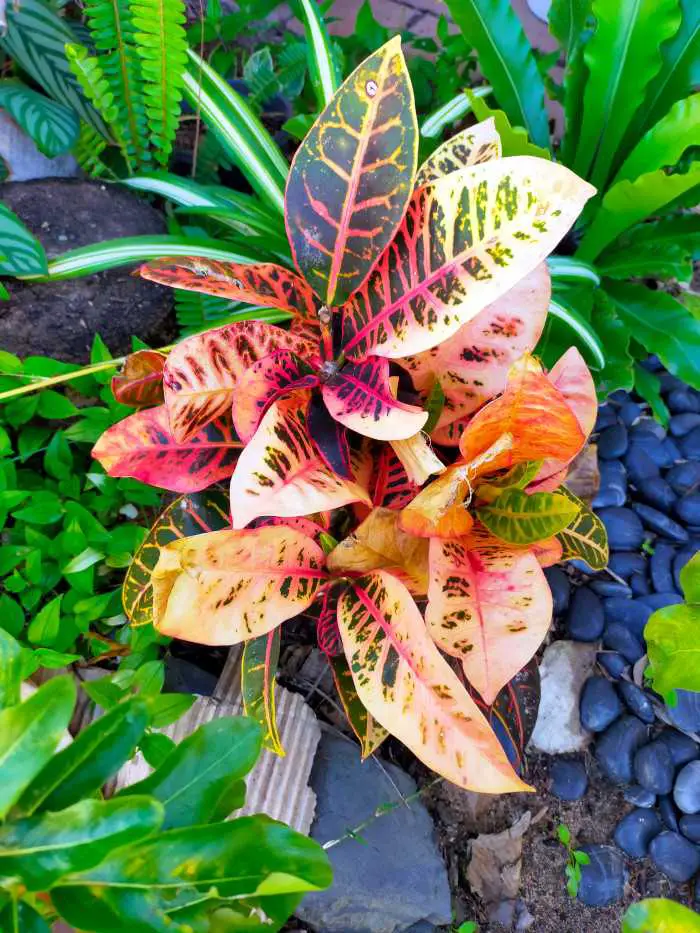
Striking foliage displays mixed shades of pink, yellow, orange, and deep red. Broad leaves feature strong yellow vein patterns against dark green backgrounds.
Bright sunshine intensifies leaf colors across outer growing tips. Distinct foliage creates an instant focal point along dark stone borders.
Plant Care
Maintain warm sunny placements to prevent leaves from losing rich tones. Protect plants from sudden cold drafts or strong freezing winds.
Tip: Surround with dark river rocks to make the fiery leaf colors pop visually.
Variegated Ginger (Alpinia Zerumbet)
Key Characteristics
- Height: 1 to 2 m (3-6.5 ft)
- Light: Partial shade; keep safe from harsh afternoon sun
- Watering: Keep soil evenly moist; never let roots dry completely
- Soil: Rich, organic, well draining soil
- Toxicity: Non toxic to pets
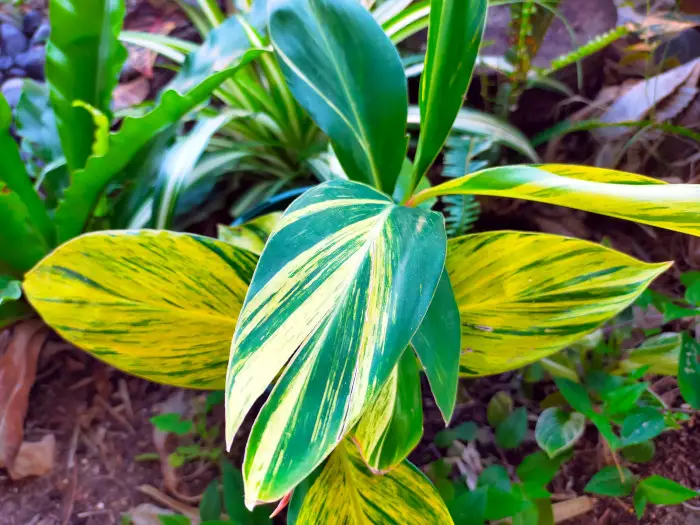
Bright yellow stripes sweep across thick green leaves to create dynamic contrast. Broad foliage spreads outward to form dense foliage clumps along garden pathways.
Shaded beds help preserve vivid leaf variegation without causing unsightly brown tips. Strong stems support lush foliage that holds up well against light winds.
Plant Care
Water routinely during warm months to maintain healthy foliage growth. Add organic compost around the plant base to enrich surrounding soil nutrients.
Tip: Plant alongside dark green shrubs to make the golden leaf stripes stand out dramatically.
Birds Nest Fern (Asplenium Nidus)
Key Characteristics
- Height: 0.6 to 1.2 m (2-4 ft)
- Light: Medium to bright indirect light; deep shade tolerant
- Watering: Water around outer edges; avoid pouring into central nest
- Soil: Loose, highly porous, well draining potting mixture
- Toxicity: Non toxic to pets
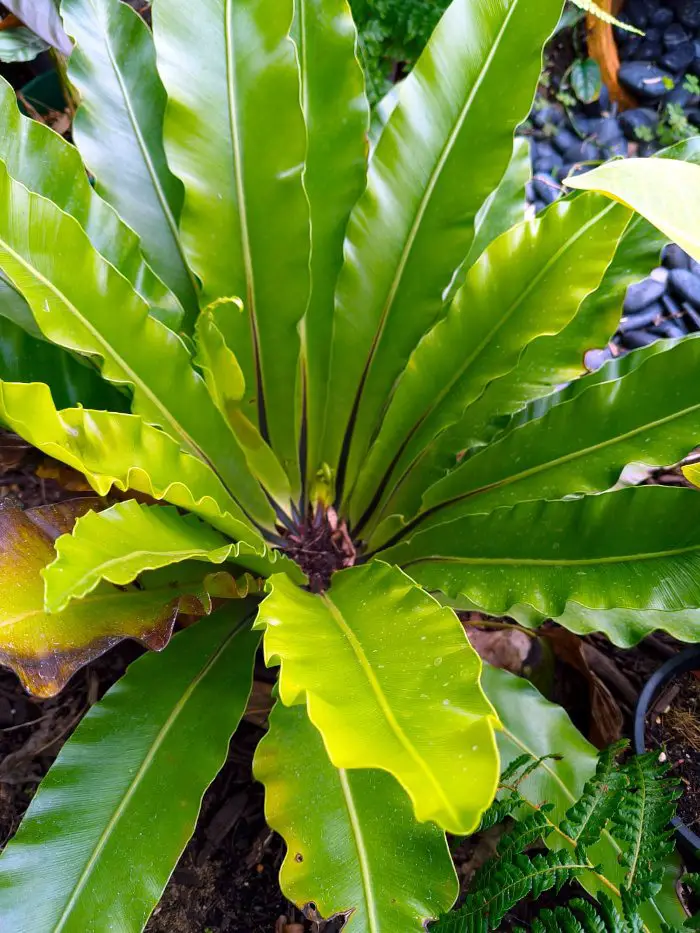
Wavy green fronds radiate outward from a dark central rosette core. Glossy leaf surfaces feature ruffled edges that catch surrounding natural light softly.
Growing in shady spots gives this fern a fresh, vibrant green appearance. Rosette structures collecting falling organic material mimic wild jungle growth habits.
Plant Care
Keep central crowns free of standing water to prevent rot problems. Mist fronds occasionally during dry spells to maintain high ambient humidity.
Tip: Mount on tree trunks or display in raised containers to highlight the rosette shape.
Ti Plant (Cordyline Fruticosa)
Key Characteristics
- Height: 1 to 2.5 m (3-8 ft)
- Light: Bright indirect light; partial morning sun
- Watering: Keep soil moist; avoid waterlogged roots
- Soil: Well draining, rich loamy soil
- Toxicity: Toxic to pets
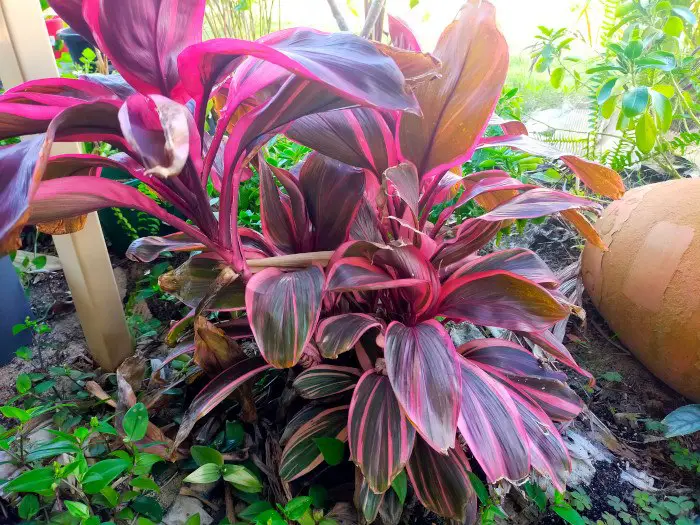
Electric pink and deep magenta margins decorate broad lance shaped leaves. Upright stems produce dense rosettes that bring bold color into shaded spots.
Tropical gardens gain instant visual warmth through these vibrant foliage colors. Layering foliage at mid level heights builds compelling multi-tiered landscape layouts.
Plant Care
Provide consistent moisture to prevent bottom foliage from drying out early. Prune tall leggy stems in spring to stimulate new lower leaf growth.
Tip: Group multiple stalks together near entryways to create a striking colorful welcome accent.
Gardenia
Key Characteristics
- Height: 1 to 1.5 m (3-5 ft)
- Light: Full sun to light partial shade
- Watering: Regular watering; needs moist, acidic conditions
- Soil: Well draining, acidic, organic rich soil
- Toxicity: Toxic to pets
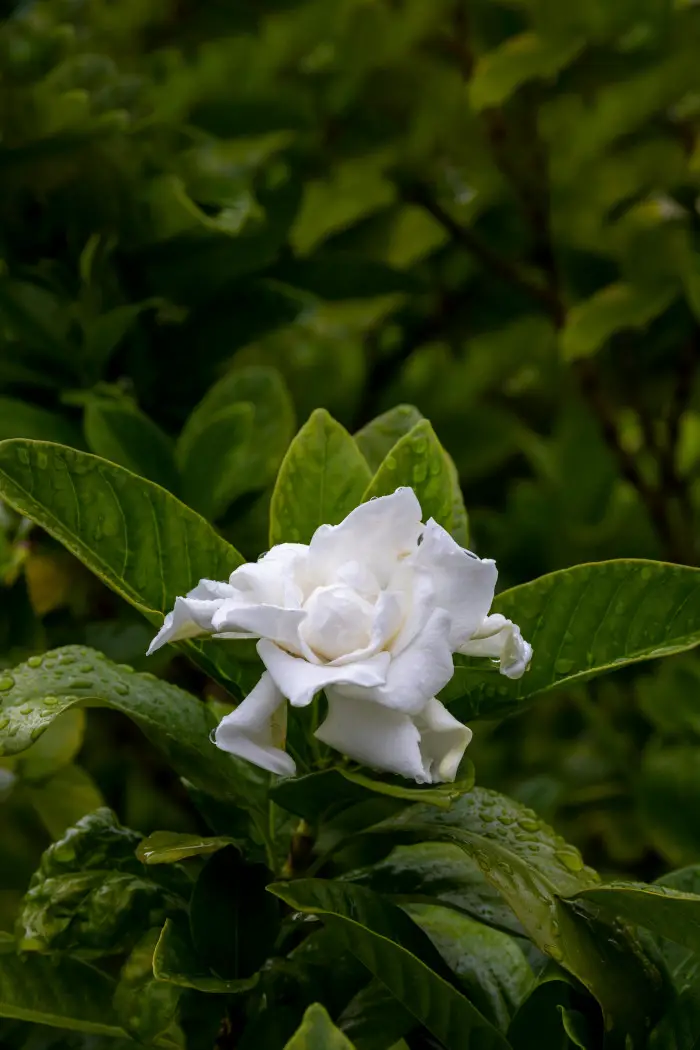
Velvety white blossoms stand out against dark, glossy evergreen leaves. Dew drops resting on soft flower petals enhance their elegant, fresh look.
Intense sweet fragrance wafts through outdoor spaces every morning during bloom season. Compact bush habits make this flowering shrub an enduring landscape classic.
Plant Care
Feed with acid loving plant fertilizer after main spring flowering periods finish. Prune lightly following bloom cycles to maintain an even, compact shape.
Tip: Locate near bedroom windows or patio seating to enjoy the rich flower scent daily.
Spider Plant (Chlorophytum Comosum)
Key Characteristics
- Height: 0.3 to 0.6 m (1-2 ft)
- Light: Bright indirect light; tolerates low shade
- Watering: Water when top soil surface feels dry
- Soil: Well draining standard potting soil
- Toxicity: Non toxic to pets
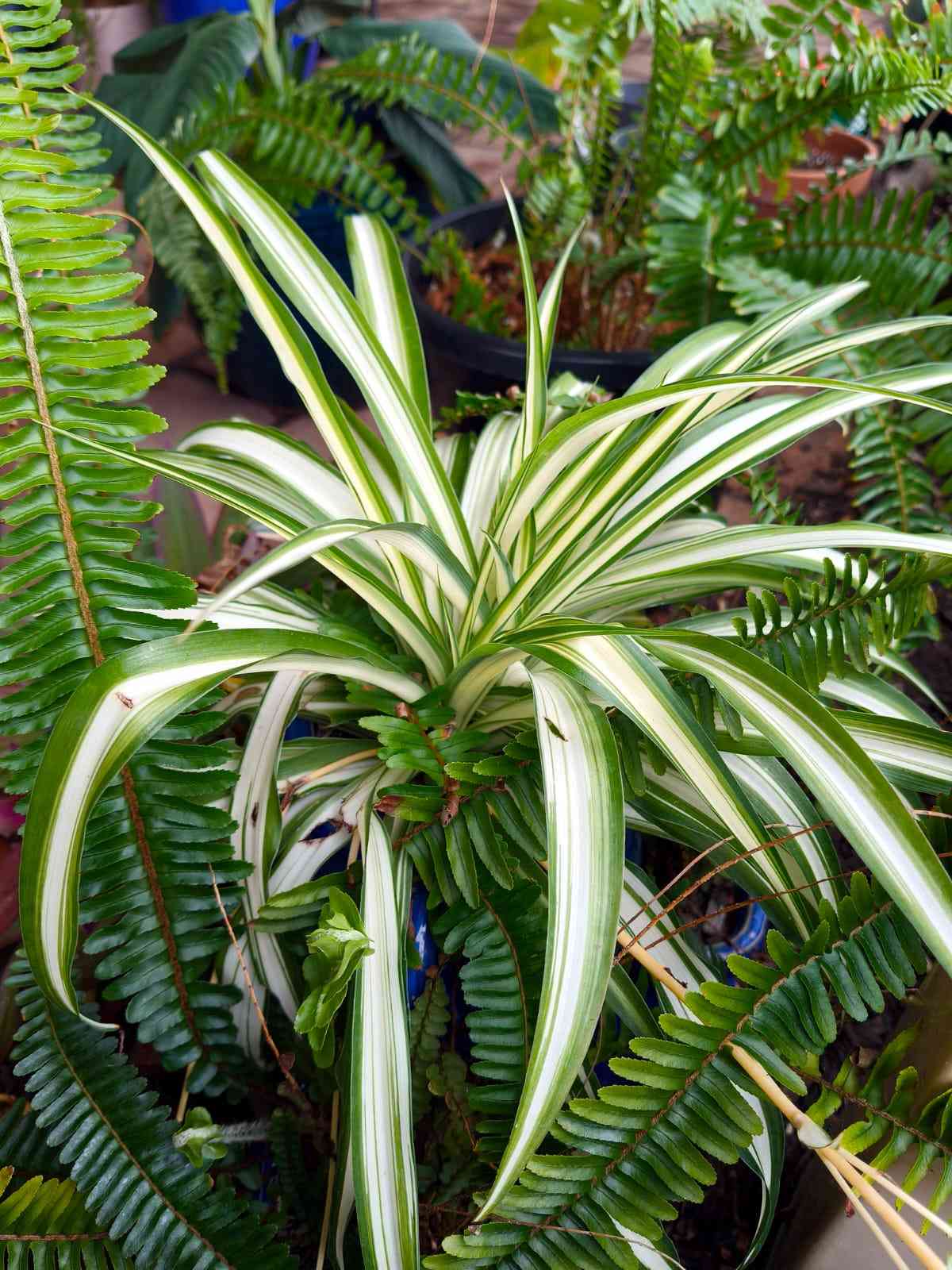
Long arching leaves feature crisp white center stripes framed by green margins. Dense foliage clumps cascade outward, filling pots or ground cover beds easily.
Trailing plantlets dangle gracefully from mature stems to produce effortless new plants. Highly adaptable nature makes growing this species stress free for beginners.
Plant Care
Allow soil to dry slightly between waterings to encourage strong root systems. Snip off baby plantlets to propagate new starts or keep parents compact.
Tip: Display in hanging baskets to let arching leaves and dangling runners cascade freely.
Australian Tree Fern (Cyathea Cooperi)
Key Characteristics
- Height: 2 to 4 m (6.5-13 ft)
- Light: Partial shade; protect from harsh direct rays
- Watering: Keep trunk and root area consistently wet
- Soil: Rich, moist, well draining organic soil
- Toxicity: Non toxic to pets
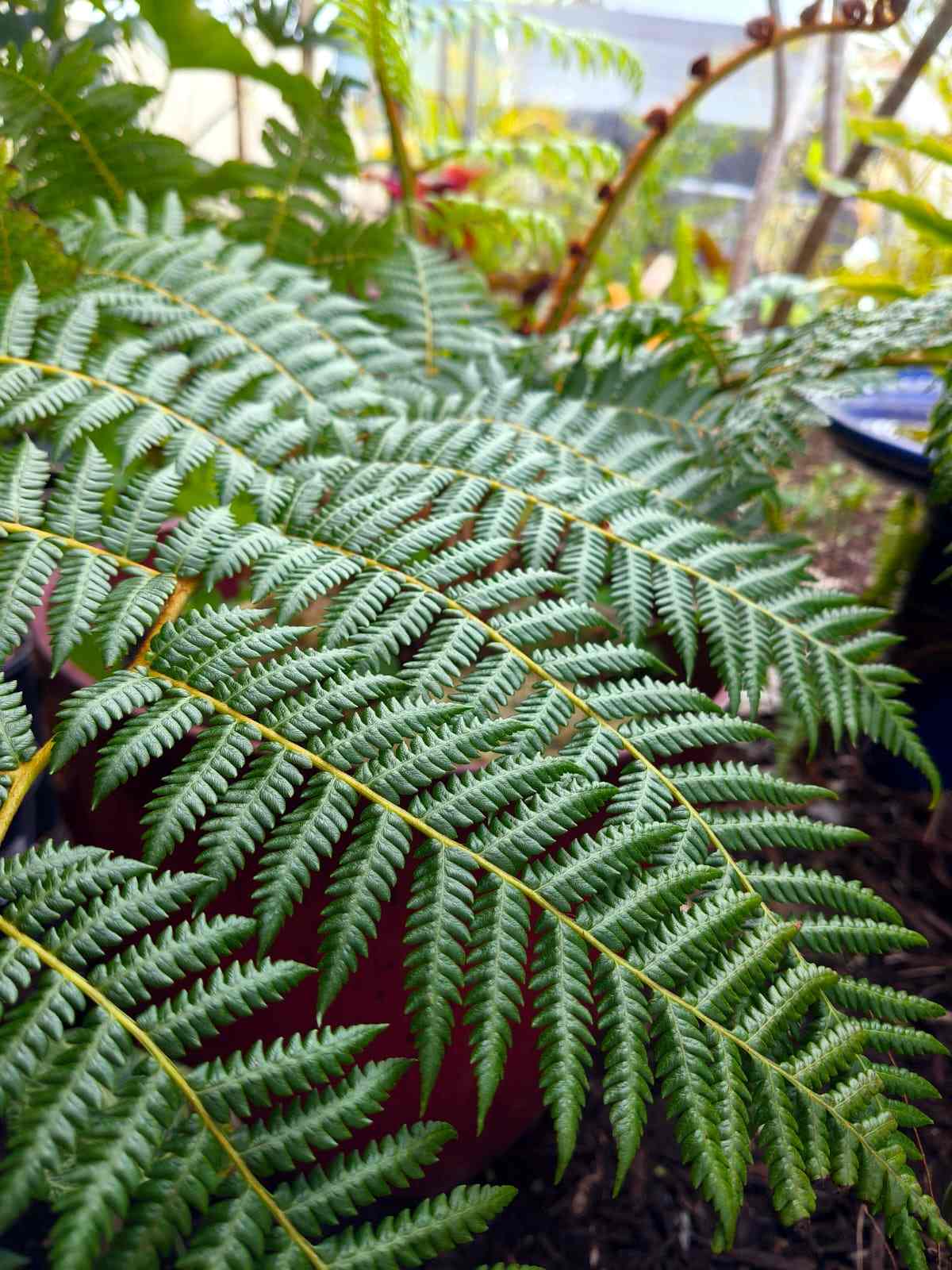
Lacy green fronds unfurl into broad arching canopies above sturdy fibrous trunks. Intricate leaflet patterns create airy textures that soften shaded garden corners.
Ancient fern foliage brings timeless rainforest atmosphere into home outdoor spaces. Tall spreading fronds filter overhead sunlight to shelter lower groundcover plants.
Plant Care
Water central trunks directly to keep growing tips moist and healthy. Protect fronds from strong dry winds to avoid leaf edge browning.
Tip: Plant near garden pathways where visitors can walk beneath the impressive arching fronds.
Conclusion
Tropical garden plants can transform an ordinary outdoor area with dramatic foliage, interesting textures, and vibrant seasonal color. Palms, flowering plants, large leaf varieties, and dense greenery can be layered together to create the lush appearance associated with tropical landscapes.
Choose plants based on your climate, sunlight, soil, moisture, and available growing space. Gardeners in colder regions can grow some tropical varieties in containers and move them to protected locations when temperatures fall. With thoughtful plant selection, even a smaller garden can capture a beautiful tropical atmosphere.
Frequently Asked Questions
What plants are good for a tropical garden?
Palms, elephant ears, canna lilies, hibiscus, bird of paradise, banana plants, ferns, and bromeliads are commonly associated with tropical style gardens. Suitability depends on your local climate.
How do I make my garden look more tropical?
Layer plants with different heights and leaf sizes, use plenty of lush foliage, and add colorful flowering plants as accents. Dense planting can also help create a fuller tropical appearance.
Can tropical plants grow in cold climates?
Some can be grown seasonally or kept in containers and moved indoors or into protected spaces during colder weather. Always check the temperature tolerance of each plant.
What tropical plants have large leaves?
Elephant ears, banana plants, bird of paradise, philodendrons, and several palm varieties can provide dramatic foliage that works well in tropical inspired landscapes.
Do tropical garden plants need full sun?
Not all of them. Some tropical plants prefer full sun, while others grow better in partial shade or filtered light. Check the requirements of each species before choosing its location.
Can I create a tropical garden in a small backyard?
Yes. Use compact varieties, containers, vertical planting, and a few statement foliage plants rather than filling every available area. Layering plants carefully can create a lush look without overwhelming a small space.