Raising ducks can be rewarding, but they need a safe and comfortable space to thrive. A well-designed enclosure protects them from predators, gives them room to move, and helps keep the area clean and organized. Some duck keepers prefer simple backyard setups, while others build larger shelters with fenced runs and covered sections.
This collection of DIY duck enclosure ideas showcases different designs that can fit various spaces and budgets. Each setup offers unique features that support duck health, safety, and daily care. From rustic wooden shelters to creative repurposed structures, these examples can help you find inspiration for your own flock. A thoughtful enclosure can make duck keeping easier while creating a secure home for your birds.
1. Rustic Wooden Duck House
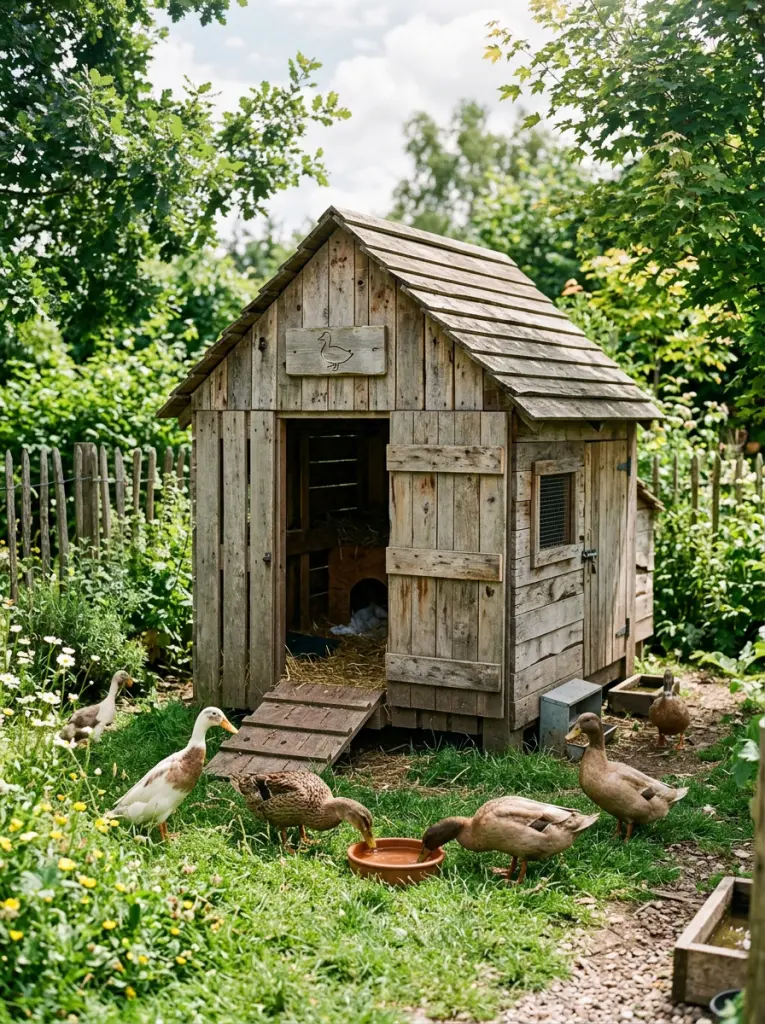
This enclosure features a handcrafted wooden duck house surrounded by lush garden plants. A small ramp leads into the shelter, giving ducks easy access while providing a dry and secure resting space.
Natural wood blends beautifully with the landscape and creates a cozy backyard setup. The surrounding grass also gives the flock room to forage throughout the day.
2. Covered Pallet Duck Run
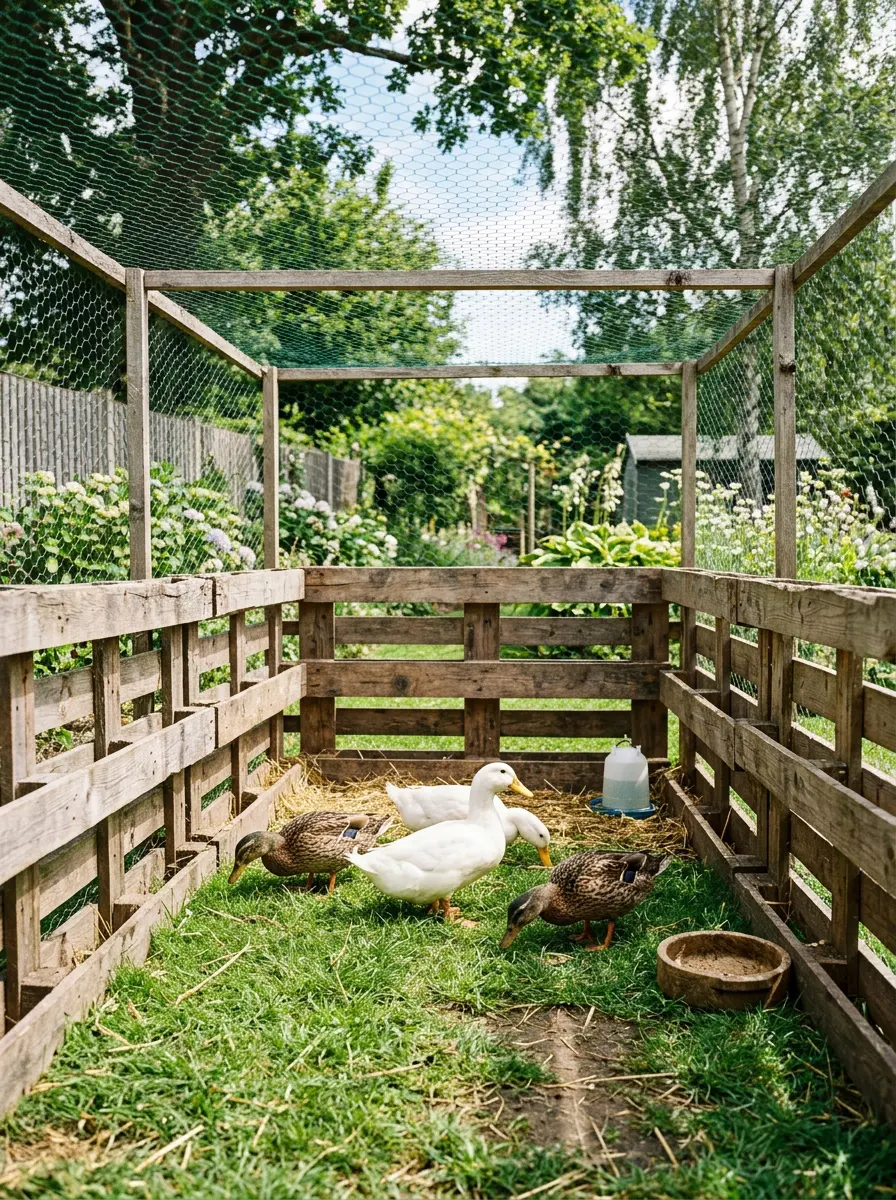
Built with pallet style fencing and overhead wire mesh, this enclosure offers protection from aerial predators while keeping ducks safely contained.
Open sides allow fresh air to circulate, and the grassy floor provides a comfortable surface for feeding, walking, and daily activity.
3. Raised Coop With Attached Run
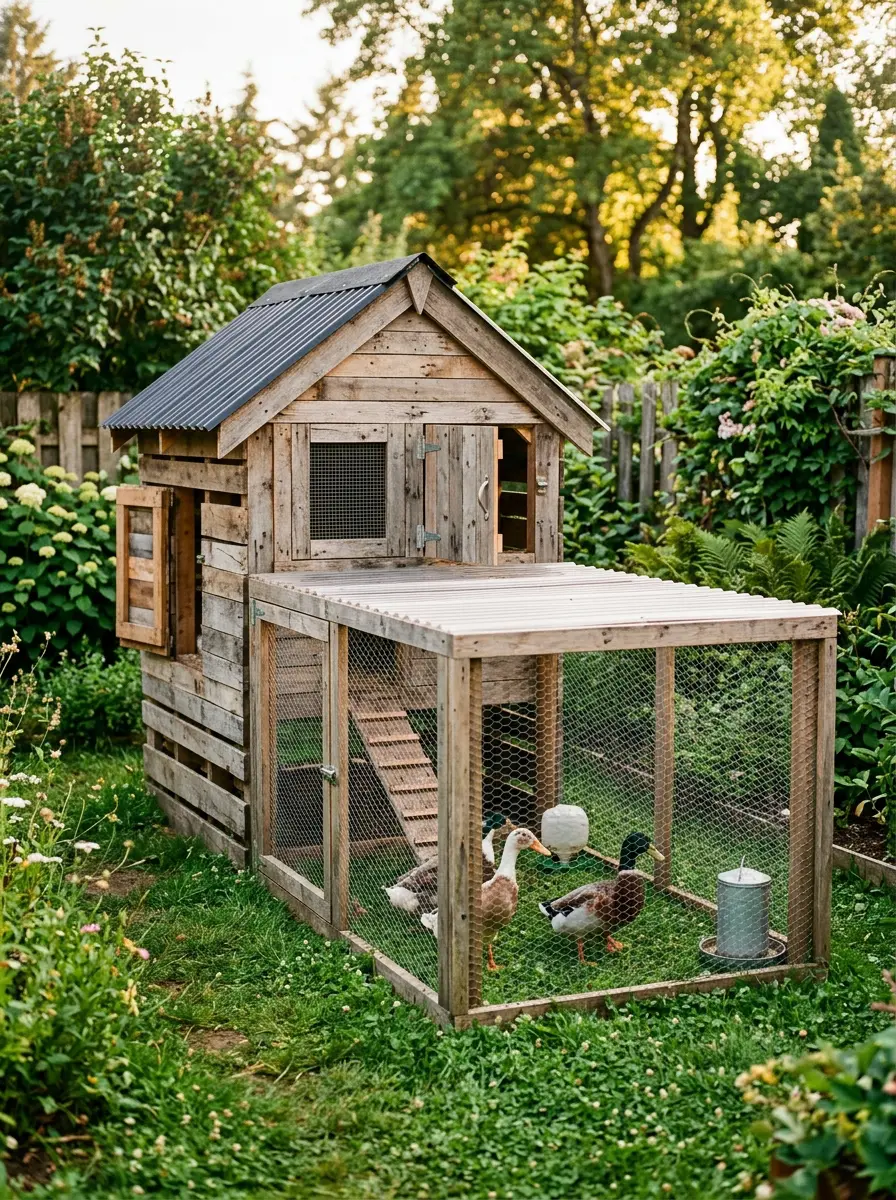
This design combines an elevated duck house with a secure wire enclosed run underneath. A ramp connects the shelter to the outdoor section, making movement simple for the flock.
Separate areas for sleeping and exercise help keep the enclosure organized while maximizing space in a smaller backyard.
4. Compact Backyard Duck Shelter
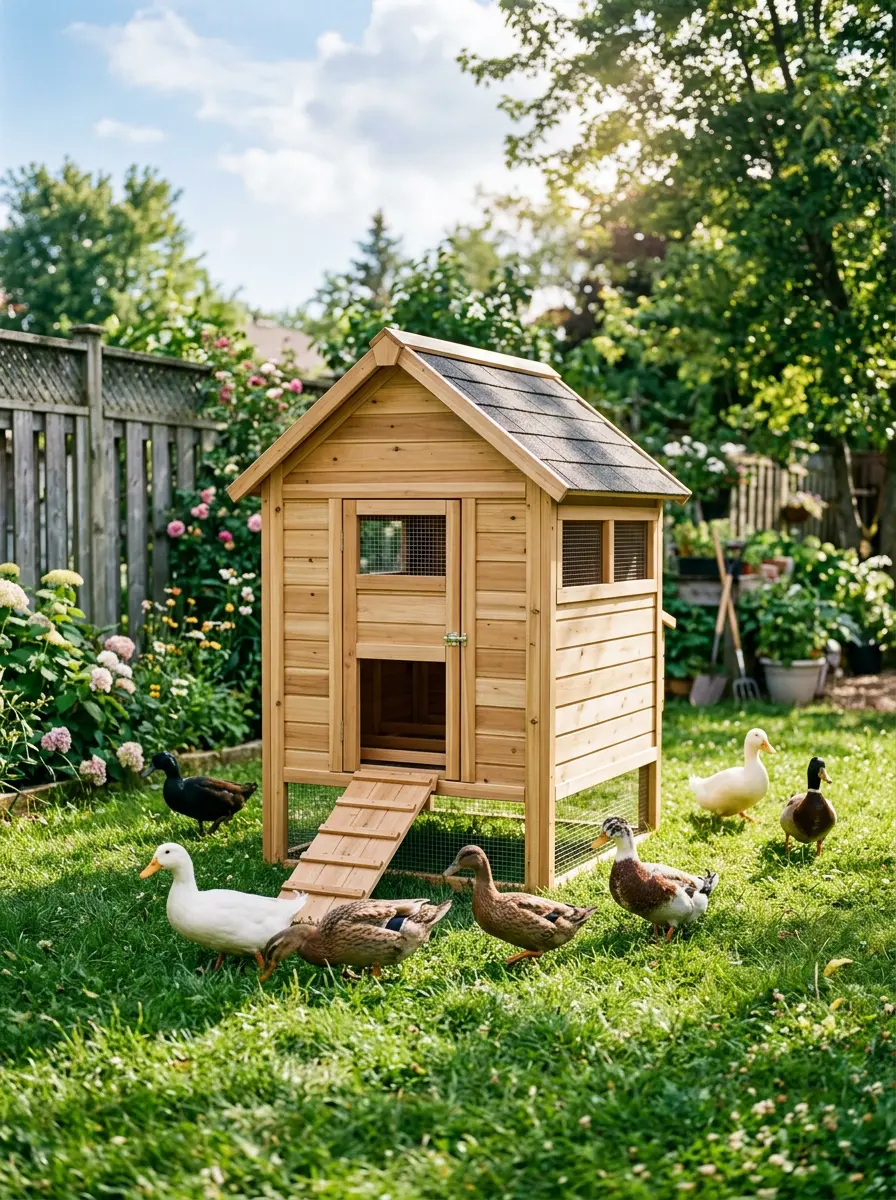
A simple wooden shelter stands above ground level with a small access ramp for ducks. Ventilation windows help improve airflow inside the structure.
Its compact footprint makes it suitable for homeowners who want a dedicated duck house without taking up a large portion of the yard.
5. Duck Enclosure With Pond Area
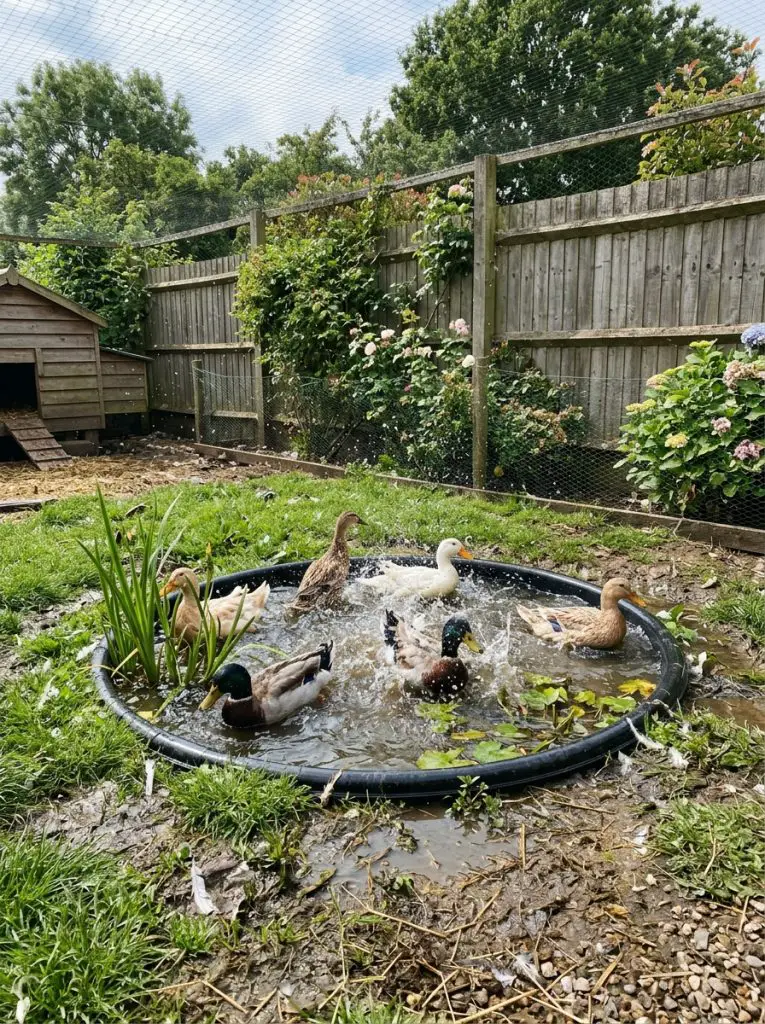
This setup includes a shallow pond where ducks can swim, splash, and clean their feathers. The fenced enclosure helps keep the flock protected while allowing plenty of outdoor activity.
Adding a water feature supports natural duck behavior and creates a more enriching environment.
6. Simple Wire Fenced Duck Pen
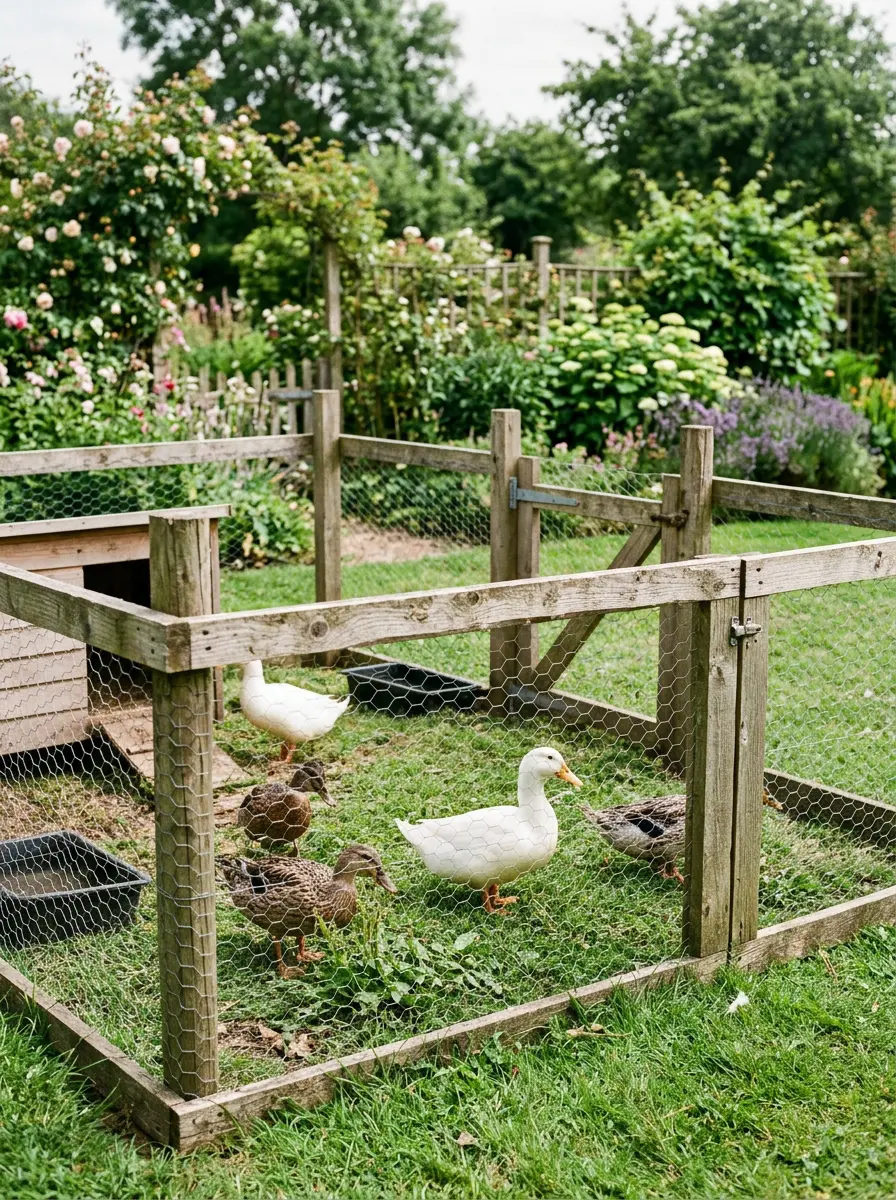
Wooden posts and wire mesh create a straightforward enclosure that provides security while maintaining visibility throughout the space.
The grassy ground offers room for grazing, and the nearby shelter gives ducks a place to rest when needed.
7. Raised Duck Bath Platform
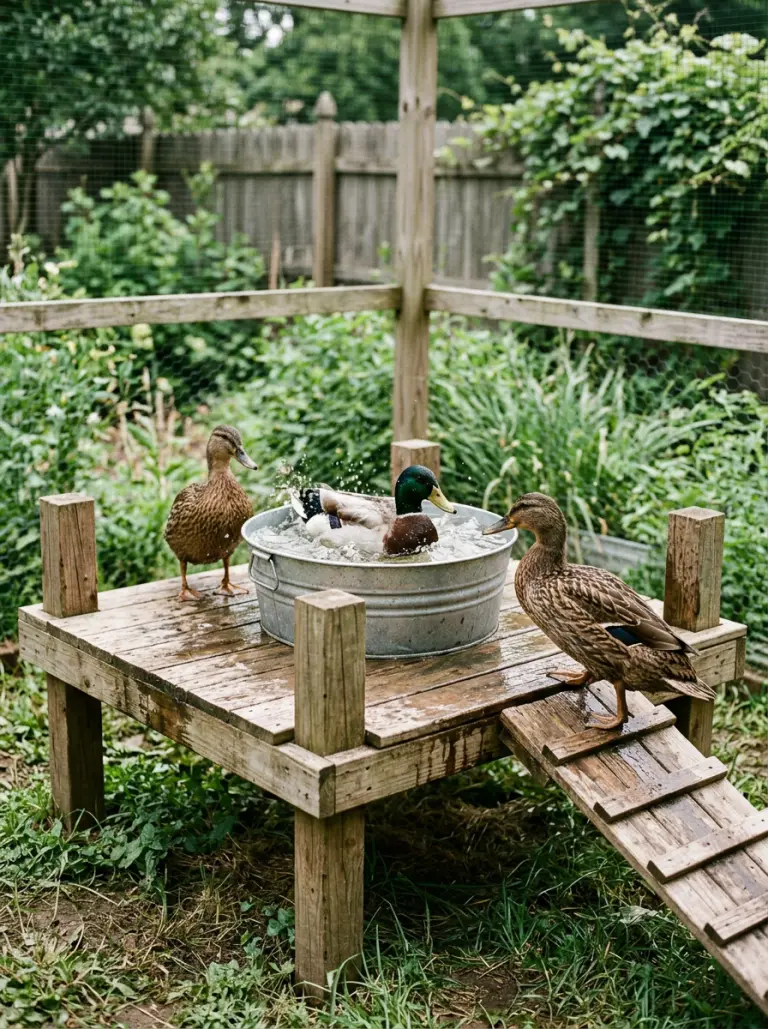
A sturdy wooden platform supports a metal tub filled with water for bathing. Small ramps make it easy for ducks to climb up and access the tub.
Keeping the bath elevated can help reduce muddy conditions and concentrate water activity in one area.
8. Outdoor Feeding Station
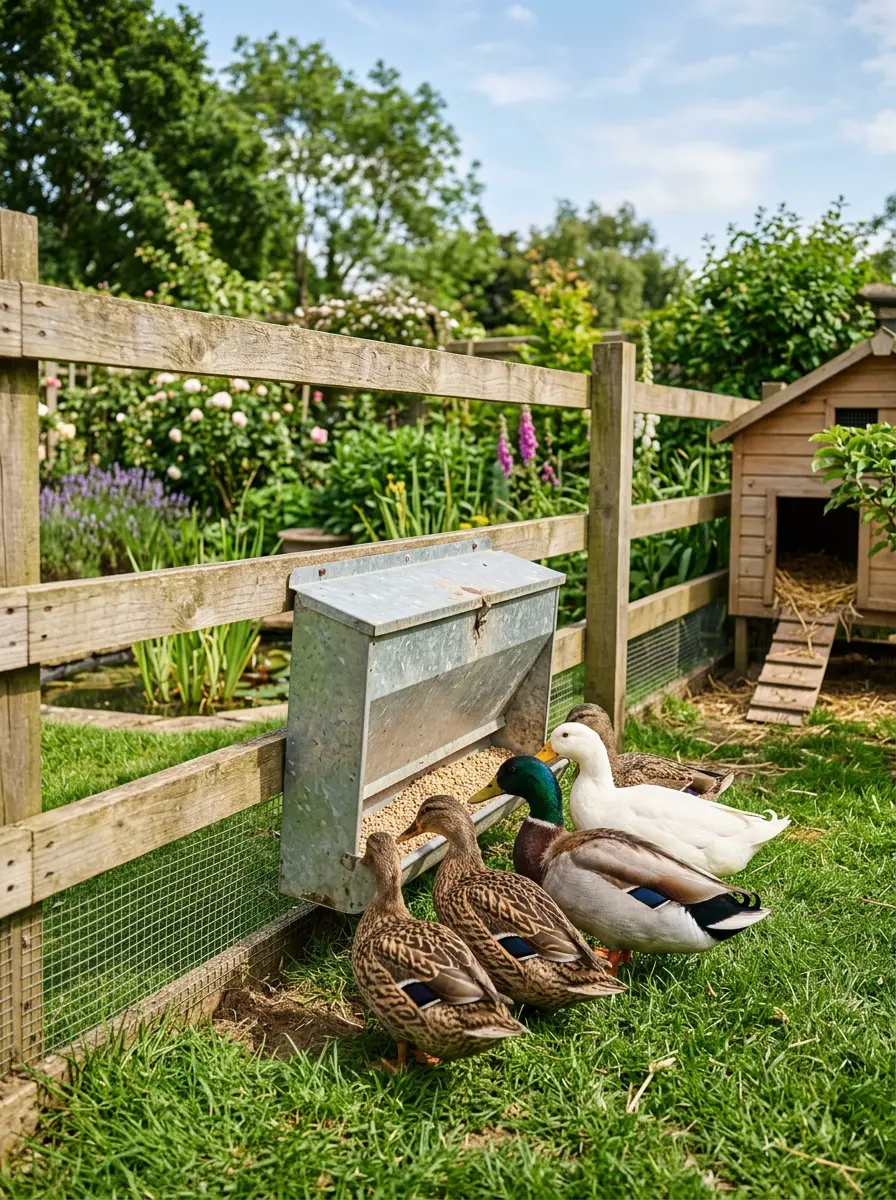
This enclosure includes a mounted feeder positioned along the fence line. Multiple ducks can gather comfortably while accessing feed from one central location.
Raised feeding equipment helps keep food cleaner and reduces waste around the enclosure.
9. Automatic Watering System
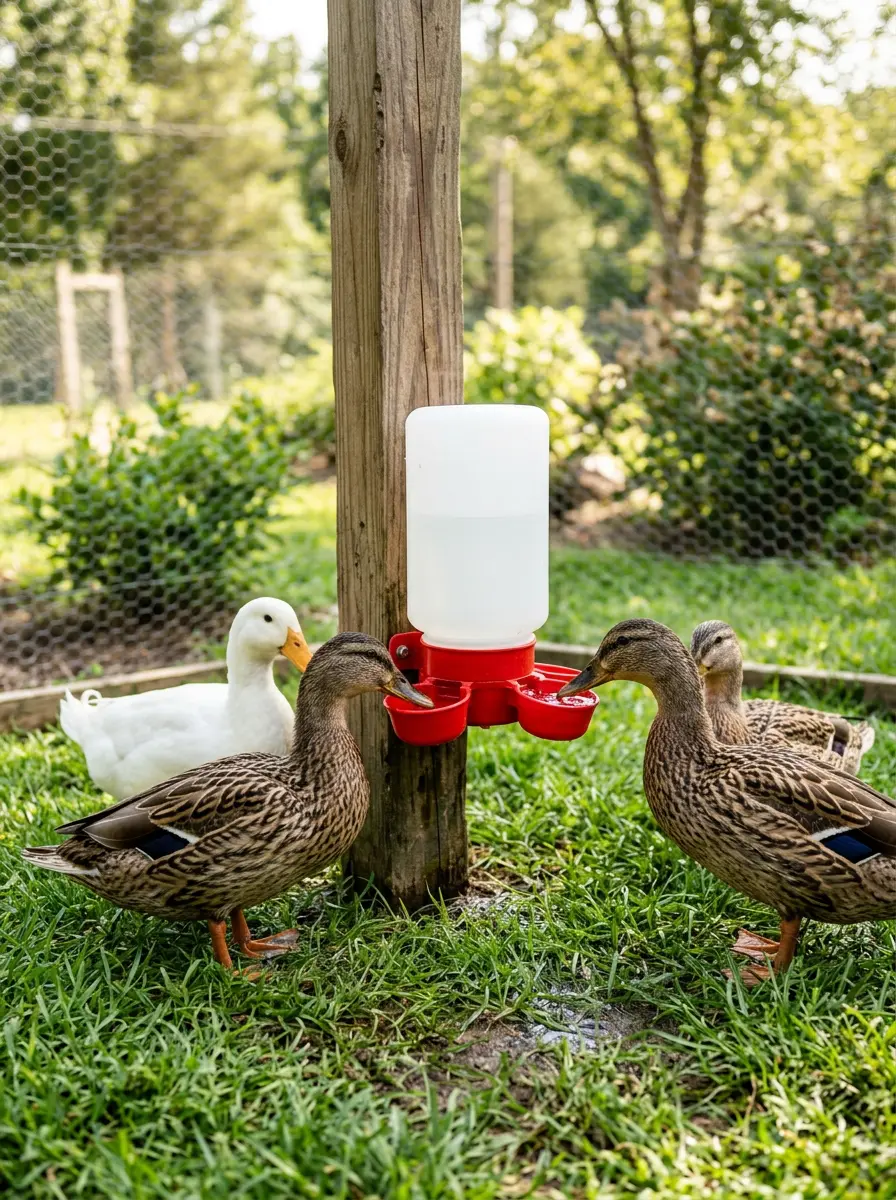
A mounted water dispenser provides ducks with easy access to fresh drinking water throughout the day. The setup keeps the water source elevated and organized.
Consistent access to clean water supports flock health and simplifies daily maintenance.
10. Straw Lined Duck House Interior
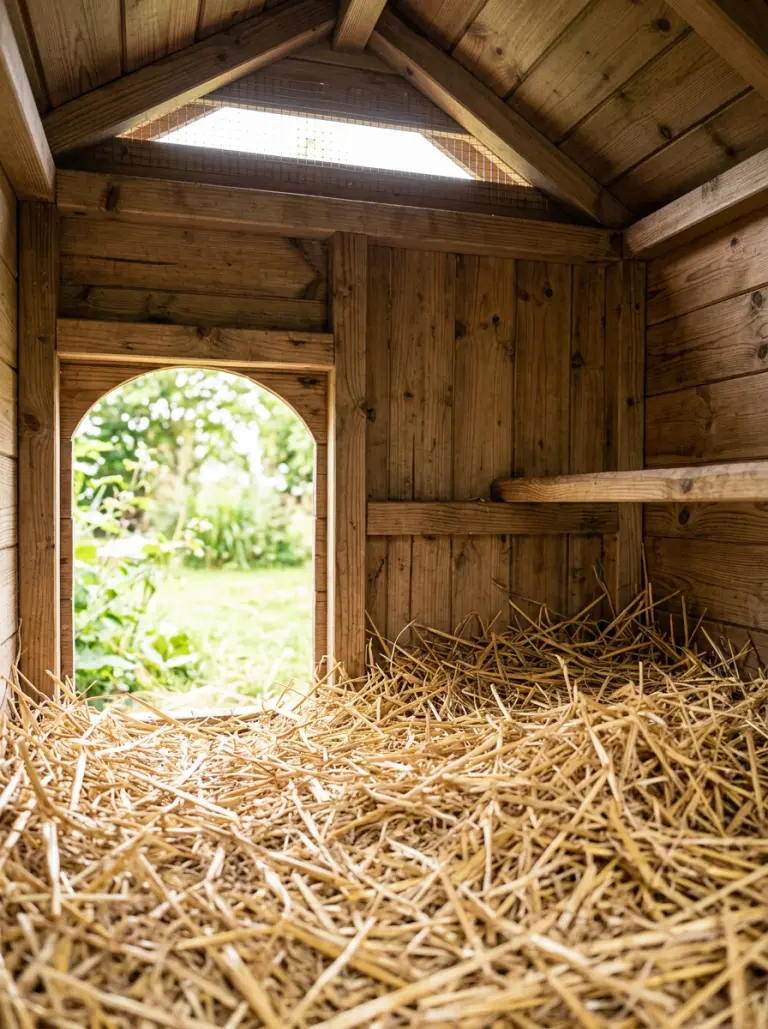
The interior features deep straw bedding, wooden walls, and a sheltered nesting area. Natural light enters through the upper opening, creating a bright and airy environment.
Soft bedding helps improve comfort while providing a clean place for ducks to rest and lay eggs.
11. Winter Ready Duck House
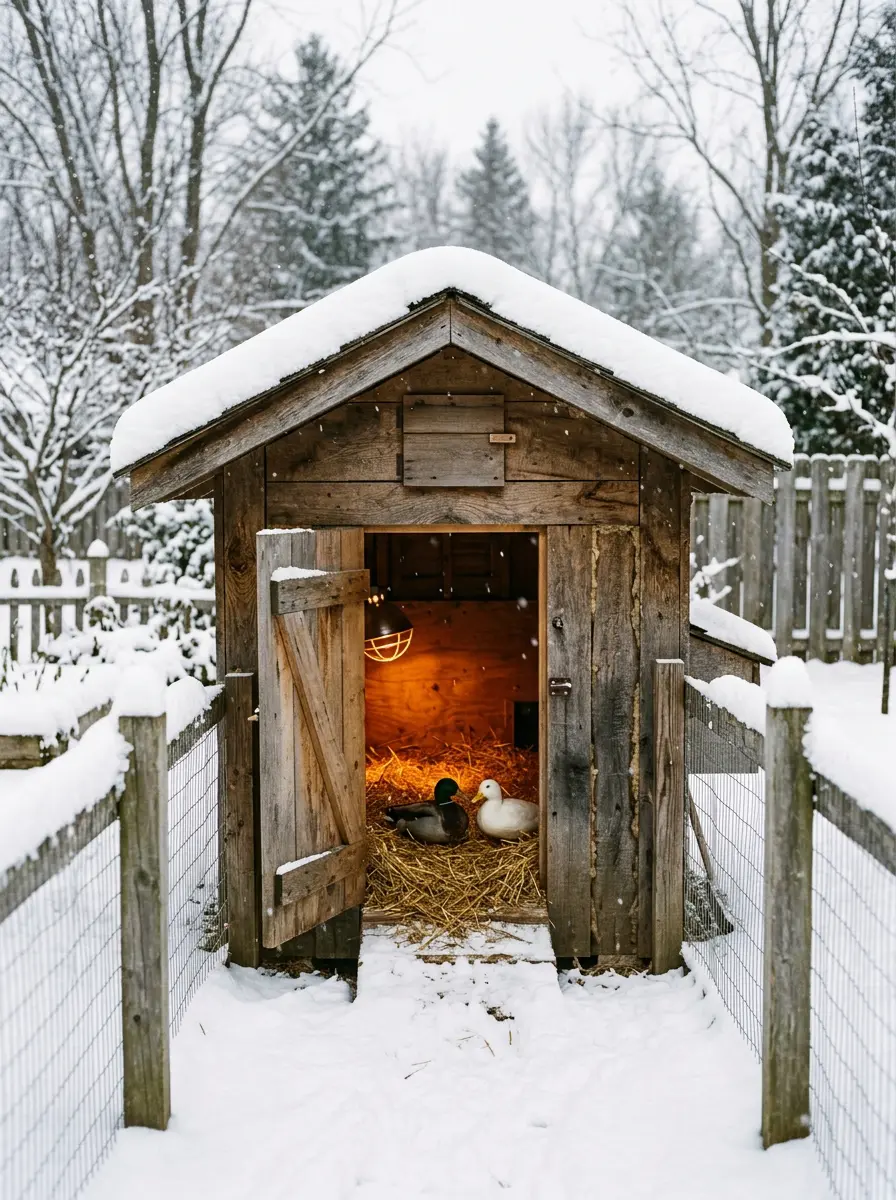
This wooden duck house is surrounded by snow and features a warm, straw lined interior. A covered entrance helps shield the flock from harsh winter weather.
Soft lighting inside creates a comfortable resting area where ducks can stay protected during colder months.
12. Covered Winter Duck Shelter
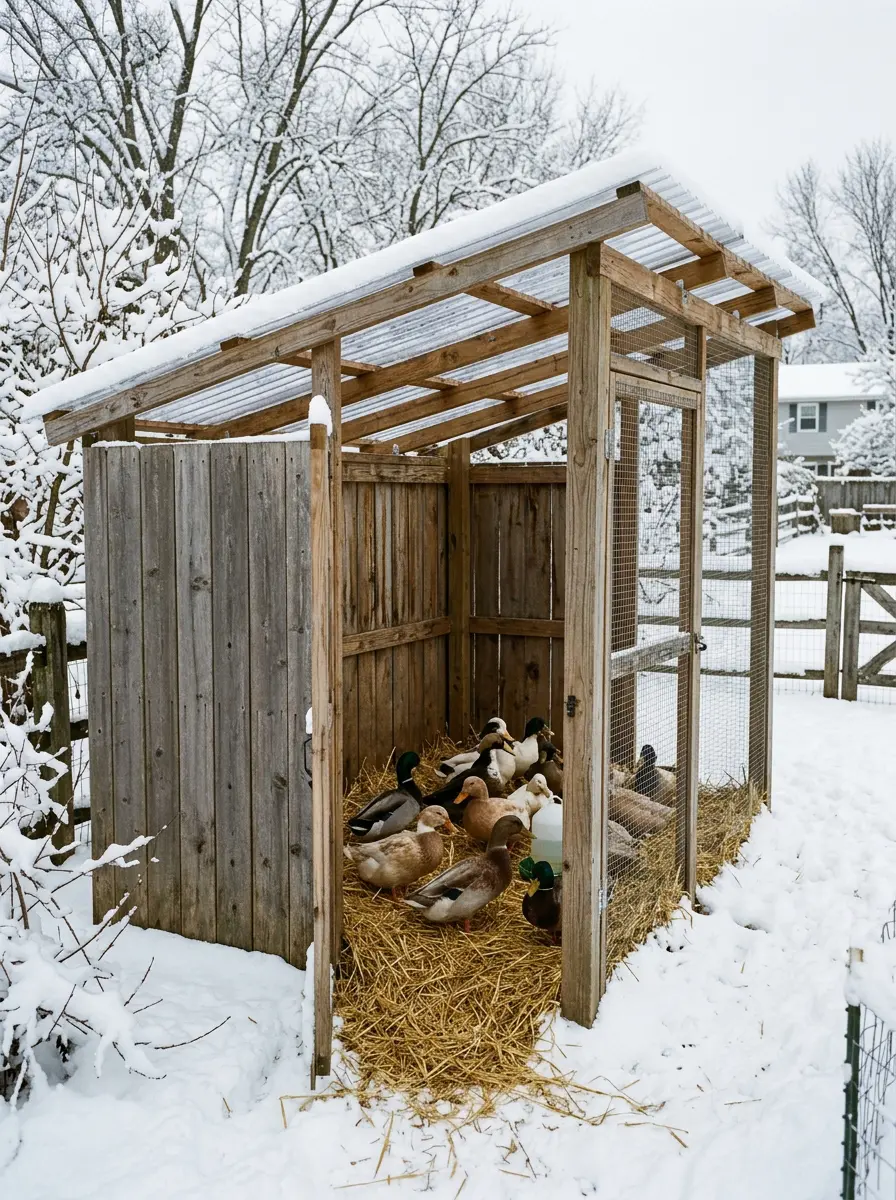
This enclosure combines wooden walls with a clear roof panel that helps keep snow away from the resting area. Wire mesh sides provide airflow while maintaining security.
Fresh straw bedding covers the floor, giving the ducks a dry and comfortable place to gather throughout winter.
13. Heated Water Station
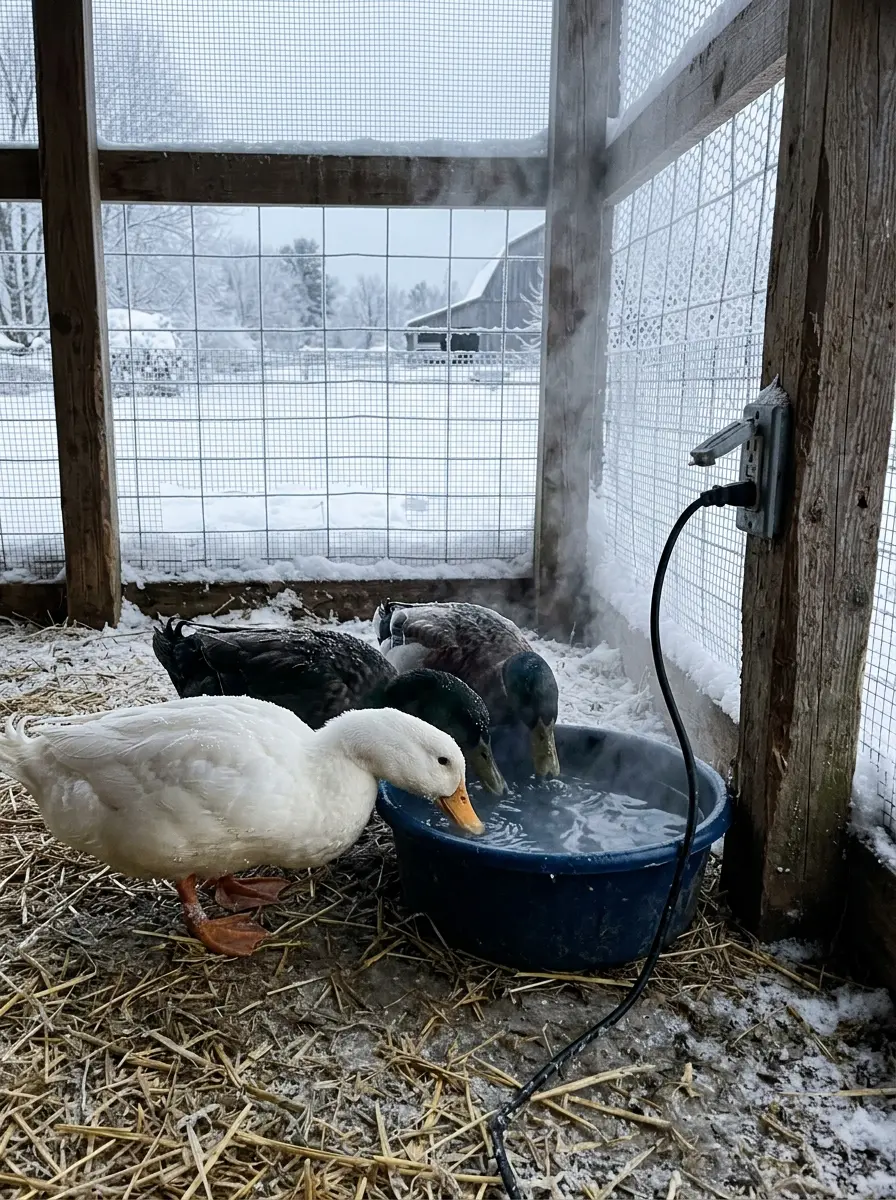
Several ducks are drinking from a water tub inside a sheltered enclosure during snowy weather. Steam rising from the water suggests a heated setup designed for cold conditions.
Access to unfrozen water helps support the flock when temperatures drop and outdoor sources become inaccessible.
14. Indoor Duck Resting Pen
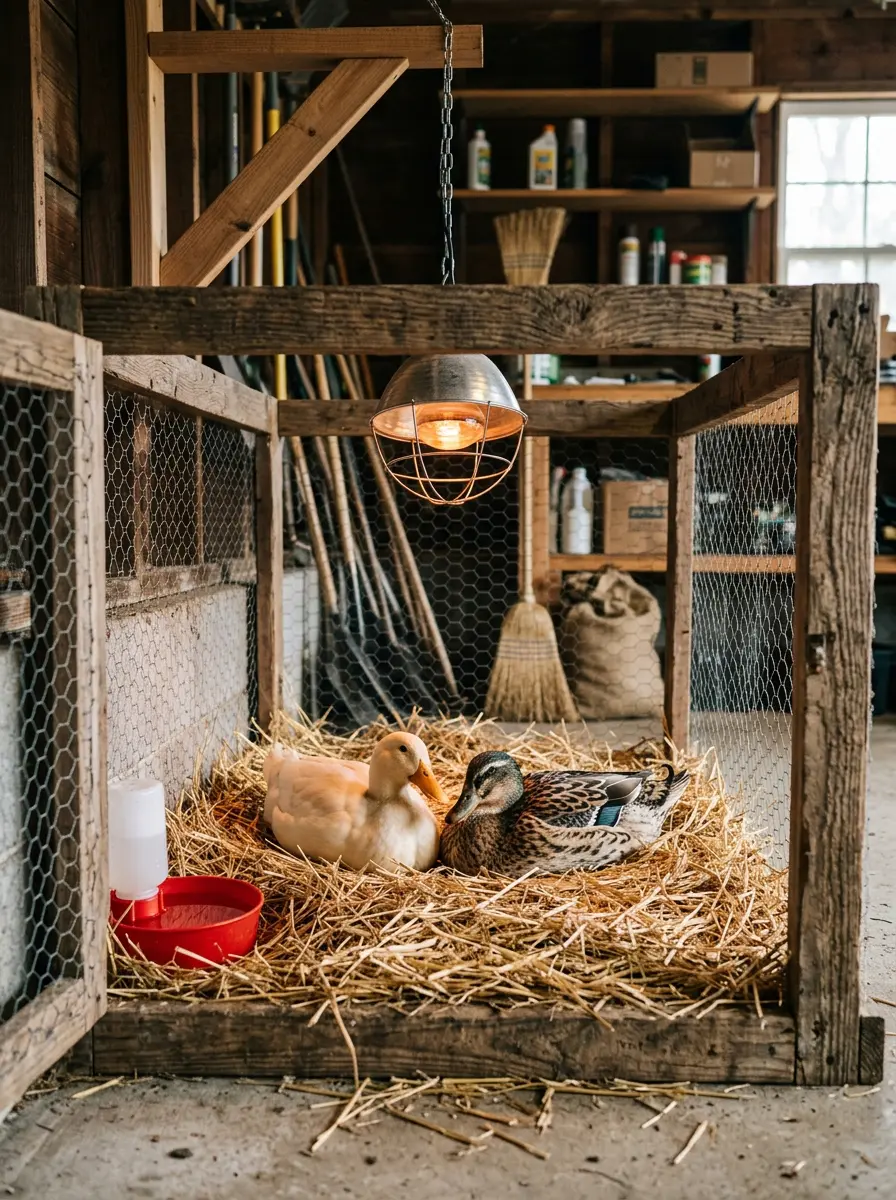
This simple indoor pen uses wooden framing, wire mesh panels, and deep straw bedding. A hanging heat lamp provides additional warmth above the enclosure.
The enclosed space offers a secure area for ducks to rest while remaining easy to monitor and maintain.
15. Duckling Brooder Setup
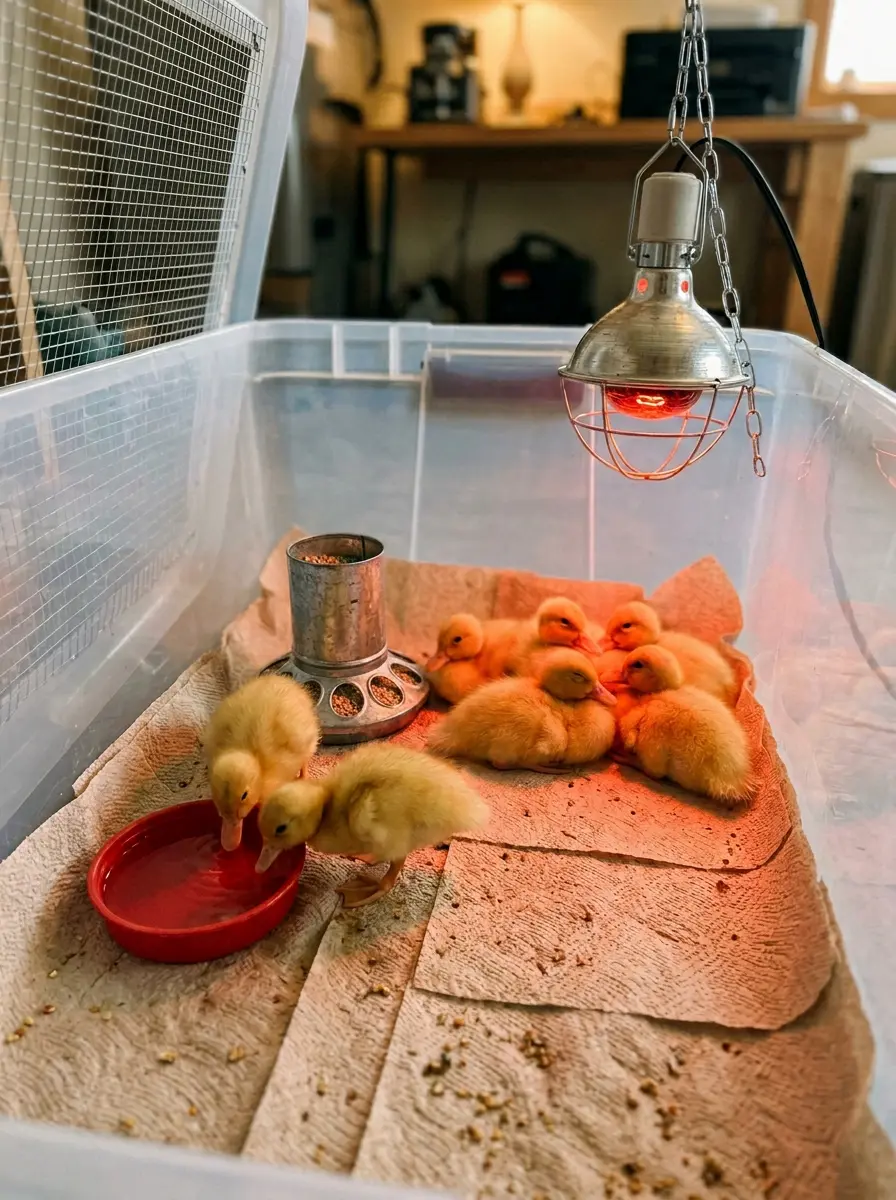
Young ducklings are housed inside a plastic brooder with food, water, and a suspended heat lamp. Soft bedding helps create a warm environment for early growth.
The transparent sides allow easy observation while keeping the ducklings safe during their first weeks of development.
16. Open Sided Duck Shelter
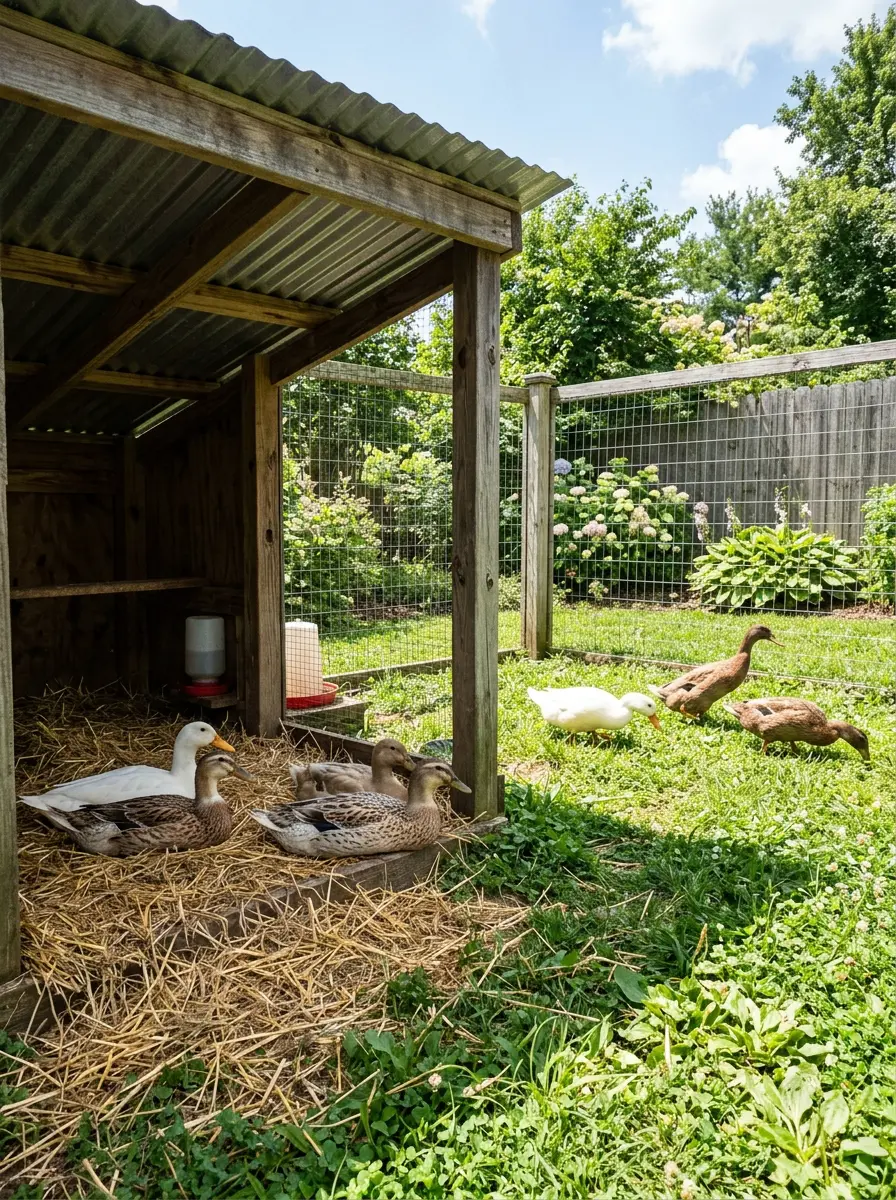
This enclosure features a covered resting area connected to a spacious wire fenced run. Ducks can relax on straw bedding under the roof while still having access to fresh grass and sunlight.
The simple design provides shade, shelter, and room for daily movement within a secure enclosure.
17. Large Wooden Duck Yard
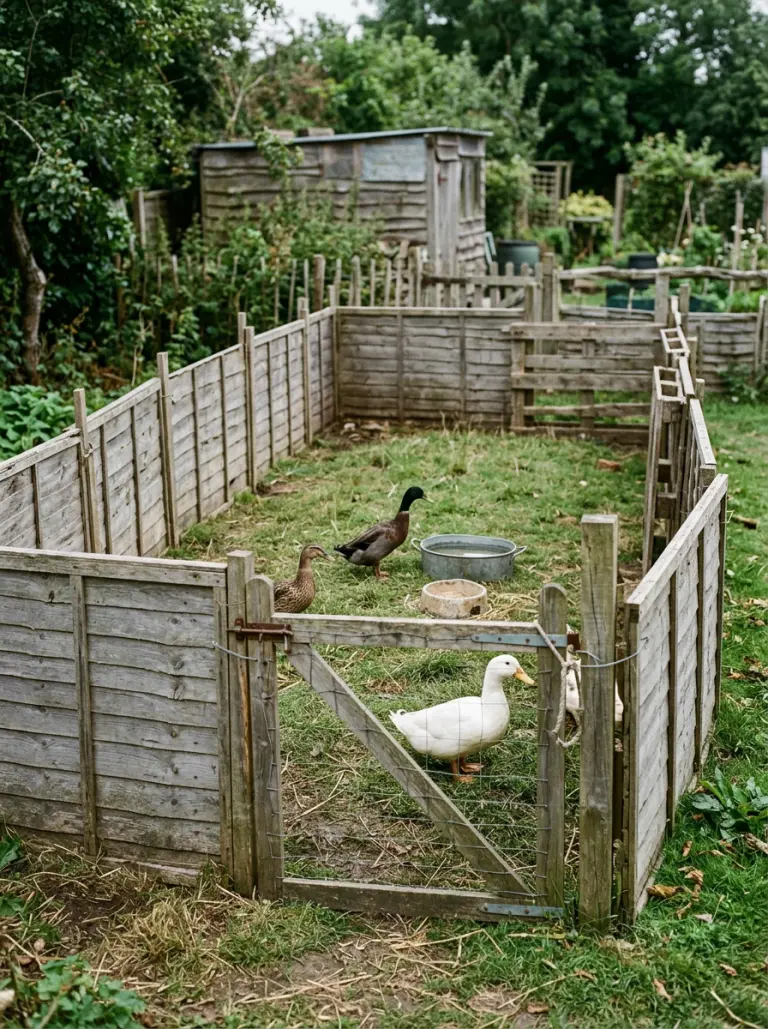
Wooden fencing creates a roomy outdoor pen with plenty of space for ducks to roam. A secure gate allows easy access for feeding and cleaning.
The open layout encourages natural foraging behavior while keeping the flock safely contained.
18. A Frame Duck House
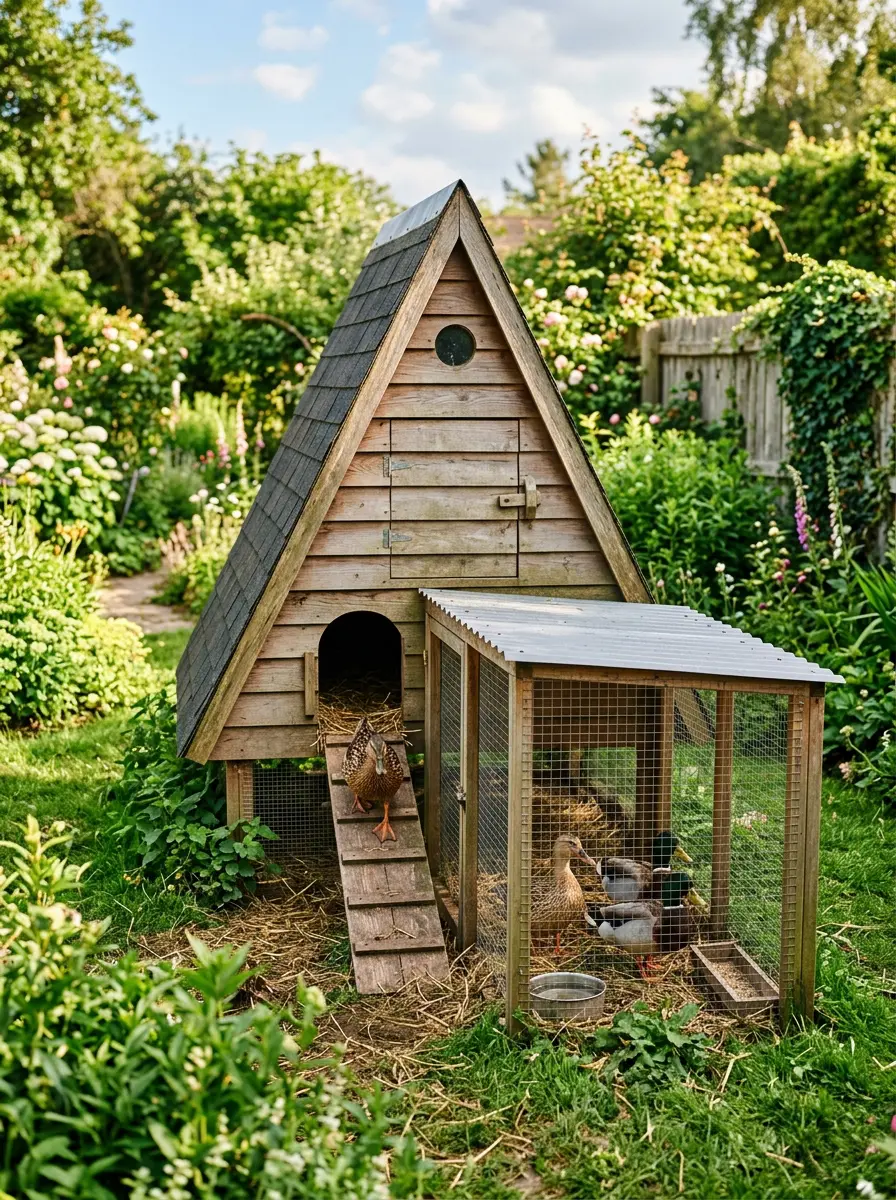
This enclosure uses a tall A frame structure paired with an attached wire run. A wooden ramp connects the upper shelter to the enclosed outdoor section below.
The unique shape provides sheltered interior space while adding visual charm to the backyard garden.
19. Duck Pond Garden Enclosure
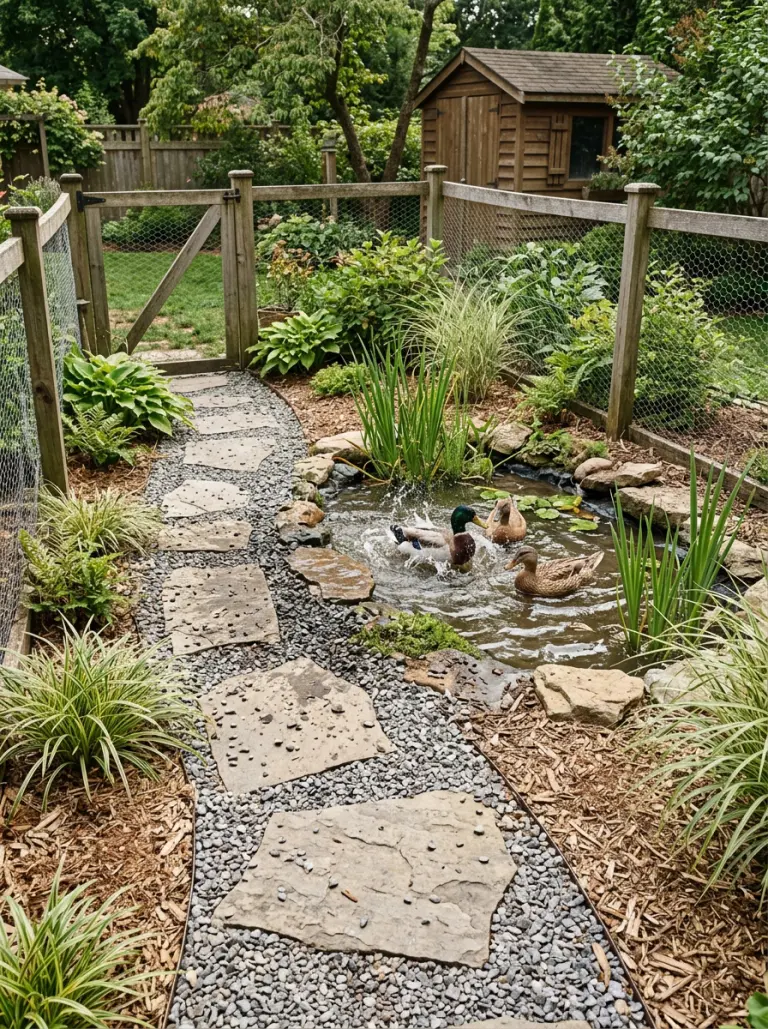
A landscaped enclosure surrounds a small pond where ducks can swim and splash. Stone pathways and ornamental plants create a neat and attractive setting.
Water loving birds benefit from the dedicated pond area while remaining protected inside the fenced space.
20. Mobile Duck Tractor
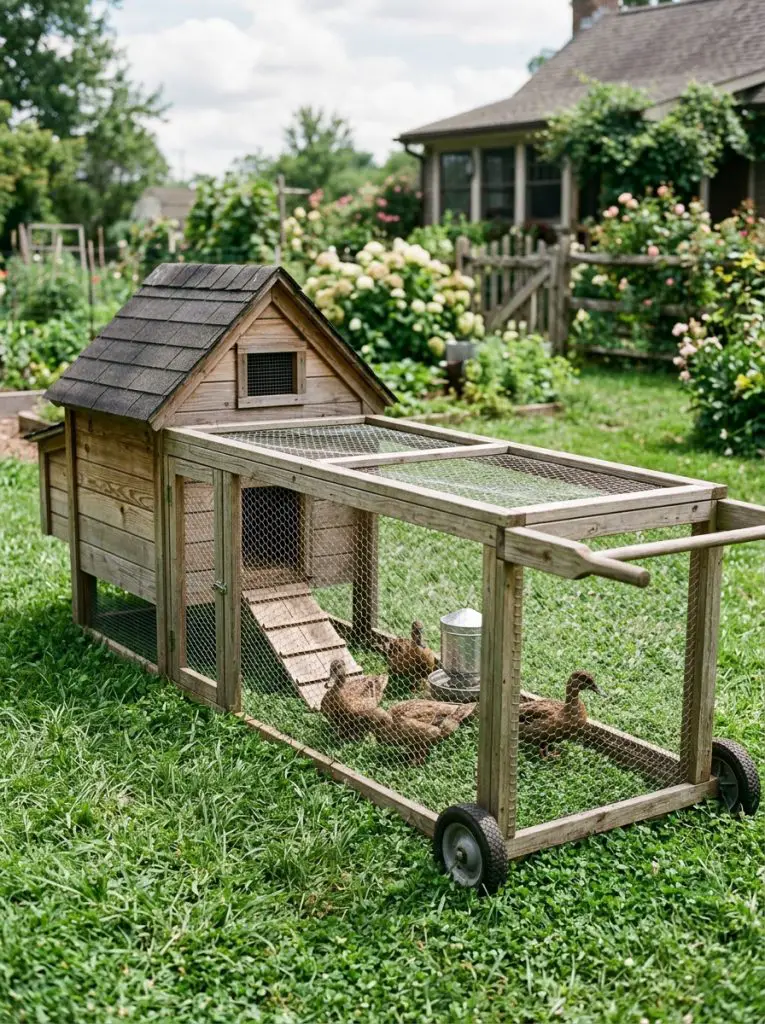
This portable enclosure combines a duck house with a wheeled run that can be moved around the yard. Mesh panels provide ventilation and visibility from all sides.
Relocating the enclosure allows ducks to access fresh grass regularly while helping distribute grazing across different areas.
Conclusion
Building a safe and comfortable home for your flock does not have to be complicated or expensive. These DIY duck enclosure ideas show that you can create everything from simple backyard pens to larger setups with ponds, winter shelters, feeding stations, and mobile runs.
When choosing a design, focus on your available space, flock size, local climate, and protection from predators. Features such as proper ventilation, clean water access, secure fencing, and dry bedding can make a big difference in your ducks’ health and happiness. With the right enclosure, your ducks will have a secure place to rest, forage, swim, and thrive throughout the year.
Frequently Asked Questions
What is the best enclosure for ducks?
The best duck enclosure provides shelter, predator protection, proper ventilation, and enough space for movement. Many backyard owners combine a secure duck house with a fenced outdoor run.
How much space do ducks need in an enclosure?
Most ducks need at least 4 to 6 square feet of indoor shelter space and 10 to 20 square feet of outdoor space per bird. More room is always beneficial for their health and behavior.
Do ducks need a pond in their enclosure?
No, ducks do not require a large pond. However, they should always have access to water deep enough to dip their heads and clean their eyes and nostrils. Small pools and water tubs work well for many backyard flocks.
How do I protect ducks from predators?
Use sturdy fencing, secure latches, and wire mesh around the enclosure. Covering the top can also help protect ducks from aerial predators such as hawks and owls.
Can ducks stay outside during winter?
Yes, healthy ducks can tolerate cold weather when they have a dry, draft-free shelter with clean bedding. Access to unfrozen drinking water is also important during the winter months.
What should I put on the floor of a duck enclosure?
Common flooring options include grass, straw, wood shavings, sand, and dirt. Many duck keepers use straw or pine shavings inside the shelter to help keep the area dry and comfortable.
Can I build a duck enclosure on a budget?
Yes. Many DIY duck enclosures use reclaimed wood, pallets, wire mesh, and repurposed materials. Simple designs can provide excellent protection without requiring a large investment.