A greenhouse can give free-ranging chickens somewhere sheltered to spend snowy days.
For flocks with a small sleeping coop and no covered run, winter creates a practical gap. The birds still need room to move, but snow and exposed ground can limit their usual routine.
Adapting an unused greenhouse may provide that extra space. However, keeping chickens there overnight requires more than adding straw and nesting boxes. Ventilation, predator protection, temperature changes, and cleaning all need attention.
This backyard example shows how one owner began making that transition. Their first-night update is encouraging, but keeping chickens in a greenhouse for winter requires checking how the setup performs beyond a single snowy night.
Can Chickens Stay in a Greenhouse During Winter?
Yes, a greenhouse can potentially serve as winter poultry housing if it meets the same requirements as a suitable coop. Its original purpose does not establish whether it is safe for chickens.
Poultry housing needs protection from weather and predators, adequate space, ventilation, sanitation, and accessible feed and water. A greenhouse that provides daytime shelter may still need substantial changes before it is suitable for overnight use.
The first decision is therefore simple: will the greenhouse function as a sheltered daytime run, or replace the sleeping coop? Those are different projects.
How This Greenhouse Became A Winter Chicken Shelter
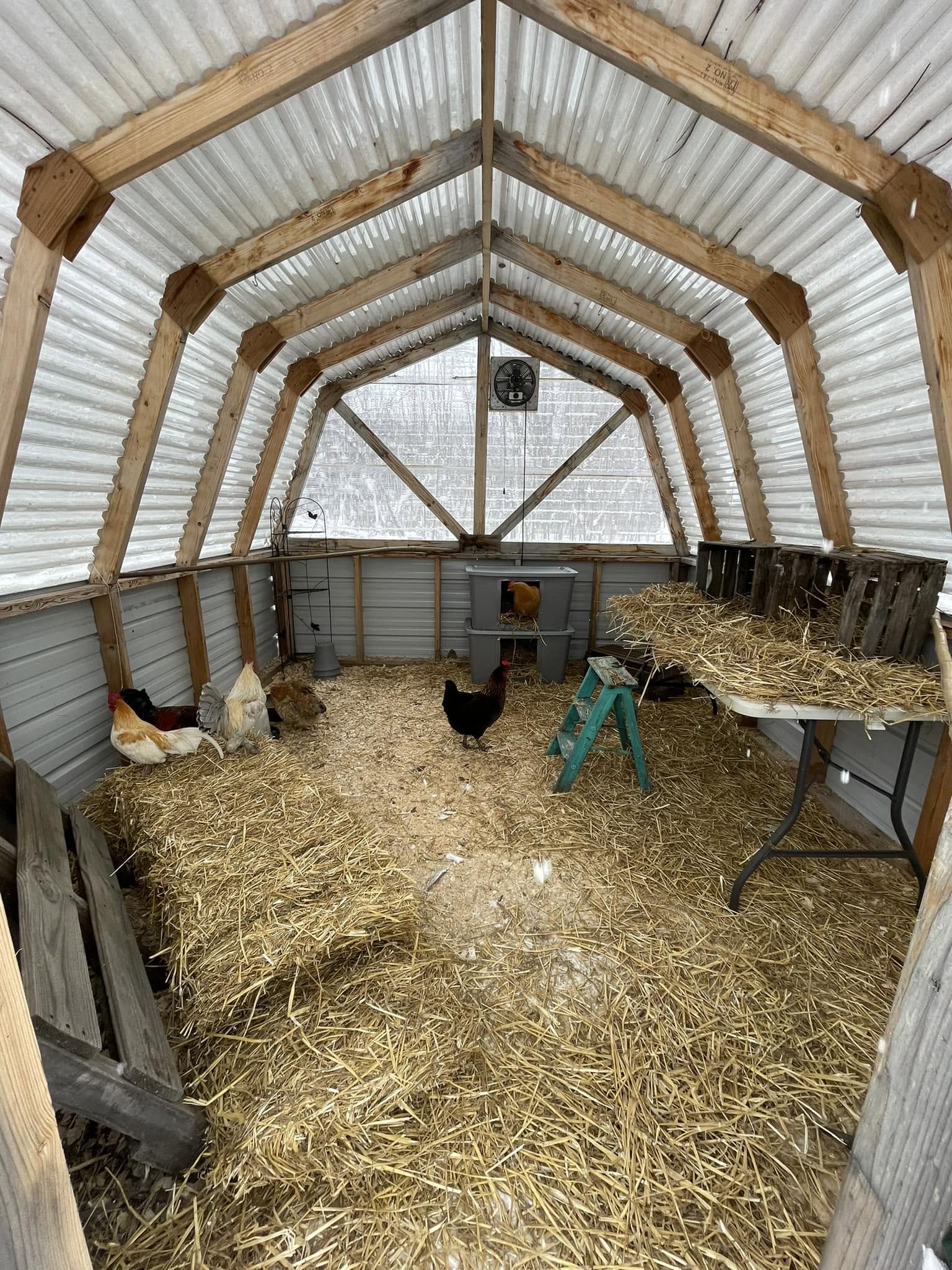
According to the owner’s account, the flock normally free-ranges and uses a small coop for sleeping. With their first winter approaching, the owner arranged the greenhouse as a sheltered place for snowy days.
The chickens began settling together there in the evening. Initially, the owner carried them back to their usual coop, then considered allowing them to remain in the greenhouse overnight.
In a follow-up, the owner reported that all the birds made it through their first night while heavy snow fell outside. They also added straw and nesting boxes.
The photographs show several practical features:
- Translucent corrugated panels supported by wooden framing.
- Solid lower wall panels.
- Wood shavings and straw covering the floor.
- A branch-style perch running along the walls.
- Straw-covered tables with wooden crates.
- A small step stool beside the raised area.
- Stacked plastic containers arranged as nesting spaces.
- Feed and water containers at floor level.
- A fan mounted high on the far wall.
These details show how the space was arranged. They do not establish its overnight temperatures, usable floor area, predator resistance, or structural snow-load capacity.
Daytime Shelter Or Overnight Housing?
A greenhouse can fill the role of a covered run while chickens continue sleeping in their established coop.
That arrangement allows the owner to assess the new space gradually. It also avoids assuming that a structure suitable for daytime activity is ready for unattended overnight use.
| Check | Daytime Greenhouse Shelter | Overnight Greenhouse Housing |
|---|---|---|
| Weather protection | Sheltered space with suitable airflow | Reliable protection throughout the night |
| Predator protection | Appropriate protection during use | Secure enclosure, including doors, vents, and perimeter |
| Resting areas | Stable places to perch | Suitable roost space for the entire flock |
| Temperature monitoring | Check sunny and shaded conditions | Check overnight lows as well as daytime highs |
| Bedding | Keep activity areas dry | Manage floor bedding and overnight droppings |
| Backup plan | Return birds to their coop | Maintain an alternative if conditions deteriorate |
If outdoor areas are not predator-proof, extension guidance recommends securing birds in suitable housing before dark.
Check Predator Protection Before Leaving Birds Overnight
Translucent panels may block snow without providing dependable protection against animals trying to enter.
Inspect the door, panel edges, vents, corners, and the entire ground-level perimeter. Look for loose fittings, openings, and places where a predator could push through or dig underneath.
Use securely fastened welded hardware cloth where openings need protection, with the mesh size and installation suited to local predators. Check that latches cannot easily be worked open.
The photos do not show every exterior detail, so the greenhouse’s overnight security cannot be confirmed from these views.
Keep Ventilation Working During Cold Weather
Closing everything tightly may seem sensible during snowfall, but chickens add moisture through breathing and droppings.
That moisture needs a route out. Position airflow so fresh air can exchange without blowing directly across resting birds. Winter ventilation helps manage dampness and ammonia inside poultry housing.
A fan is visible high on the greenhouse wall. However, a fan alone does not demonstrate adequate ventilation. Its function depends on outdoor air openings, placement, capacity, and how the enclosure is operated.
Check regularly for condensation, wet surfaces, and stale air.
Measure Daytime Highs And Overnight Lows
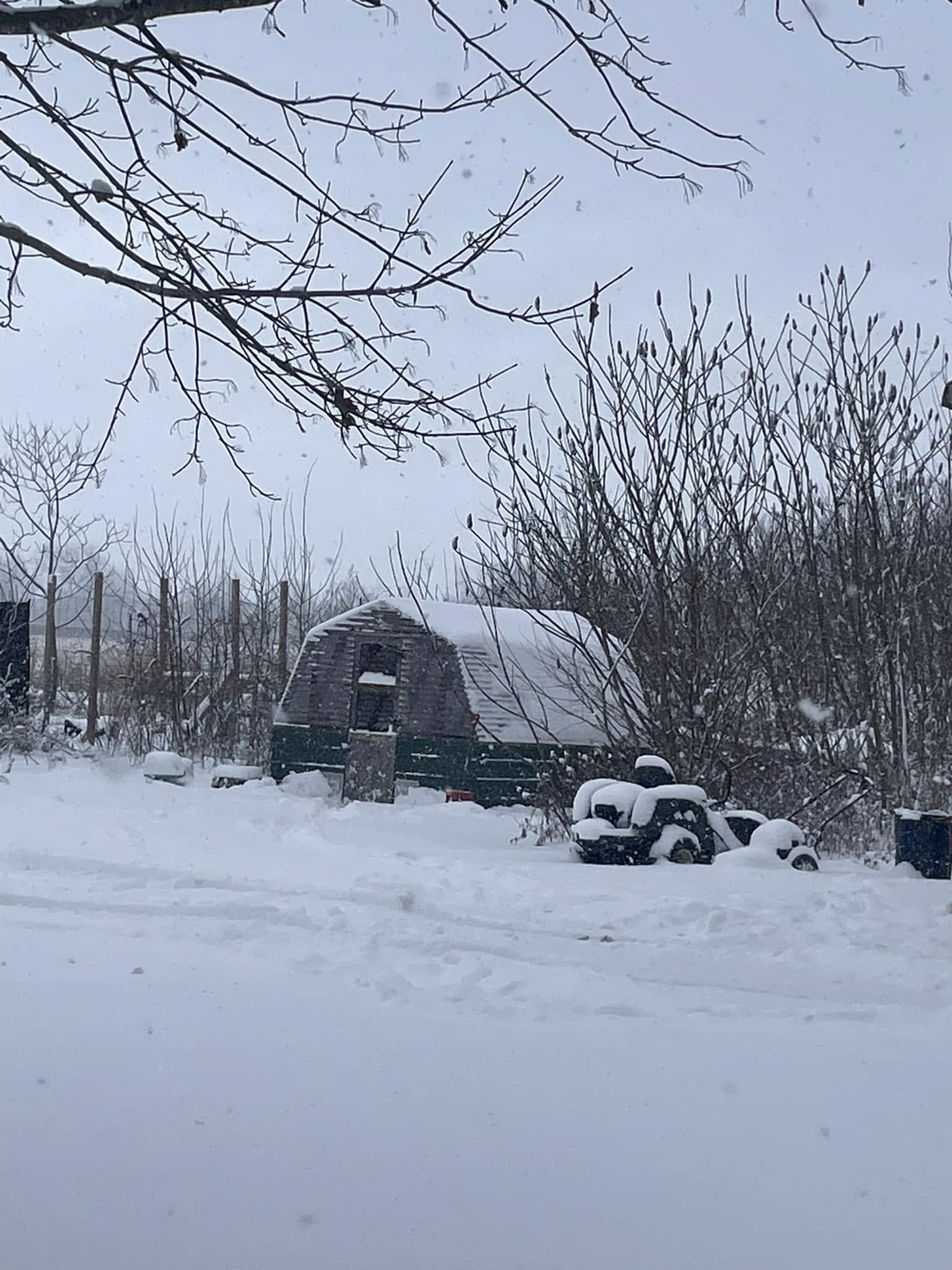
A greenhouse that feels comfortable during an afternoon visit may behave very differently overnight.
Sunlight can warm the interior, while temperatures may fall substantially after sunset. Do not assume transparent panels provide the insulation of a purpose-built winter shelter.
Install a minimum-and-maximum thermometer near bird height, away from direct sunlight. Observe conditions during several types of weather, including clear nights and sunny winter afternoons.
Maintain adjustable ventilation and a backup housing plan. Evaluate warmth alongside dryness, bird behavior, and protection from direct wind.
Keep Bedding Dry And Make Cleaning Accessible
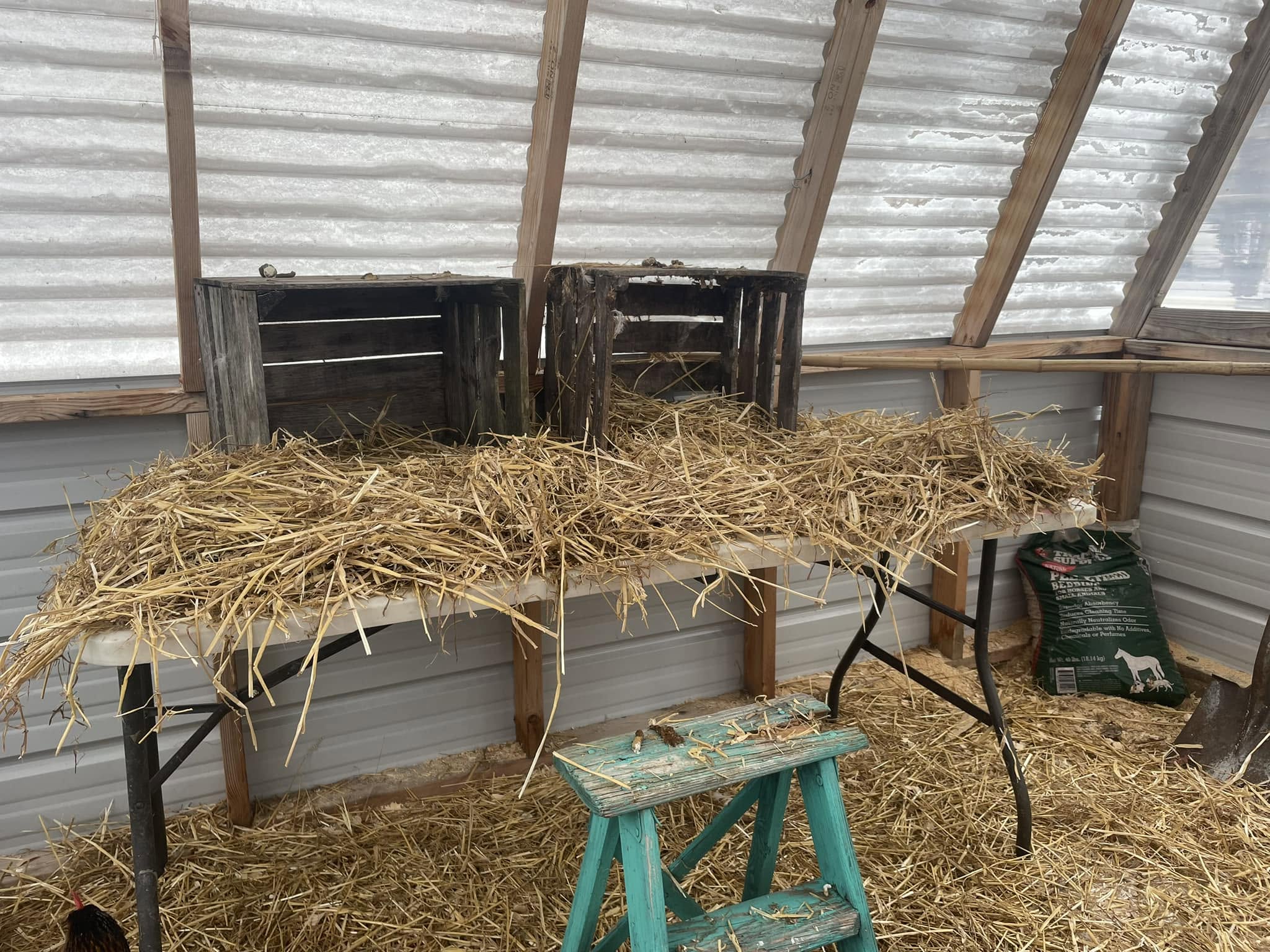
The photographs show shavings across the floor, with additional straw around the raised platform.
That creates space for scratching, but the useful question is how easily the owner can remove damp material. Inspect beneath perches, around the drinker, and under furniture rather than checking only the visible walking area.
If stall mats are added, fit them securely and check underneath for trapped moisture. Mats do not replace absorbent bedding.
Keep a clear cleaning route through the greenhouse. Extra furniture becomes a problem when it prevents access to droppings or wet patches.
Separate Roosting Space From Nesting Boxes
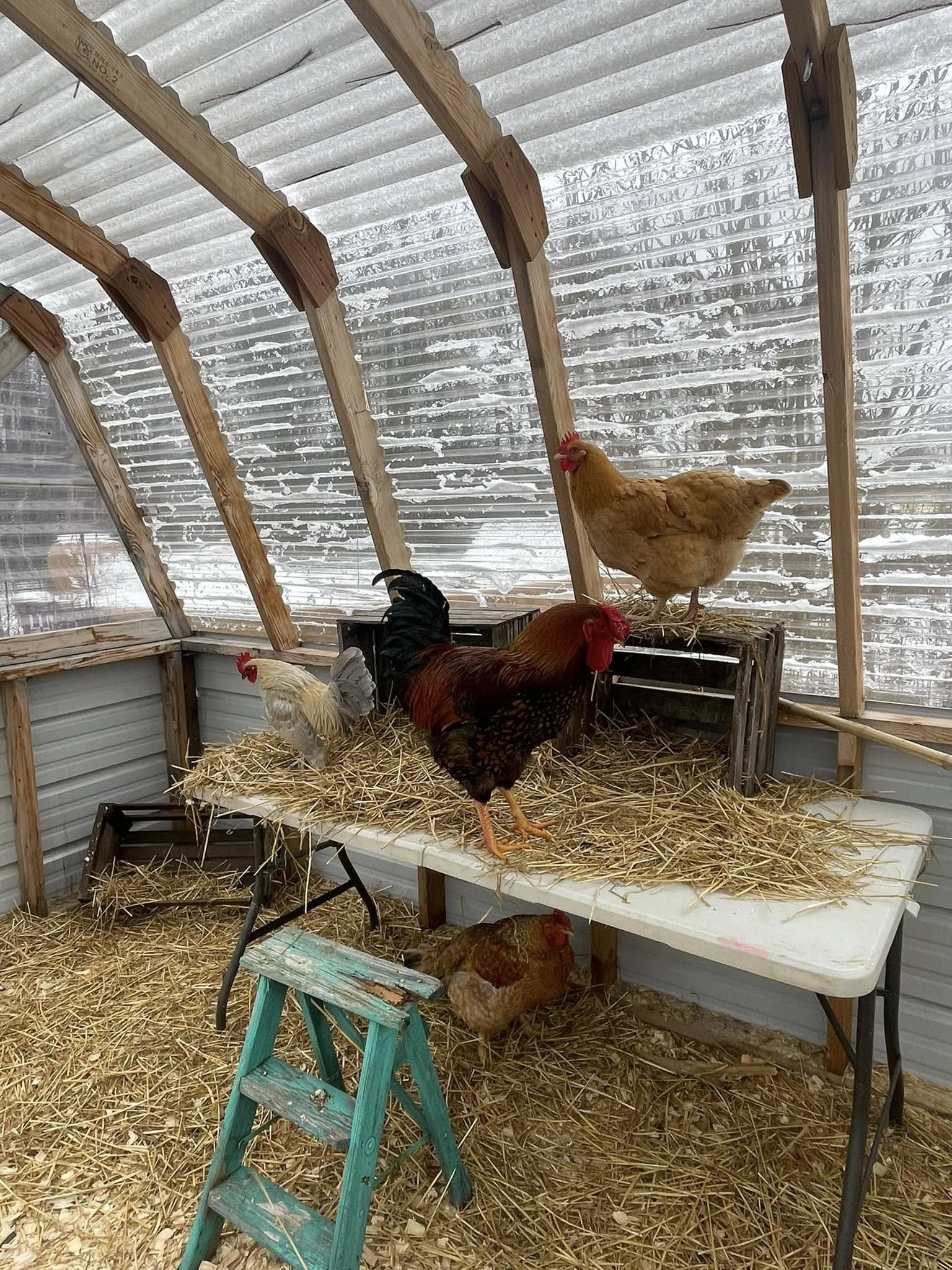
The crates and plastic containers provide potential nesting areas, while branches offer places to perch. Each feature needs a separate check.
Nesting boxes are intended for laying. They should not substitute for suitable overnight roosts.
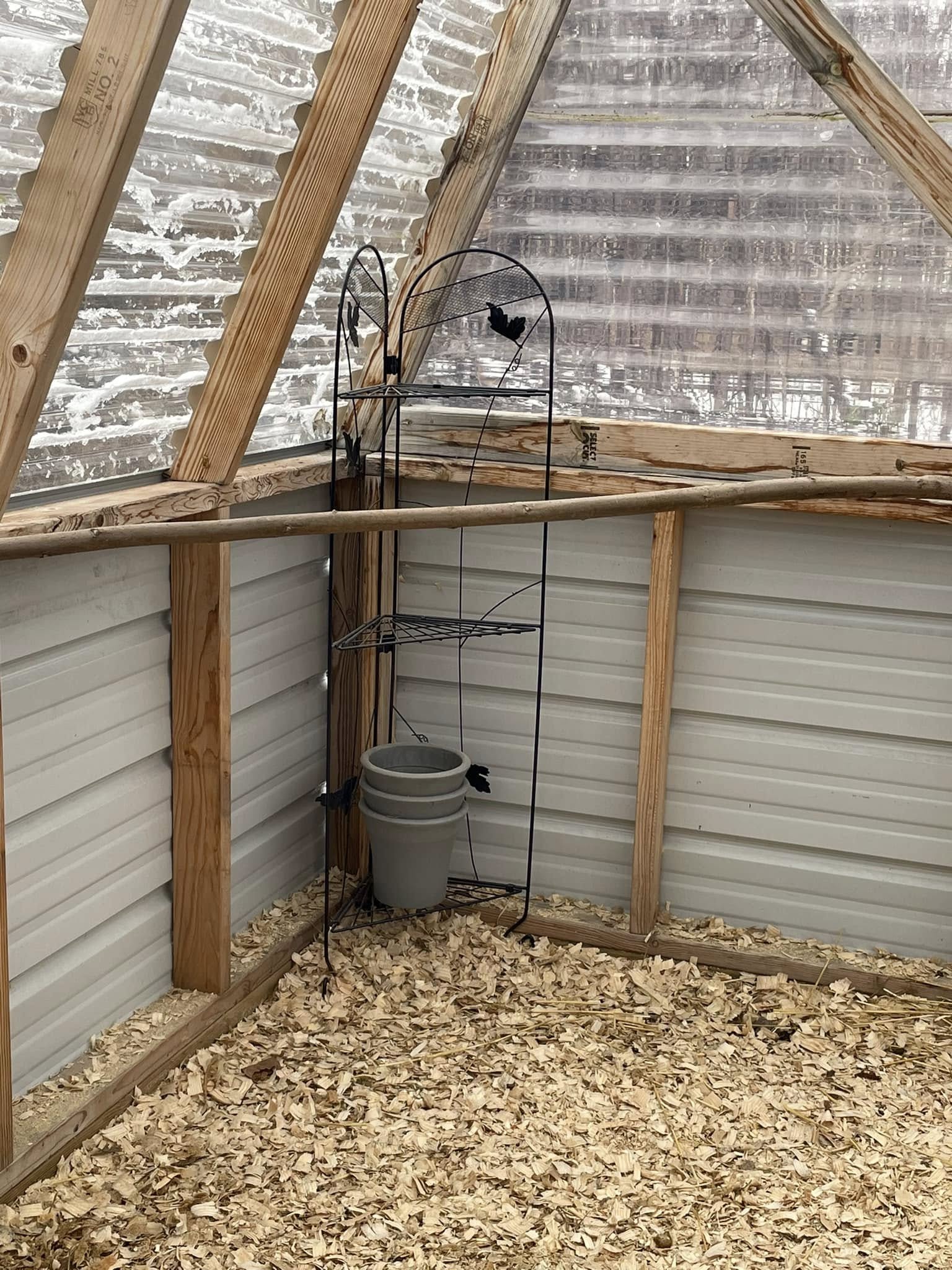
Inspect branches for secure attachment, comfortable footing, sharp projections, and safe access. Position roosts so droppings will not fall into feed, water, or nesting spaces.
The stacked containers should also be stable, with smooth openings and no exposed sharp edges. Secure tables and crates against tipping, and replace damaged furniture rather than treating it as permanent poultry equipment.
Plan For Feed And Unfrozen Water
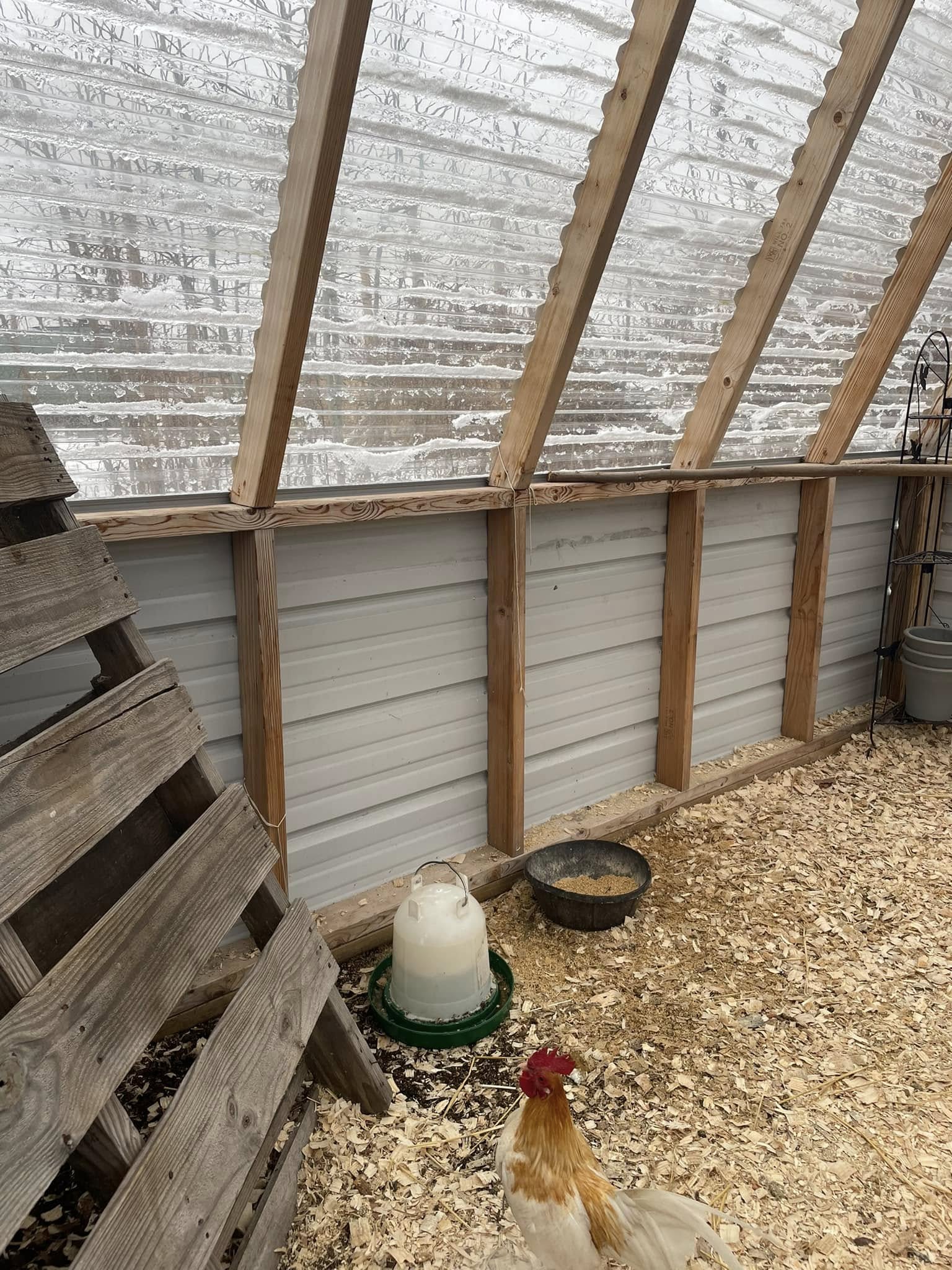
The floor-level waterer shown in the photos is easy to reach, but surrounding bedding can be kicked into its tray.
A stable stand may help keep it cleaner, provided every bird can drink comfortably. Raising the container will not prevent freezing, so establish a separate winter water plan.
Check drinking water frequently during freezing conditions and keep a spare container available. Continue providing complete feed appropriate to the flock rather than relying on outdoor foraging during snowy weather.
Keep stored feed protected from moisture and rodents.
Check Space, Snow Loads, And Stored Materials
Tables, crates, and equipment reduce usable floor area, even when the greenhouse appears spacious.
Measure the accessible area and account for the whole flock spending long periods indoors during storms. University of Minnesota Extension gives a general starting recommendation of 3 to 5 square feet of indoor space per bird; breed, layout, and confinement conditions can require more.
Remove fertilizers, pesticides, sharp tools, loose cords, and unsuitable plants.
Also verify the structure’s snow-load specifications. The roof shape and visible wooden framing do not establish how much accumulated snow it can safely support.
Greenhouse Floor Space Calculator
Enter your measurements to estimate usable floor area per chicken. Subtract storage, closed beds, and other areas birds cannot use.
This compares your measurements with a general 3 to 5 square feet per bird planning range. It does not approve a flock size or assess ventilation, predators, winter suitability, or welfare. Larger birds and prolonged confinement may require more space. For irregular floor plans, calculate usable area separately rather than using a rectangular estimate.
Plan For Returning The Greenhouse To Growing
Winter poultry use changes how the greenhouse must be managed before spring planting.
Droppings can contaminate floors, growing beds, containers, and low surfaces. Remove used bedding and clean equipment before returning the space to crop production.
If chickens can access growing soil, plan harvest timing around manure exposure. University of New Hampshire guidance recommends waiting at least 120 days after raw or aged manure application before harvesting crops growing in or near the soil.
Simply removing the flock and planting salad greens immediately afterward is not a complete food-safety plan.
Build Your Greenhouse Readiness Action List
Check an item only after you have inspected it. Leave anything uncertain unchecked, then build an action list from the checks still outstanding.
0 of 10 checks reviewed
This is an organizational checklist, not a safety certification. Checking every box does not confirm that the greenhouse is suitable for overnight housing. Your selections are not saved after the page is reloaded.
A Daily Greenhouse Chicken Checklist
Check the setup in the morning, during the day, and before closing for the night.
- Confirm every bird is active and able to reach feed and water.
- Check that drinking water is liquid and clean.
- Review recorded temperature highs and lows.
- Inspect panels and windows for condensation.
- Remove damp bedding and concentrated droppings.
- Check ventilation openings for obstruction.
- Confirm roosts, tables, crates, and nest boxes remain stable.
- Inspect doors, latches, and the enclosure perimeter.
- Collect eggs and check nesting material.
- Recheck the structure after snow, wind, or damage.
Keep the original coop available while testing the arrangement. One comfortable night is useful feedback, but changing weather may reveal problems later.
Frequently Asked Questions
Will A Greenhouse Stay Warm Enough For Chickens At Night?
A greenhouse is not automatically a warm overnight shelter. Its performance depends on construction, weather, ventilation, and the birds being housed. Measure temperatures instead of judging by how the space feels during daylight. Healthy, acclimated adult birds have different needs from chicks or unwell chickens. Assess dryness and wind protection too, and maintain alternative housing if conditions become unsuitable.
Should I Add A Heat Lamp To The Greenhouse?
A heat lamp should not be the default next step. Plastic panels, dry bedding, and electrical equipment create a setting where installation mistakes can have serious consequences. University of New Hampshire Extension generally advises against supplemental coop heating in most circumstances. If vulnerable birds need additional warmth, obtain advice for those birds and use appropriately installed equipment rather than copying an online setup.
Are Plastic Storage Containers Suitable As Nesting Boxes?
They can potentially be adapted, but the finished arrangement needs checking. Containers should be stable, appropriately sized, accessible, and easy to clean, with smooth openings and suitable bedding. Secure stacked boxes so they cannot shift when a bird enters or lands on them. Keep nesting areas away from falling roost droppings, and provide separate sleeping perches.
Can Chickens Still Free-Range From A Greenhouse?
They can have outdoor access when conditions and local requirements allow, provided they can return easily to shelter. Keep the entrance and return route clear of snow and ice. Free-ranging introduces predator and wild-bird exposure, so the greenhouse does not remove those risks. Check current local animal-health advice before deciding how outdoor access will operate during winter.
Conclusion
This owner’s greenhouse provided an encouraging first night and a sheltered place for the flock during snowfall. The photos also show practical efforts to add bedding, perches, nesting areas, and room to move.
Before using a similar setup all winter, check the less visible details: predator protection, ventilation, temperature changes, cleaning access, and roof capacity.
Keep the original coop as a backup until the greenhouse has been assessed through changing conditions. Share this guide with friends and family considering a greenhouse shelter for their own backyard chickens.
Sources
The owner’s account and supplied photographs describe this individual setup. The general care guidance draws on the sources below; these organizations have not inspected or endorsed the greenhouse shown.
- Small And Backyard Poultry: Small-Scale Poultry Housing Overview
- Penn State Extension: Small-Scale Poultry Housing
- Small And Backyard Poultry: Ventilation In Poultry Housing
- University Of Minnesota Extension: Raising Chickens For Eggs
- Iowa State University Extension: Winter Chicken Care
- University Of New Hampshire Extension: Backyard Chickens In Winter
- University Of New Hampshire Extension: Using Animal Manures In The Garden