
You step outside after the rain. At first, everything looks fine. Then you notice it. Water is sitting in the same spot again.
It stays there for days. The grass feels soft when you walk on it. The soil starts to smell. After a while, you begin to think something is wrong under the ground.
Most people try quick fixes. They add more soil on top. They dig a trench without planning. It feels like they are fixing the problem. But after the next rain, the water comes back again.
Here is the real issue. You are fixing the wrong cause.
This guide will show you how to create drainage in your yard in a way that actually works. You will learn why water pools in the yard and what steps fix it for good.
Start simple. Fix the main cause first. That is what makes the difference.
Table of Contents
Why Your Yard Still Floods After You Tried Fixing It
If your yard keeps flooding after every rain, it means the real cause is still there.
Start by looking at your soil. Clay soil holds water for a long time. It drains very slowly compared to other soil types. Sandy soil drains quickly, which is why some yards dry fast while others stay wet for days.
Sources like Family Handyman explain that clay soil can drain up to ten times slower than sandy soil. That alone can cause water pooling in yard.
Now check the shape of your yard. Water always moves toward the lowest point. If that point is close to your house, water will collect there every time it rains.
Next, think about where the water is coming from. Rainwater does not only fall from the sky. It also flows from your roof. A single downspout can send a large amount of water into one small area during heavy rain.
The most common causes
- Soil that does not absorb water well
- The yard that slopes toward the house
- No clear path for water to move away
- Downspouts dumping water too close
If you fix the wrong cause, the problem will keep coming back. That is why this step matters.
Explore More Yard Drainage Ideas
The Fastest Way to Pick the Right Drainage Solution
Many people get confused because there are too many options. You do not need to try everything. You just need to choose the right solution for your situation.
Use this simple guide to decide what to do first:
- If water stays in one spot for a long time, you need a French drain
- If water moves across your yard during rain, you need a dry creek bed
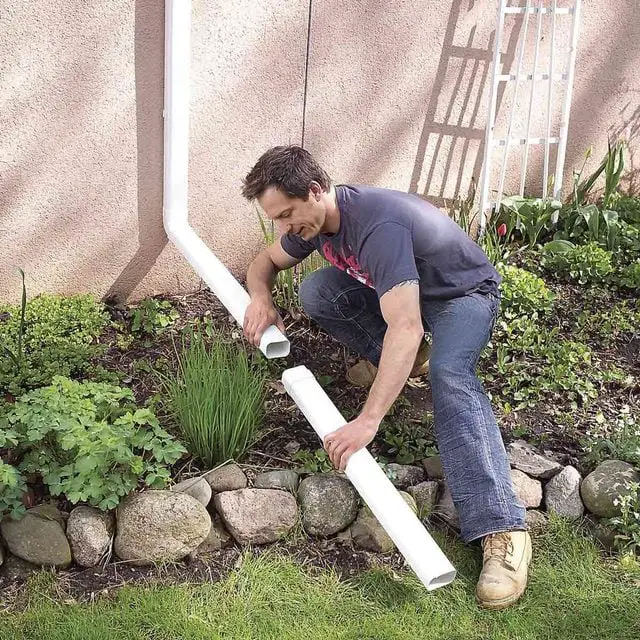
- If water comes from your roof, you need to fix your downspouts
This simple approach saves time and effort.
Experts at This Old House explain that poor drainage near the foundation can lead to serious long-term damage. That is why you should always start fixing areas close to your house.
Quick cost and result comparison
| Solution | Cost | Time | Best For |
|---|---|---|---|
| Downspout fix | 20 to 100 dollars | About 10 minutes | Roof water |
| French drain | 200 to 800 dollars DIY | 1 to 2 days | Standing water |
| Dry creek bed | 100 to 500 dollars | About 1 day | Runoff water |
If you only have time for one fix, start with your downspouts. This solves more problems than most people expect.
Fix Your Yard Slope First Because This Solves Many Problems
If water is collecting near your house, your yard slope is likely the problem.
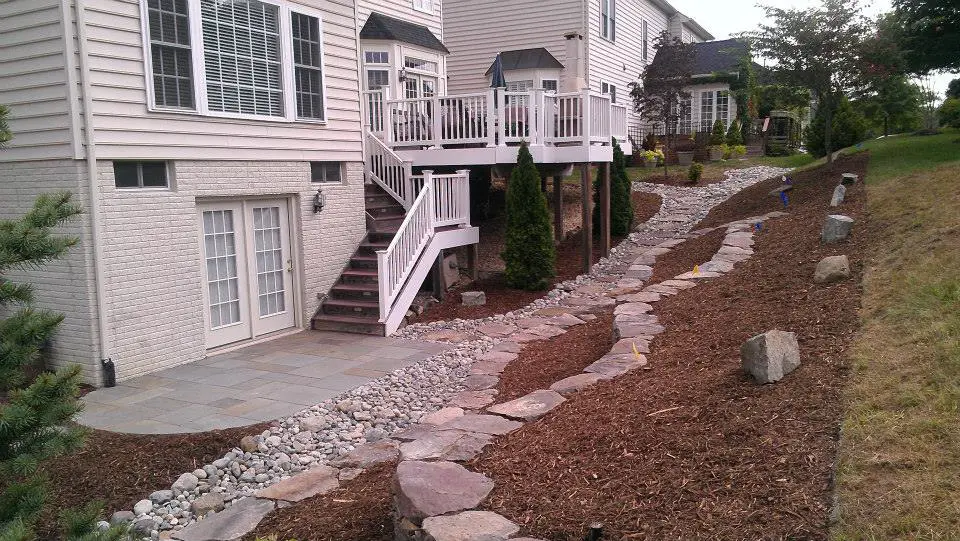
Water should always move away from your home. If it moves toward your house, it will collect and stay there.
You only need a small slope. Around 2 to 5 percent is enough to guide water away without changing how your yard looks.
How to check the slope easily
- Place two sticks in the ground a few feet apart
- Tie a string between them
- Use a level to make sure the string is straight
- Measure how much the ground drops from one side to the other
If there is no drop, water cannot move.
What works in real situations
- Add soil close to your house to raise that area
- Smooth the soil outward so water can flow away
- Press the soil down so it stays in place after rain
Real example
A homeowner had water pooling near their patio every time it rained. They added a slight slope using extra soil. After the next storm, the area dried out by the next morning.
Start with the slope before digging anything. This simple fix solves many drainage problems.
Install a French Drain to Remove Standing Water
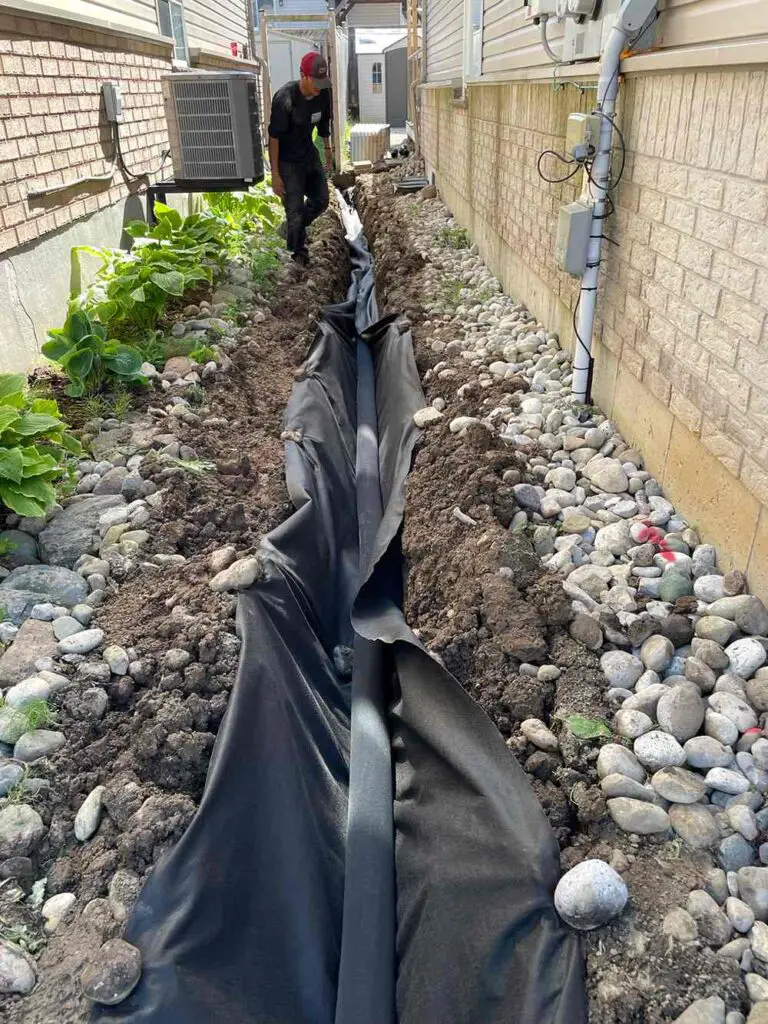
If water sits in the same spot every time it rains, you need a way to move that water underground.
A French drain is one of the best ways to do this.
What you need
- A shovel for digging
- Gravel to help water flow
- A perforated pipe that collects water
- Landscape fabric to stop dirt from blocking the system
Step-by-step process
- Dig a trench that is about 18 to 24 inches deep
- Make sure the trench has a slight slope so water can move
- Add a layer of gravel at the bottom
- Place the perforated pipe on top of the gravel
- Cover the pipe with more gravel
- Add fabric on top to keep dirt out
What most people get wrong
- They forget to create a slope, so water stays inside the pipe
- They skip fabric, which causes clogging after a few months
- They dig too shallow, which reduces effectiveness
Many contractors report that a properly installed French drain can reduce water buildup by up to 90 percent in problem areas.
Take your time with this step. A small mistake here can affect the whole system.
Build a Dry Creek Bed to Guide Water Across Your Yard
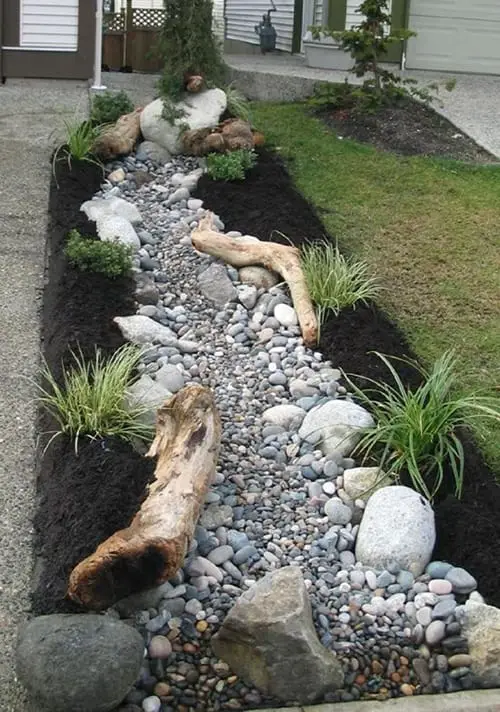
If water flows across your yard during rain, you need to guide it in a controlled way.
A dry creek bed helps move water safely away from your home.
How to build it properly
- Watch where water flows during rain and mark that path
- Dig a shallow channel along that path
- Add landscape fabric to prevent weeds
- Place large rocks first to shape the path
- Fill the gaps with smaller stones
You can also add plants along the edges. This helps keep the soil in place and reduces erosion over time.
When this works best
- Yards with a natural slope
- Areas where water already flows
- Heavy rain situations
This solution is both practical and visually appealing.
Fix Downspout Drainage Before Anything Else
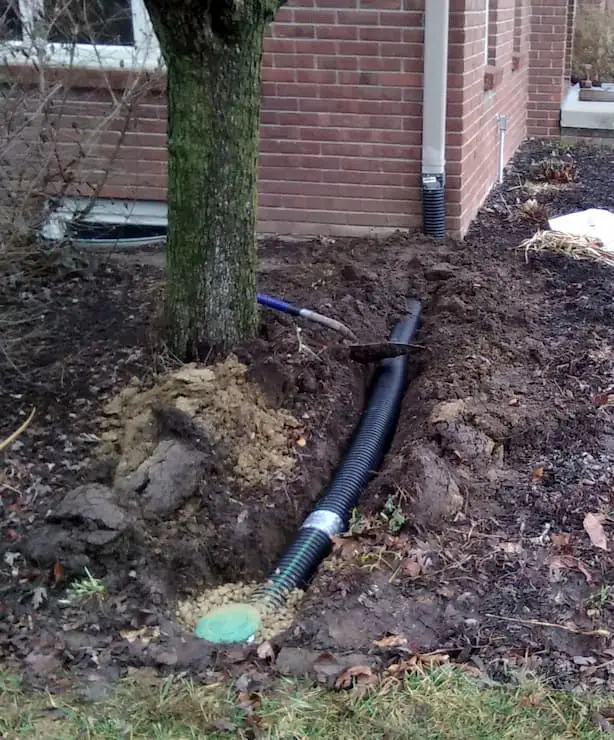
This is the easiest fix and often the most effective one.
Your roof collects a large amount of rainwater. All of that water flows through a downspout and ends up in one spot.
If that spot is close to your house, water problems will start quickly.
Quick fix steps
- Extend the downspout at least 6 to 10 feet away from your house
- Use a flexible pipe or splash block
- Direct the water toward a safe drainage area
Real result
Many homeowners notice that water pooling disappears after just one rain once this is fixed.
Always check your downspouts first. It is a simple fix with a big impact.
Improve Soil Drainage Without Digging Your Whole Yard
If your soil is holding too much water, you can improve it over time without major digging.
What actually helps
- Aeration creates small holes that allow water to move deeper
- Compost improves soil structure and helps break heavy clay
- Organic matter makes soil more balanced over time
Studies show that adding organic material can improve drainage by up to 50 percent as the soil structure improves.
What to avoid
- Adding too much sand without proper mixing
- Using the wrong soil combination
Slow improvements often work better than quick fixes here.
Fix Roof and Gutter Water Problems
- Rain gutter drainage
- Gutter drainage solutions
- Gutter downspout drainage ideas
- Rain Chain Drainage Ideas
What Most People Get Wrong First
Many drainage problems happen because of simple mistakes.
Common mistakes
- Digging without checking the slope first
- Trying to fix the wrong area
- Ignoring water coming from the roof
- Using low-quality materials that clog easily
Real mistake example
Someone dug a trench across their yard, thinking it would fix the issue. The trench looked correct, but it had no slope. After the rain, it filled with water and stayed full.
They had to redo the entire project.
Always fix the cause before trying a solution.
Best Drainage Fix Based on Your Yard Type
If you are not sure what to fix first, this section will help you make the right choice without guessing.
Look at how water behaves in your yard after rain. That tells you what to do next.
Flat yard with puddles
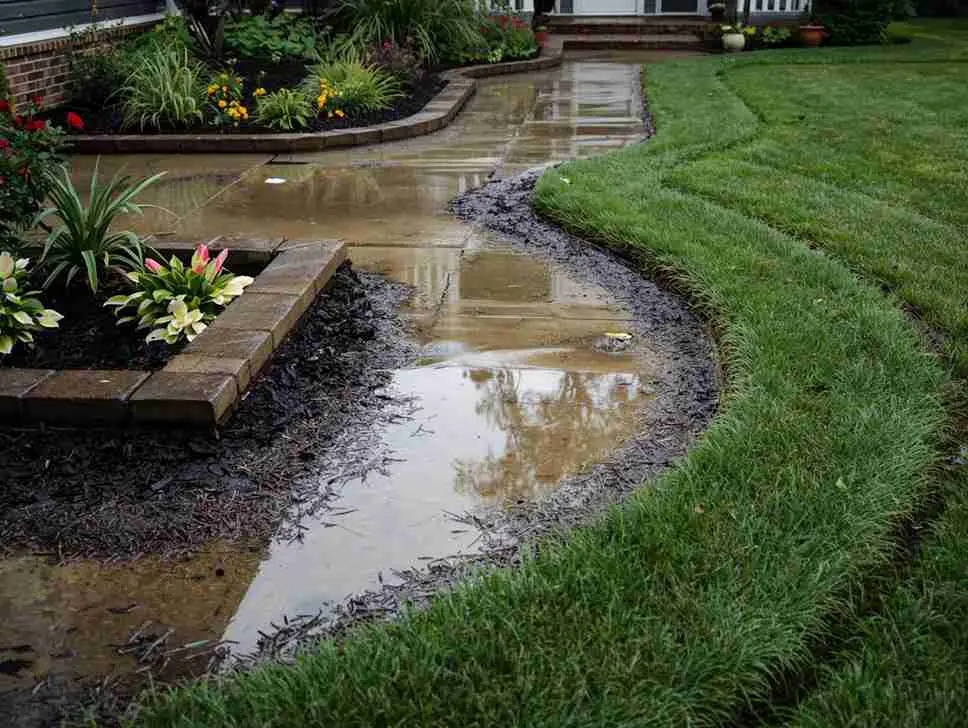
If your yard is flat and water sits in random spots, the main issue is usually poor slope.
Start by adjusting the ground near those wet areas. Add soil where needed and gently shape it so water can move away instead of staying in place.
After you fix the slope, watch what happens after the next rain. If water still sits in the same spot, that means it needs help moving underground. This is where a French drain works well.
Small puddles may disappear just from slope changes. Larger problem areas often need both a slope and a drain.
Clay soil yard
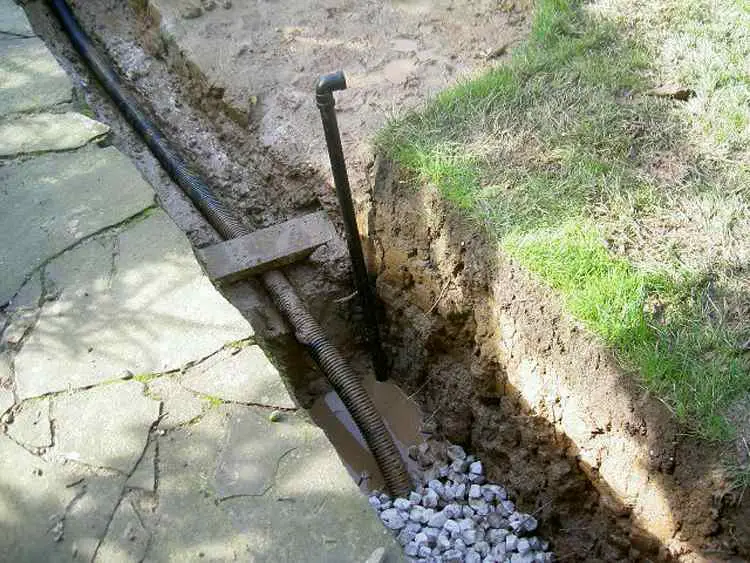
If your yard feels sticky when wet and hard when dry, you likely have clay soil. This type of soil holds water for a long time.
Start by improving the soil before digging anything.
Use aeration to open small holes in the ground. Then add compost or organic matter. This helps the soil break up and allows water to move through more easily.
Give it some time. Soil improvement does not work overnight.
If water still sits after a few rains, then you can add a drainage system like a French drain.
Over time, the soil will absorb water better. Drainage systems also work better after the soil improves.
Sloped yard with runoff
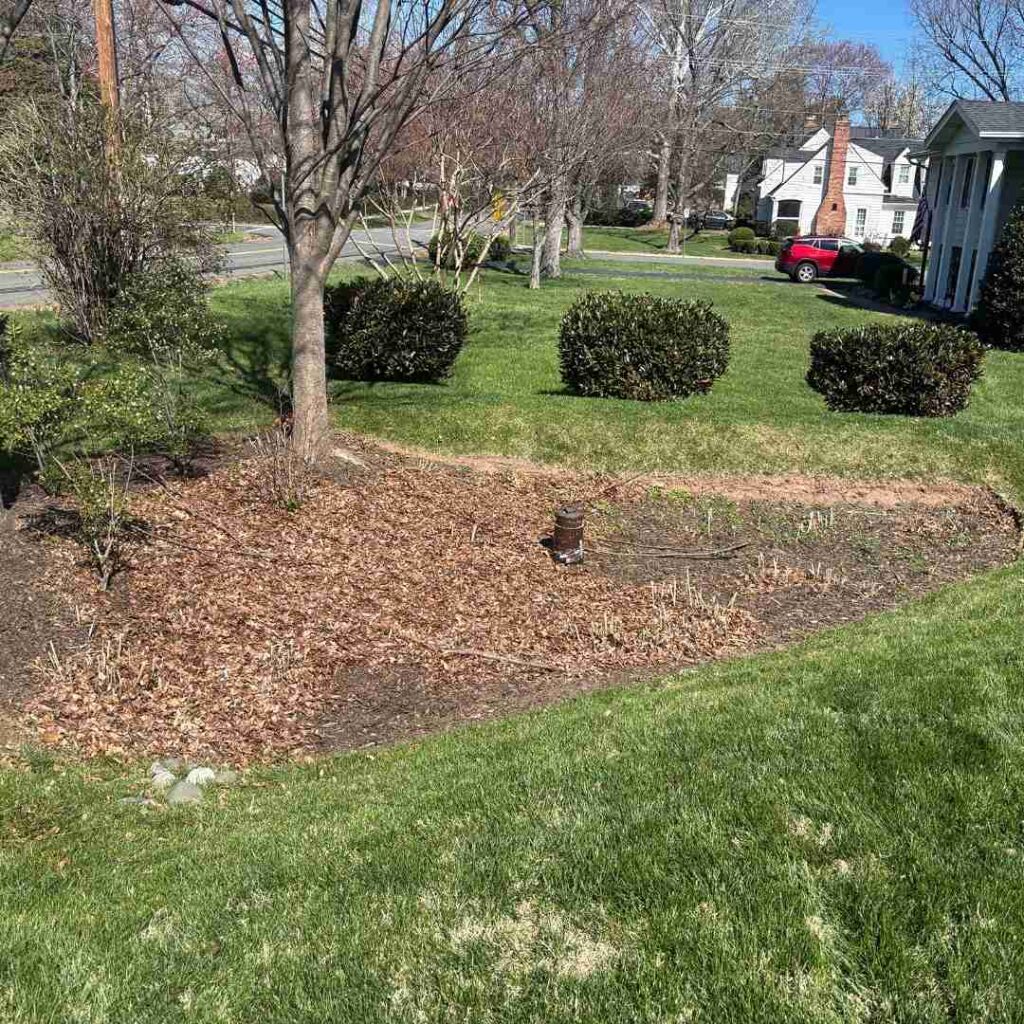
If your yard is on a slope and you see water moving quickly across it during rain, the problem is not standing water. It is an uncontrolled flow.
You need to guide that water instead of trying to stop it.
A dry creek bed works well here. It gives water a clear path to follow and keeps it away from areas you want to protect.
Watch where water naturally flows during rain. Build your creek bed along that path instead of fighting it.
You can also add rocks and plants to slow the water down and reduce soil loss.
Water will follow the path you create. Over time, you will see less erosion and more control.
Water near your house
If water collects near your foundation, this is the most important problem to fix first.
In many cases, the issue starts with your downspouts.
Check where your downspouts end. If they release water close to your house, extend them at least 6 to 10 feet away.
After that, check the slope near your home. Make sure the ground gently moves water away.
These two fixes together solve most drainage problems near the house.
Many people notice a big change after the next rain. It also helps protect your foundation over time.
Conclusion
Now you know how to create drainage in your yard in a way that actually works.
Start with the basics. Check your slope. Fix your downspouts. Then move to bigger solutions if needed.
You do not need to do everything at once. Focus on one problem. Fix it properly. Then observe what happens after the next rain.
Small changes can make a big difference when done the right way.