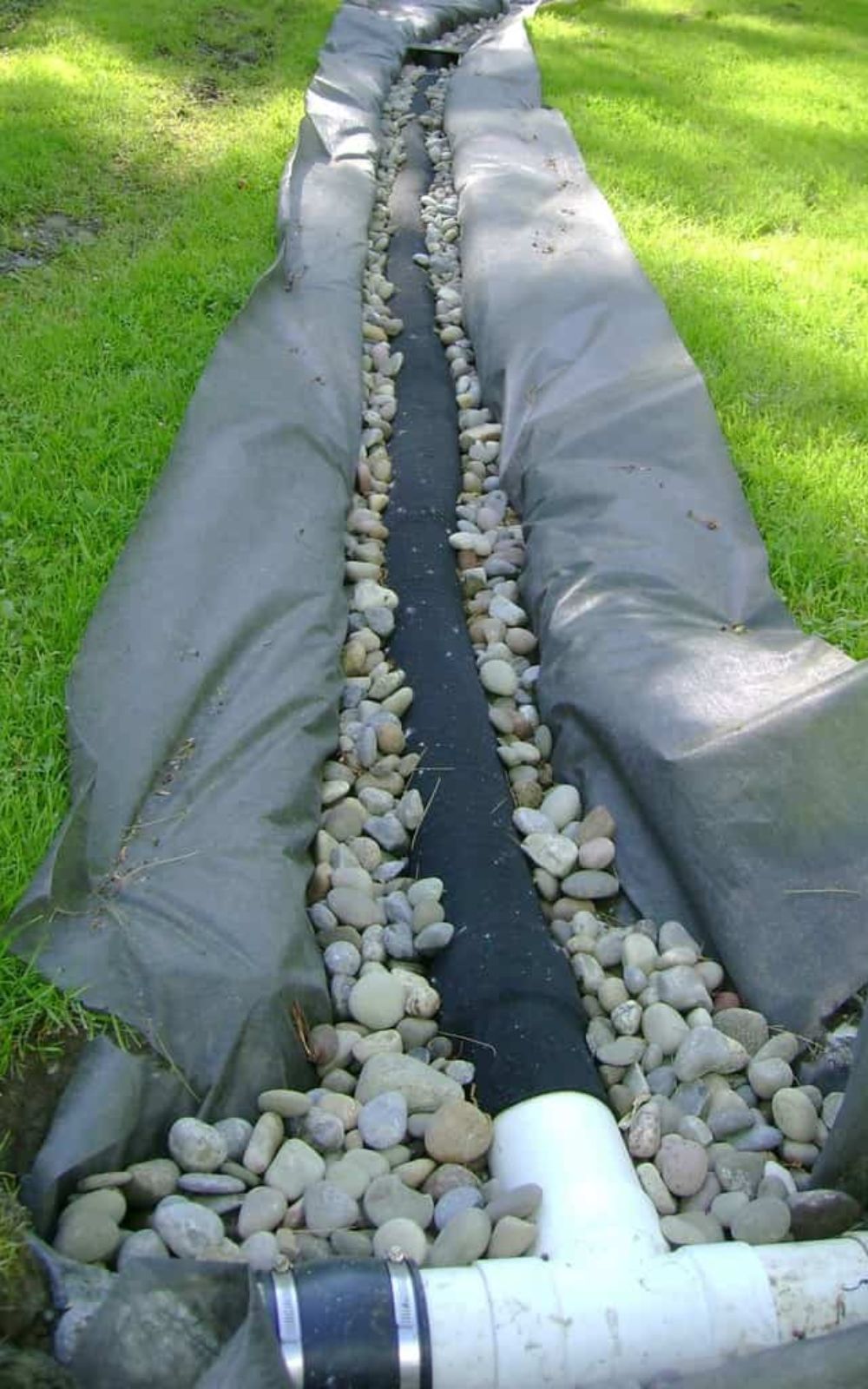

Water sitting in your yard is not a small issue. It starts with a puddle. Then the ground stays soft. Then your grass dies.
Over time, water can even move toward your home.
Most people try quick fixes. A shallow trench. Some gravel. It works for a few days. Then the water comes back.
And here’s why that matters.
Water needs a clear path. If you do not give it one, it stays where it collects.
This guide shows you how to build a drainage ditch that actually works. You will learn how to plan it, measure slope, and avoid the mistakes that cause failure.
Related Yard Drainage Ideas
Before You Dig: Quick Checklist
Stop for a moment before you start digging.
Ask yourself:
- Where does the water start?
- Where should it go?
- Is the exit point lower?
- What type of soil do you have?
- How much water shows up after rain?
Do a quick test.
Pour water on the problem spot. Watch it. If it does not move, your yard needs a proper slope.
If you skip this step, you are guessing.
Why You Need a Drainage Ditch (and When You Don’t)
If water stays for more than a day, you likely need a ditch.
That is your first sign.
Soil type also matters. Some soil holds water longer than others.
Use this quick guide:
| Soil Type | Drain Speed | What It Means for You |
|---|---|---|
| Clay Soil | Very slow | A shallow ditch may be enough |
| Loamy Soil | Medium | Standard ditch works |
| Sandy Soil | Fast | Shallow ditch may be enough |
Clay soil drains very slowly. That is why water sits longer.
But not every yard needs a ditch.
- Small puddle → try simple fixes first
- Water near home → use more controlled systems
- Large pooling → ditch is a good solution
If water has no exit, nothing will fix it.
Real Yard Example (What Actually Happens)
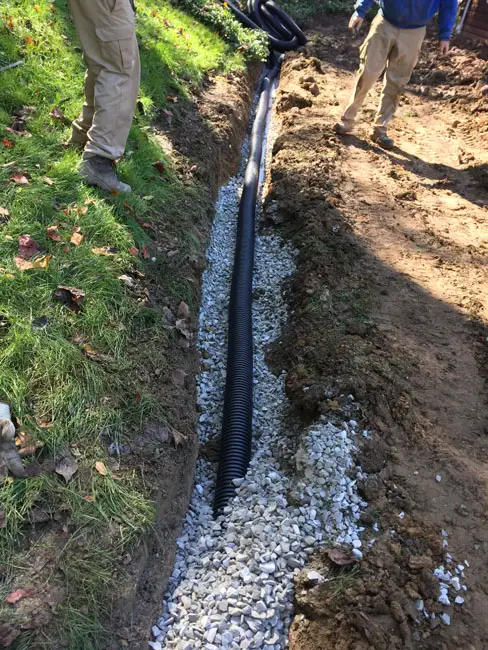
A homeowner had water pooling near a fence.
They dug a trench. It looked good. Straight and clean.
After the rain, water still sat there.
The issue was simple. The trench had no real slope.
It dropped less than an inch over the full length.
That is not enough.
They lowered one end by just 2 inches.
Water started flowing right away.
Small detail. Big difference.
Planning Your Drainage Ditch Layout
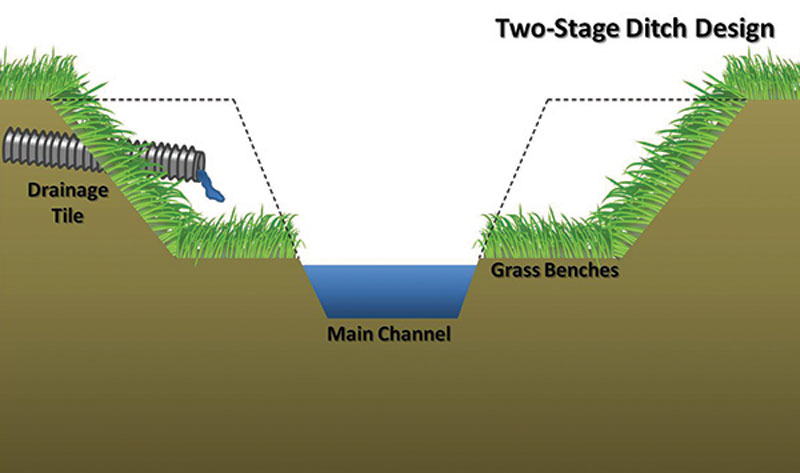
This is the most important step.
Start by finding where water collects.
Then choose a safe exit point. This must be lower than the starting point.
Now focus on the slope.
Water needs a gentle drop. About 1 percent works well.
Use this table so you don’t guess:
| Ditch Length | Required Drop |
|---|---|
| 8 feet | 1 inch |
| 16 feet | 2 inches |
| 24 feet | 3 inches |
| 32 feet | 4 inches |
Mark your path with stakes and string.
Keep it simple. Straight paths work best.
Avoid sending water toward any building.
If this step is right, the ditch will work.
Gutter and Rainwater Drainage
- Rain Gutter Drainage
- Gutter Drainage Solutions
- Gutter Downspout Drainage Ideas
- Rain Chain Drainage Ideas
Tools and Materials You’ll Need
You can build a drainage ditch with basic tools.
Tools:
- Shovel
- Trenching tool
- Level
- Tape measure
- Stakes and string
Optional tools:
- Trencher
- Mini digger
Materials:
- Gravel
- Landscape fabric
- Optional pipe
Here’s a simple cost guide:
| Setup Type | Estimated Cost |
|---|---|
| Basic soil ditch | $0 – $50 |
| Gravel + fabric | $150 – $400 |
| With pipe system | $200 – $600 |
| Trencher rental | $80 – $150 per day |
Cheap setups work. But stronger setups last longer.
Step by Step: How to Build a Drainage Ditch
Follow these steps in order. Take your time. Small errors here can break the whole system.
1. Mark the path
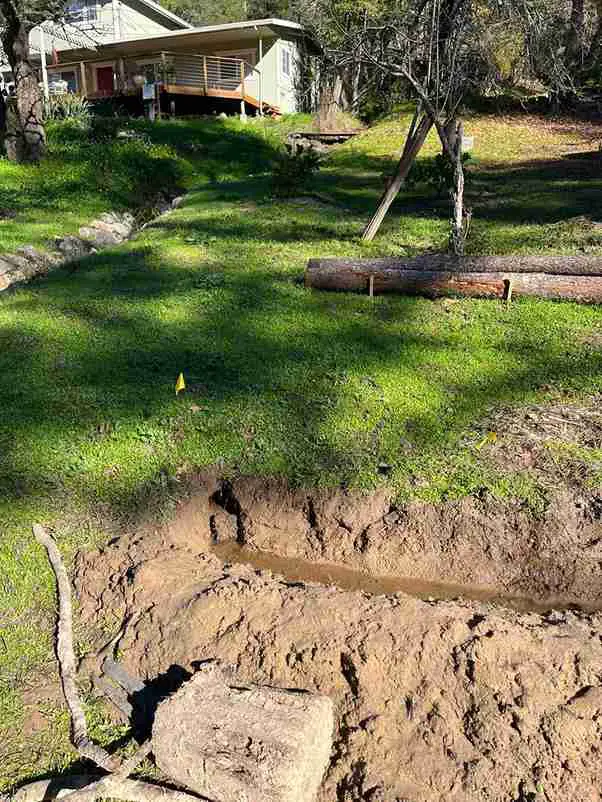
Start by laying out the exact route of your ditch.
Use wooden stakes and string to map the line. Keep the string slightly sloped from start to end. This helps you see the direction water will move.
Measure the drop based on your plan. For example, if your ditch is 16 feet long, you need about 2 inches of drop.
Walk along the line and check for obstacles like roots or rocks. It is easier to adjust the path now than later.
If the path looks clean and the slope is clear, you are ready to dig.
2. Dig the trench
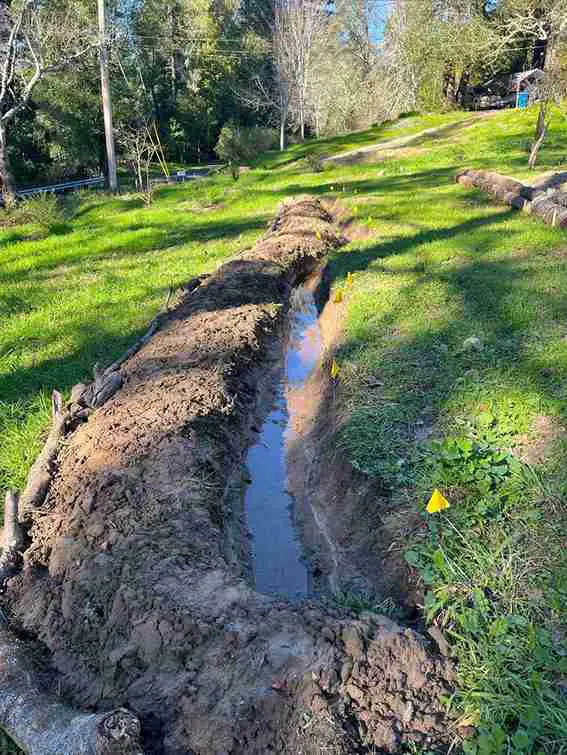
Begin digging along the marked line.
Aim for a depth between 12 and 24 inches. Go deeper if you expect heavy water flow or have clay soil.
Keep the width consistent. A common width is 6 to 12 inches at the bottom.
Remove loose soil as you go. Do not leave piles near the edge. They can fall back in later.
Work in small sections instead of digging everything at once. This makes it easier to control depth and shape.
3. Check slope often
This is where most people go wrong.
Do not wait until the end to check the slope.
After every few feet, place a level along the trench. Make sure the ditch is gradually sloping downward.
Look for flat spots. Even a small flat section can stop water.
If you find one, dig slightly deeper at that point. Smooth the transition so water can flow without interruption.
Think of the ditch like a slide. If there is a flat section, water will stop there.
4. Shape the ditch
Now refine the shape of your trench.
For small water flow, use a V shape. This is easy to dig and helps guide water to the center.
For larger flow, widen the top of the ditch. This allows more water to pass without spilling over.
Keep the sides smooth. Rough edges can slow water and cause erosion later.
Make sure the bottom stays slightly rounded or flat, not uneven.
5. Add fabric
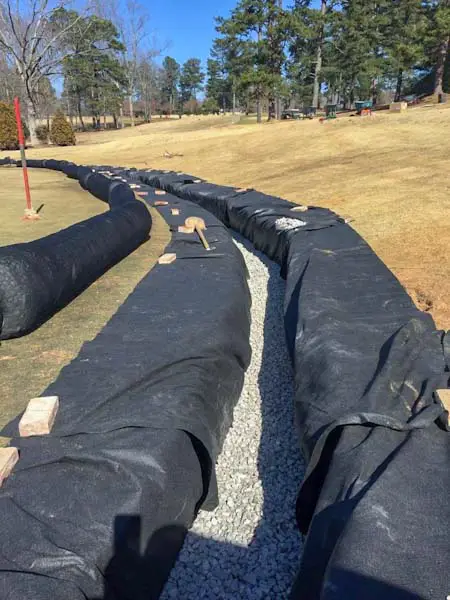
Line the trench with landscape fabric.
Start at one end and lay it along the bottom and sides. Leave extra fabric on the edges so you can fold it over later.
This step is important.
The fabric stops soil from mixing with gravel. Without it, the ditch can clog over time.
Press the fabric into place so it follows the shape of the trench.
6. Add gravel
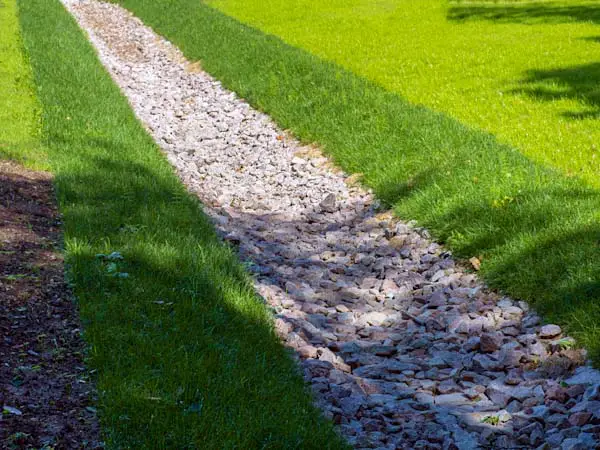
Pour gravel into the trench.
Start with a layer at the bottom. Spread it evenly.
The gravel helps water move faster and prevents mud buildup.
For better results, use medium-sized gravel. Very fine gravel can clog. Large stones can leave gaps.
If needed, add more layers until the base feels solid.
7. Test water flow
Before finishing, test the ditch.
Pour water at the highest point. Watch how it moves.
Water should flow smoothly from start to end without stopping.
Pay attention to slow areas. These usually mean the slope is not correct.
If water pools anywhere, fix it now by adjusting depth or smoothing the path.
This test saves you from problems later.
8. Final adjustment
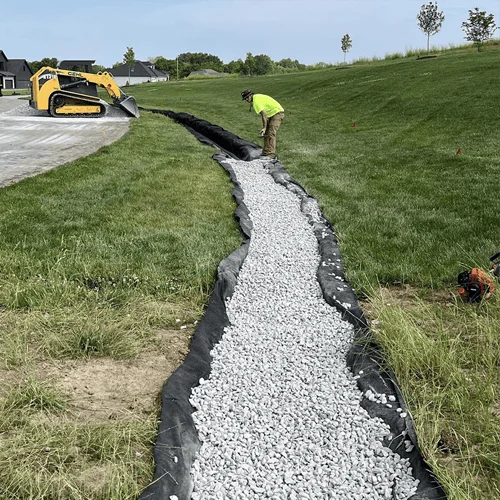
Finish the ditch by cleaning up the edges.
Remove loose soil and smooth the sides. This helps prevent collapse.
If you used extra fabric, fold it slightly over the gravel edges.
Check the entire length one more time.
Make sure there are no blockages, dips, or uneven spots.
Once everything looks good, your drainage ditch is ready to handle water properly.
Choosing the Right Ditch Design
Not all ditches are the same.
Use this table to decide:
| Design Type | Best For | Pros | Cons |
|---|---|---|---|
| V Shape | Small flow | Easy and cheap | Not for heavy rain |
| Wide ditch | Heavy flow | Handles more water | More digging |
| Rock lined | Erosion control | Strong and durable | Higher cost |
| Grass lined | Looks better | Blends with yard | Needs care |
Pick based on your problem. Not just looks.
Rock and Natural Drainage Systems
- Rock Drainage Landscaping Ideas
- DIY Dry Creek Bed Ideas for Drainage Solutions
- Dry Rock Bed for Drainage Ideas
Common Mistakes That Ruin Drainage Ditches
Small mistakes can cause big problems.
Use this table to avoid them:
| Problem | What Happens | Fix |
|---|---|---|
| Flat slope | Water sits | Increase drop |
| Too steep | Soil washes away | Reduce slope |
| No exit | Water backs up | Create outlet |
| No lining | Ditch breaks down | Add gravel or rock |
Here’s a common issue.
- People build a perfect ditch. But forget the exit.
- Water flows halfway. Then stops.
- The problem stays.
- Always think about where water ends.
Quick Decision Guide
If you are unsure, use this:
| Situation | What You Should Do |
|---|---|
| Small puddle | Shallow ditch |
| Large pooling | Deep and wide ditch |
| Clay soil | Add gravel layer |
| Heavy rainfall | Use rock lining |
| Near house | Plan direction carefully |
This removes guesswork.
Maintenance Tips to Keep It Working
A drainage ditch needs simple care.
After heavy rain, check it.
Look for:
- Blocked sections
- Loose soil
- Missing gravel
Clear leaves every few weeks.
Fix small problems early.
This keeps your ditch working for years.
Drainage Ditch vs French Drain (Quick Comparison)
Many people ask this.
Here is the simple answer:
- Drainage ditch → open, visible, easier to build
- French drain → hidden, more complex, better near foundations
If your problem is surface water, a ditch works well.
If water is near your home, a French drain may be safer.
Conclusion
A drainage ditch is simple. But small details matter.
Slope matters more than depth. Exit matters more than shape.
If you plan it right, it works for years.
If you rush it, the problem comes back.
Start small. Test it. Adjust it.
Now you know how to build a drainage ditch that actually works.


![How To Charge A Lawn Mower Battery - [Step-By-Step Guide] 9](https://mowerslab.com/wp-content/uploads/2022/02/How-To-Charge-A-Lawn-Mower-Battery-150x150.webp "How To Charge A Lawn Mower Battery - [Step-By-Step Guide] 12")